Idea
Fermented Foods
People have fermented food for at least 13,000 years. What the microbes do, what the health research shows, and why a viral clip blamed kimchi for stomach cancer.

Overview
A fermented food is any food or drink whose character comes from microbes that were allowed, or encouraged, to grow in it. Yeasts turn grape sugar into wine. Bacteria sour milk into yogurt and cabbage into sauerkraut. Molds digest soybeans and rice into miso and soy sauce. In each case living organisms do the cooking, breaking down sugars, starches, proteins and fats into acids, alcohol, gases and hundreds of flavor compounds.
For a long time the word had no agreed meaning. Biochemists use "fermentation" narrowly, for the way some cells make energy from sugar without oxygen. Cooks and food makers use it far more loosely, and marketers use it for almost anything sour. In 2019 the International Scientific Association for Probiotics and Prebiotics (ISAPP) brought together a panel of microbiologists, food scientists and nutrition researchers to settle the question. Their consensus statement, published in 2021, defines fermented foods and beverages as "foods made through desired microbial growth and enzymatic conversions of food components."1 The word "desired" separates fermentation from spoilage, which is microbial growth nobody wanted.2 The definition also requires microbes to do the work: enzymes alone, such as those already present in a food, do not count.1
The ISAPP panel drew some lines that surprise people. Cucumbers soaked in vinegar brine are pickled, not fermented, because no microbes produced the sourness in the jar. The same goes for chemically leavened bread, synthetic vinegar, soy sauce made by chemical hydrolysis rather than brewing, and soft cheeses acidified with added acid. A salad dressing that contains vinegar is not itself a fermented food. On the other side, bread, most beer and wine, distilled spirits, roasted coffee and chocolate are all fermented foods even though baking, filtering, distilling or roasting has killed the microbes that made them.1
That last point explains the difference between a fermented food and a probiotic. A probiotic, in the scientific sense, is a defined strain of live microorganism that has been shown in studies to give a health benefit. Most fermented foods do not meet that bar. Some contain no live microbes at all by the time they are eaten. Others, like unpasteurized sauerkraut or kefir, are full of live microbes, but those microbes are a shifting community of mostly unnamed strains that have not been tested one by one. The ISAPP panel recommends that most such products say "contains live and active cultures" and reserve the word "probiotic" for foods with strain-level evidence.1 Clinical trials of fermented foods themselves remain few. A 2019 review found that only a handful, among them kefir, sauerkraut, natto and sourdough bread, had been tested in even one randomized controlled trial for gut effects.3
Fermentations fall into a few broad kinds, sorted by the main chemical change and the microbes that drive it:
- Lactic acid fermentation: lactic acid bacteria turn sugars into lactic acid, souring and preserving foods such as yogurt, sauerkraut, kimchi and sourdough.3
- Alcoholic (ethanolic) fermentation: yeasts turn sugars into ethanol and carbon dioxide, giving beer, wine, mead and the rise in yeasted bread.3
- Acetic fermentation: acetic acid bacteria use oxygen to turn ethanol into acetic acid, the sourness of vinegar and kombucha.1
- Mold (fungal) fermentation: molds such as koji, Aspergillus oryzae, grow over grains or beans and digest them with powerful enzymes, the first step in soy sauce, miso and sake.1
- Alkaline fermentation: Bacillus bacteria break down protein in seeds and beans, releasing ammonia that pushes the pH up, as in Japanese natto and West African dawadawa.4
Real foods often mix these. Kombucha runs yeasts and acetic acid bacteria side by side. Cacao beans pass through yeast, lactic and acetic stages in a single week. Most traditional ferments start spontaneously from microbes already on the food, or by "back-slopping," adding a little of an earlier batch to the new one, rather than from a purchased starter culture.1
In context
Fermentation is older than farming, and it may be one of the reasons farming began. The oldest direct evidence comes from Raqefet Cave on Mount Carmel in Israel, a burial site used by the Natufians, a people of foragers who lived in the Levant at the end of the last Ice Age. In 2018 a Stanford-led team analyzed starch grains, plant fibers and use-wear in three stone mortars at the site, dated to roughly 13,700 to 11,700 years ago. One mortar showed starch damage matching grains that had been malted, mashed, heated and fermented, which the team compared against beer they brewed experimentally. They read the evidence as a thin, gruel-like wheat or barley beer, likely made for feasts honoring the dead.5 Some archaeologists dispute the reading and think the mortars were used to grind flour, so the claim stands as strong evidence rather than settled fact.5 The study revived an old argument, sometimes called the beer hypothesis, that the wish to brew helped push people toward growing cereals.5
Bread arrived at about the same time. Charred crumbs from two hearths at Shubayqa 1 in Jordan, another Natufian site, show that people were baking flatbread from wild cereals and tubers around 14,400 years ago, at least 4,000 years before farming.6 Nothing shows those loaves were leavened, so they cannot count as fermented, but they show how early people were processing wild grain in ways that set the stage for both bread and beer.
At the other end of Asia, pottery jars from Jiahu, a Neolithic village in Henan province, China, held residues of a mixed drink made from rice, honey and fruit, likely hawthorn and possibly grape. Chemical analysis published in 2004 dated it to about 7000 to 6600 BCE, which makes it the oldest chemically confirmed fermented drink from a pottery vessel.7
Dairy fermentation followed the spread of herding. In the Kuyavia (Kujawy) region of central Poland, archaeologists had long found pottery pierced with small holes and guessed they were cheese strainers. In 2012 chemists at the University of Bristol extracted milk fats from 34 of these sieves, dated to around 5200 to 4900 BCE, roughly 7,200 years ago. That was the earliest direct evidence of cheese-making.8 Cheese and yogurt may have mattered more then than now. Most adults at the time could not digest lactose, the main sugar in milk, and fermentation strips much of it out, so curdling milk made it edible as well as storable.18
By classical times, fermented foods underpinned whole economies. Rome's favorite condiment, garum, was a liquid made by layering fish with salt and leaving it for months until the flesh broke down; factories for it stretched along the coasts of Spain, Portugal and North Africa.9 A shop in Pompeii still held jars of fish in mid-process when Vesuvius buried the town in 79 CE.10
For most of history, people made these foods without knowing what caused them. The decisive step came from Louis Pasteur. Asked by an industrialist in Lille why batches of beet alcohol kept going sour, Pasteur turned his microscope on fermenting liquids. In a short paper to the French Academy of Sciences in 1857 he showed that the souring was carried out by tiny living cells, a specific organism for a specific fermentation. This cut against the leading chemist Justus von Liebig, who held that fermentation was a purely chemical decay, and it is often counted as the founding of modern microbiology.11
Fifty years later, Élie Metchnikoff, a Russian-born biologist at the Pasteur Institute in Paris, gave fermented foods their first modern health story. Building on the Bulgarian microbiologist Stamen Grigorov's identification of the bacterium in Bulgarian yogurt, Metchnikoff argued in The Prolongation of Life (1907) that toxins from gut bacteria drive aging and that the lactic acid bacteria in soured milk could hold them in check. He pointed to long-lived Bulgarian peasants who ate a great deal of yogurt. His theory was wrong in its details, but it set off a European craze for yogurt and is usually cited as the starting point of probiotic research.12
The twentieth century then changed how most fermented foods were made. Industrial bakeries switched to fast commercial yeast. Pasteurization, canning and refrigeration made it possible to keep foods without fermenting them at all, and many supermarket pickles became vinegar pickles. Fermented foods that remained were often heat-treated after fermenting to stop them changing on the shelf, which kills the live microbes.113 Commercial starter cultures standardized flavor and texture but narrowed the range of microbes involved.3
A revival began at the turn of the twenty-first century. Sandor Katz's Wild Fermentation (2003), a practical and political book on home fermenting, found a large readership and helped spark a movement of home picklers, brewers and small producers.14 Restaurant kitchens followed. In 2018 the Copenhagen restaurant Noma published The Noma Guide to Fermentation by René Redzepi and David Zilber, a manual drawn from its fermentation lab that covers koji, misos, vinegars and garums.15 Interest in the gut microbiome has driven a parallel wave of research on what living ferments do in the body, research the ISAPP consensus was written partly to bring into order.1
- ~13,000 years ago Raqefet Cave beer Natufian foragers brew a cereal gruel in stone mortars in Israel
- 7000 BCE Jiahu drink Villagers in Henan, China, ferment rice, honey and fruit
- 1857 Pasteur Louis Pasteur shows that a living microbe causes lactic fermentation
- 1907 Metchnikoff The Prolongation of Life links Bulgarian yogurt to long life
- 2003 Wild Fermentation Sandor Katz's book helps launch a home-fermenting revival
Older times are squeezed together so the whole span fits.
Research
Fermented foods drifted into the news in October 2026, when a short clip of a gastroenterologist saying that "fermented foods cause gastric cancer" spread across social media. The claim is taken apart in its own section below. The rest of this page is the wider story: how fermentation works, how many cultures depend on it, what the health research does and does not show, and where the craft is heading.
How fermentation works
Part 1 of 6
Fermentation is controlled rot: the cook sets the salt, acid and temperature so the microbes they want win. This part covers the five main chemistries, the order in which microbes take over a jar, why that keeps the food safe, what it changes in the food, and how a ferment gets started.
Most microbes that live on food would happily rot it. Fermentation is what happens when cooks tilt the odds so the microbes they want win. A 2021 consensus panel of the International Scientific Association for Probiotics and Prebiotics put it in one line: fermented foods are foods made through desired microbial growth and enzymatic conversions of food components.16 The word "desired" carries the weight. Spoilage and fermentation use much the same chemistry; the difference is which organisms take over and what they leave behind.
Fermented foods are also unusually easy to study. A crock of sauerkraut or a wheel of cheese holds a community of a few dozen species, small enough to take apart in a lab, which is why microbiologists have started using them as model ecosystems for messier places like the human gut.17
The main pathways
Five broad kinds of fermentation cover most of the world's ferments. They are sorted by the main product the microbes make.
Lactic acid fermentation. Lactic acid bacteria eat sugars and give off lactic acid. Some (the "homofermenters," such as the bacterium long called Lactobacillus plantarum) make almost nothing else. Others (the "heterofermenters," such as Leuconostoc mesenteroides) also make carbon dioxide, ethanol, acetic acid and the sugar alcohol mannitol, which add fizz and a broader flavor.18 This is the chemistry of sauerkraut, kimchi, dill pickles, yogurt, sourdough and many sausages.
Alcoholic fermentation. Yeasts, above all Saccharomyces cerevisiae, break sugars down into ethanol and carbon dioxide when oxygen is short. The same reaction raises bread and makes beer, wine, cider and the starting point of most vinegars.17
Acetic fermentation. Acetic acid bacteria such as Acetobacter, Gluconobacter and Komagataeibacter need oxygen. They take the ethanol that yeasts leave behind and oxidize it into acetic acid, the sour of vinegar. Kombucha runs both steps in one jar: yeasts split the sugar and make ethanol, the bacteria turn the ethanol into acid, and Komagataeibacter spins spare glucose into the rubbery cellulose mat (the "SCOBY") that floats on top.20
Mold-driven fermentation. Filamentous fungi grow as threads through a solid food and pour out enzymes that break down starch, protein and fat. Aspergillus oryzae does this in koji for soy sauce, miso and sake (see the next section). Rhizopus species knit cooked soybeans into a solid cake in Indonesian tempeh.21 Penicillium roqueforti veins blue cheeses, and Penicillium camemberti forms the white rind of Camembert and Brie.22
Alkaline fermentation. A smaller family of ferments goes the other way on the pH scale. Bacillus bacteria, especially Bacillus subtilis, break down the protein in protein-rich seeds and release ammonia, which pushes the pH up into the alkaline range. Japanese natto (fermented soybeans), West African dawadawa or soumbala (fermented seeds of the African locust bean, Parkia biglobosa) and Nigerian ogiri are all made this way.23 In natto, B. subtilis also makes the sticky strings, a chain of glutamic acid called poly-gamma-glutamic acid.24
| Pathway | Who does it | What changes | You know it as |
|---|---|---|---|
| Lactic | Lactic acid bacteria | sugar → lactic acid (plus CO₂ for some species) | sauerkraut, kimchi, yogurt, sourdough |
| Alcoholic | Yeasts | sugar → ethanol + CO₂ | bread, beer, wine |
| Acetic | Acetic acid bacteria | ethanol → acetic acid, with oxygen | vinegar, kombucha |
| Mold | Aspergillus, Rhizopus, Penicillium | starch and protein → sugars and amino acids | koji, tempeh, mold-ripened cheese |
| Alkaline | Bacillus | protein → amino acids + ammonia, pH rises | natto, dawadawa |
Succession in the crock
A ferment is rarely the work of one species. In vegetable ferments the community changes in a predictable order, called succession, because each wave of microbes changes the conditions in ways that favor the next.
- Day 0 Salt Shredded cabbage is packed with about 2 percent salt.
- Days 1–2 Leuconostoc opens The fast, gassy heterofermenter Leuconostoc mesenteroides dominates.
- Days 2–3 The handover As acid builds, more acid-tolerant homofermenters take over.
- ~Day 14 L. plantarum finishes The most acid-tolerant species is in charge, and the batch sits at pH 3.4 to 3.7.
In sauerkraut, shredded cabbage is packed with about 2 percent salt. Within the first day or two the heterofermenter Leuconostoc mesenteroides dominates. As the acid builds, the community shifts within two to three days toward more acid-tolerant homofermenters, and by the end of about two weeks L. plantarum, the most acid-tolerant of the group, is in charge. A study of four commercial fermentations at a North Carolina plant found L. mesenteroides as the main species early and L. plantarum late, along with a wider cast than the textbook four, including Weissella, Leuconostoc citreum and Lactobacillus curvatus. By day 14 every batch had reached a pH between 3.4 and 3.7.18 The same pattern plays out, with different leading species, in a crock of kimchi.
Deep Dive: The microbial succession inside a crock of kimchi
Kimchi starts out more crowded than sauerkraut. Napa cabbage is salted, rinsed and coated in a paste of chili, garlic, ginger, scallion and often fish sauce or salted shrimp. Every one of those ingredients brings its own microbes, so the jar begins as a mixed and fairly random community of soil, plant and marine bacteria. Within days that crowd thins out to a handful of lactic acid bacteria, and the order in which they rise and fall decides how the kimchi tastes at each stage.
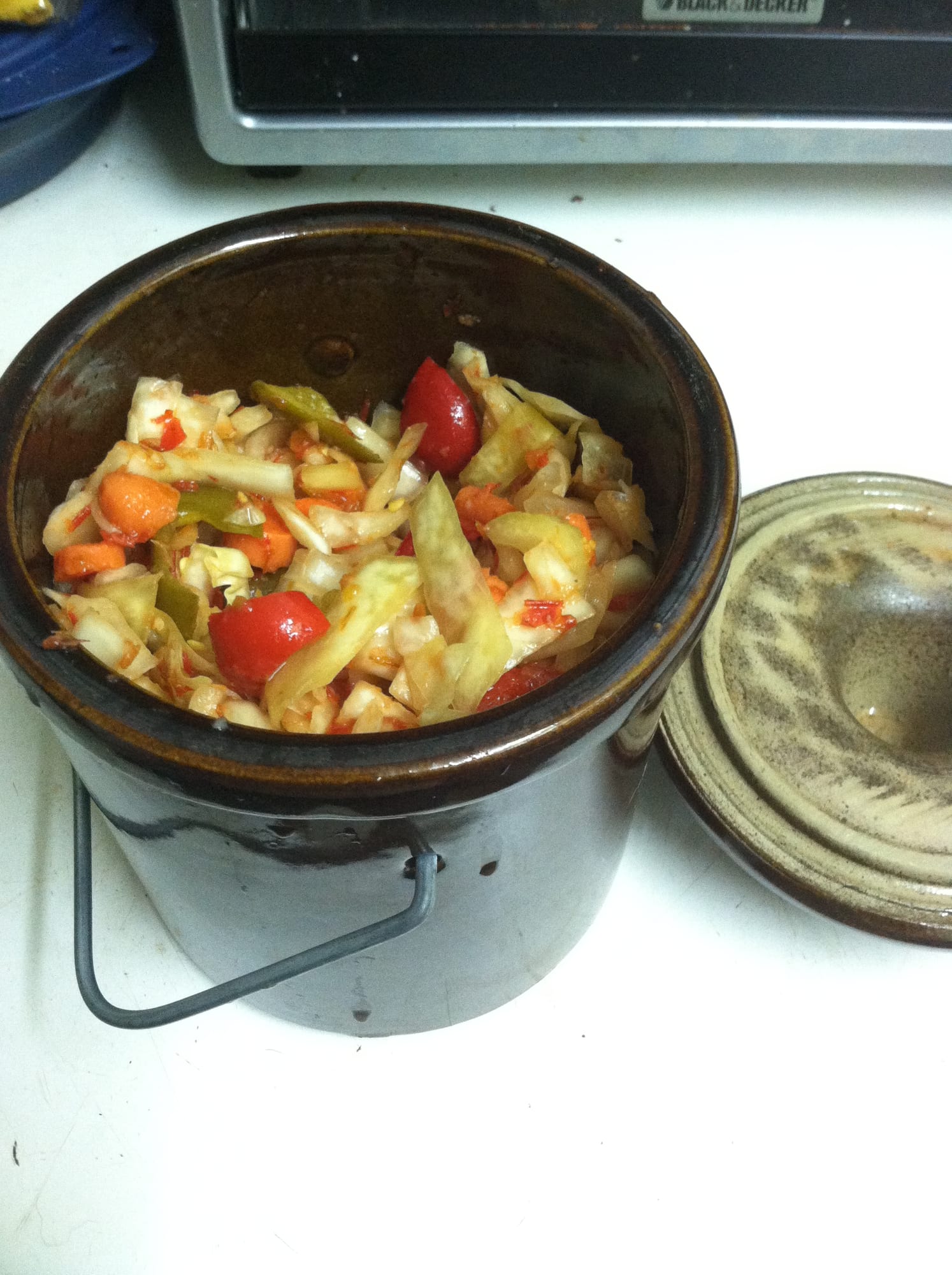
A fresh batch of homemade kimchi packed into a ceramic crock, where the succession plays out. Photo: Nhlord, CC BY-SA 4.0, via Wikimedia Commons.
The best picture of that order comes from a 2013 study by Ji Young Jung, Che Ok Jeon and colleagues in South Korea. They made kimchi in the lab and sampled it at five points over 29 days. They used DNA sequencing to count which bacteria were present, and they went one step further by sequencing the messenger RNA in the jar, which shows which genes each species was actually switching on. A census tells who is in the room; the RNA shows who is working.25
Six species of lactic acid bacteria dominated. In the early stage the most active by far was Leuconostoc mesenteroides, the same heterofermenter that opens sauerkraut. Its mixed output of lactic acid, acetic acid, carbon dioxide and mannitol gives young kimchi its fresh, lightly sparkling taste. Its carbon dioxide also pushes out oxygen, which helps the later, more oxygen-shy bacteria. As acid built up, the active community shifted to Lactobacillus sakei (now Latilactobacillus sakei) and Weissella koreensis, which carried the fermentation through its later stages and made the kimchi steadily more sour.25
One finding was unexpected. Around day 25, gene activity from L. sakei dropped sharply. The authors suggested that bacteriophages, viruses that infect bacteria, may have been killing it off.25 Viral predators of this kind can knock back whichever bacterium is most common. That may be part of why fermentation does not end with a single species winning outright.
Temperature changes the schedule. Kimchi made in winter and buried in the ground, or kept in a modern kimchi refrigerator just above freezing, ferments slowly and gives the cold-tolerant Leuconostoc species a longer run. Warm kitchens hurry the jar toward the sour, Lactobacillus-heavy stage. Cooks who say a kimchi is "ripe" or "over-ripe" are tracking that succession by taste.
Commercial makers have tried to take some of the chance out of it. In a 2012 study the same Korean group added a Leuconostoc mesenteroides starter culture to two kinds of kimchi and compared them with unseeded batches. The starter kept Leuconostoc in the lead for longer and held back the Lactobacillus that tends to make kimchi over-sour. It also kept Weissella at a higher share until the end.25 The aim is a kimchi that tastes ripe for longer on the shelf.
Sauerkraut and kimchi share a basic plot: a fast, gassy heterofermenter goes first and acidifies the jar, and an acid-tolerant finisher takes over. The cast differs because the ingredients differ. Sauerkraut, with only cabbage and salt, settles on L. plantarum. Kimchi, with its garlic, chili and seafood and its usual cold storage, leans toward L. sakei and Weissella. In both, the cook sets the conditions and the microbes sort out the rest.
Why salt and acid keep ferments safe
Salt and acid do most of the safety work. Salt draws water and sugar out of vegetables to make a brine, and at the right strength it slows many spoilage organisms while lactic acid bacteria, which tolerate salt well, carry on. It also helps steer the succession: salt level has a controlling influence on which species dominate and when.18
Acid finishes the job. The key number is pH 4.6. Below it, the spores of Clostridium botulinum, the bacterium that makes botulinum toxin, cannot grow and make toxin. United States food law uses that line: foods with a finished equilibrium pH above 4.6 (and water activity above 0.85) count as "low-acid" and need much heavier processing, while acidified foods must reach and hold pH 4.6 or below.26 A healthy sauerkraut or kimchi passes that line within days and ends far below it. The lactic acid bacteria do the acidifying themselves, which is why traditional vegetable ferments have a good safety record when the salt is right and the vegetables stay under the brine.
Alkaline ferments work differently. Natto and dawadawa rely on cooking the beans first, then on Bacillus growing fast enough, at high enough numbers, to crowd out competitors.23
What fermentation does to food
Microbes eat part of the food before people do, and the leftovers change in several useful ways.
Predigestion. Enzymes from molds and bacteria break proteins into peptides and free amino acids and break starches into sugars. In tempeh, Rhizopus breaks down soy protein and fat during the one- or two-day ferment, which helps explain why tempeh is easier to digest than plain cooked soybeans.21
Flavor. Breaking protein releases glutamate, the amino acid that tastes of umami (savoriness). Soy sauce, miso, fish sauce, aged cheese and dawadawa all owe their depth to it.27 Other byproducts, from the acids of lactic ferments to the ammonia notes of natto, add their own layers.
Vitamins. Some microbes make vitamins that the raw food lacks. Bacillus subtilis in natto makes large amounts of vitamin K2 in the form called menaquinone-7; reported values run roughly 800 to 1,000 micrograms per 100 grams, which makes natto the richest known food source.24 Plant foods carry no vitamin B12, but tempeh can pick some up, because bacteria such as Klebsiella pneumoniae and Citrobacter freundii that ride along in traditional Indonesian tempeh can make it. The Rhizopus mold itself does not.28 Commercial tempeh made with a pure mold culture usually lacks these bacteria, so it cannot be counted on for B12.
Fewer antinutrients and FODMAPs. Whole grains and beans hold phytic acid, which binds minerals like iron, zinc and magnesium and keeps them from being absorbed. Sourdough fermentation cut phytate in whole wheat bread by about 62 percent, compared with 38 percent for a yeast-only dough, and freed more magnesium.29 Yeasts and lactic acid bacteria also break down part of the fructans in wheat, which are among the FODMAPs (short-chain carbohydrates that ferment in the gut and trigger symptoms in people with irritable bowel syndrome). A complication is that the bacteria convert some of the freed fructose into mannitol, which is itself a FODMAP.30
New compounds. Fermentation also makes things that were never in the raw food: the bacterial cellulose of kombucha, the poly-gamma-glutamic acid of natto and peptides with possible effects on blood pressure.2024
What survives the stove
The ISAPP definition does not require the microbes to be alive when the food is eaten.16 That matters, because many fermented foods are heated later. Sourdough bread is baked well past the temperatures that kill bacteria and yeasts. Shelf-stable sauerkraut in cans or jars has been pasteurized or canned, and most commercial soy sauce is heated. These foods keep what the microbes made, such as acids, flavors, vitamins and reduced phytate, but they carry few or no living microbes. Vitamin K2 and the predigestion of proteins survive heat. Live microbes survive only in unheated ferments: refrigerated sauerkraut and kimchi, yogurt and kefir, most kombucha, raw-milk cheeses and unpasteurized miso. The panel also drew a line around the word "probiotic." It applies only when a food holds defined live microbes at the time of eating that have been shown to have a health benefit.16
Wild or seeded
There are two ways to start a ferment. Wild, or spontaneous, fermentation relies on the microbes already on the ingredients and in the kitchen. Sauerkraut, kimchi, natural wine, lambic beer and most traditional dawadawa start this way, and they vary from batch to batch. Backslopping, saving a bit of the last batch to seed the next, sits in between; sourdough starters and kefir grains work this way.
Starter cultures are defined strains added at the start. They give speed, safety and consistency, and almost all industrial yogurt, cheese, sake and soy sauce use them.17 The trade-off is diversity. When French researchers traced the history of Penicillium camemberti, the white mold of Camembert, they found it descended from a single white mutant that cheesemakers have propagated as a clone. The domesticated mold grows faster on cheese and makes fewer toxins than its wild relatives, but it has very little genetic diversity left and has lost the ability to reproduce sexually.22 Koji, the subject of the next section, is the most thoroughly domesticated fermentation microbe of all.
A world of ferments
Part 2 of 6
Every food culture ferments, and most use what grows nearby and what needs keeping. Where cabbage is plentiful, it becomes sauerkraut or kimchi. Where milk is plentiful, it becomes yogurt, kefir or cheese. Where soybeans grow, they become miso, natto, doenjang or tempeh, each through a different set of microbes. A tour by region shows both the variety and a handful of shared methods underneath.
East Asia
Korea's best-known ferment is kimchi, napa cabbage or radish salted and packed with chili, garlic, ginger and often fermented seafood, then left to sour through lactic acid fermentation. In late autumn, families and neighbors gather to make enough to last the winter, a practice called kimjang. UNESCO added "Kimjang, making and sharing kimchi in the Republic of Korea" to its list of the world's intangible cultural heritage in 2013, citing the way it is passed down within communities and its spirit of sharing.31
Much of the region's cooking rests on molds. Koji is cooked rice, barley or soybeans grown over with Aspergillus oryzae, a mold whose enzymes break starch into sugar and protein into amino acids. Koji is the first stage of sake, miso, soy sauce and rice vinegar.1 Miso is soybeans mixed with koji and salt and aged for months. Soy sauce is a brine of soybeans, roasted wheat and koji, fermented by salt-loving yeasts and lactic acid bacteria before pressing. Korean doenjang takes a different route: cooked soybeans are formed into blocks called meju and left to collect wild molds and Bacillus bacteria from the air and from rice straw before being salted and aged.4
Japan's natto works by alkaline fermentation instead. Steamed soybeans are inoculated with Bacillus subtilis and kept warm for about a day, producing beans coated in sticky, stringy threads with a strong ammonia smell.34
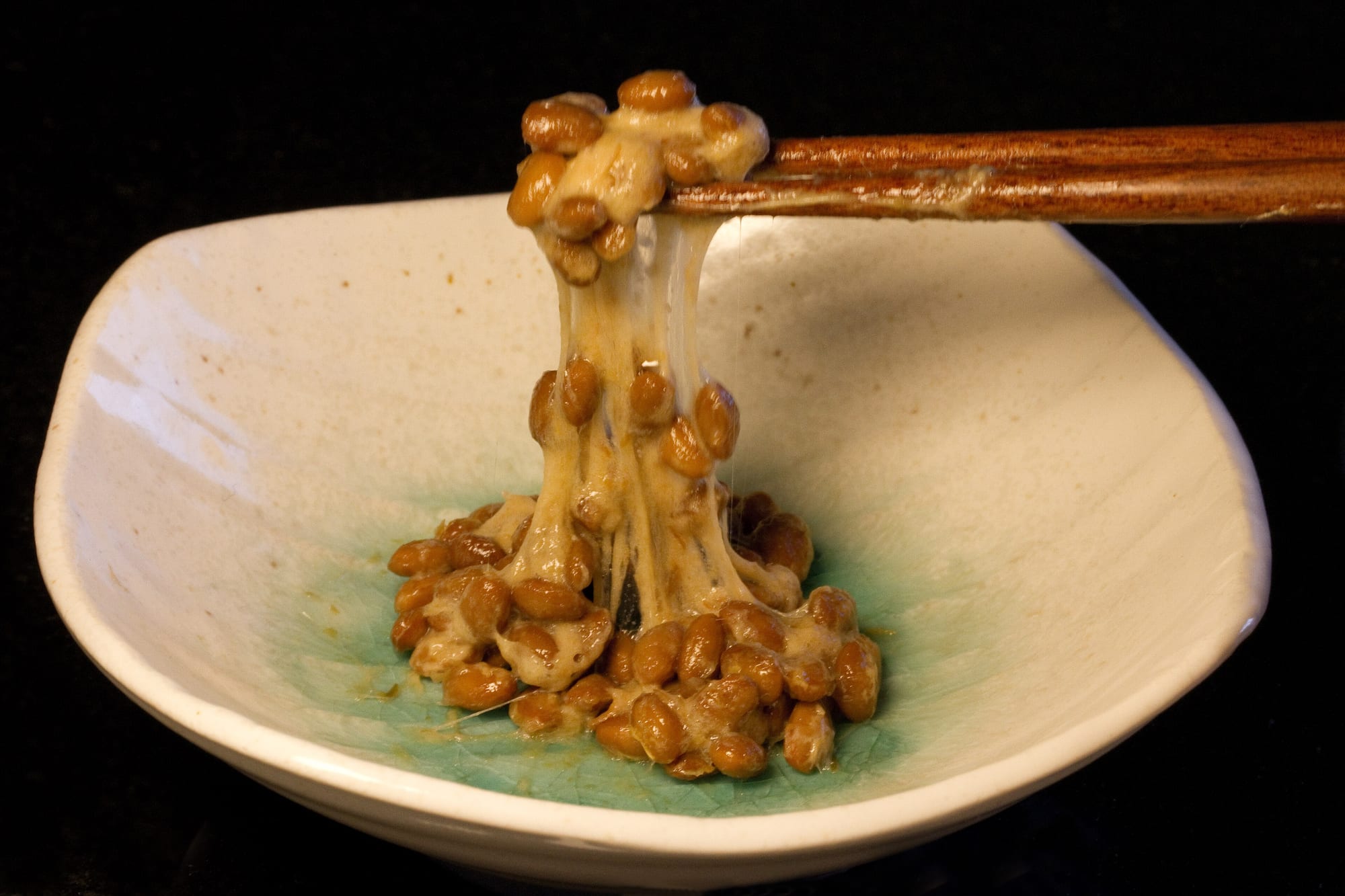
Stirred natto pulls into the sticky threads that Bacillus subtilis makes during fermentation. Photo: Kinchan1, CC BY 2.0, via Wikimedia Commons.
South and Southeast Asia
In southern India, idli and dosa are made from a batter of soaked, ground rice and black gram (urad dal) left overnight. Lactic acid bacteria and yeasts sour the batter and fill it with gas, so idli steam up light and spongy without any added leavening. The dish appears in Kannada writing as iddalige around 920 CE, though the early recipes do not clearly describe fermentation, and the food historian K. T. Achaya concluded that the fermented version probably took shape later.32
Indonesia's tempeh binds whole cooked soybeans into a firm cake with the white threads of a Rhizopus mold, grown in two days or so in a warm place. Its earliest known written mention is in the Serat Centhini, a Javanese manuscript compiled around 1815, which places tempeh in a story set in the early 1600s.33
Southeast Asia's signature seasoning is fish sauce: nam pla in Thailand, nước mắm in Vietnam, patis in the Philippines. Small fish, usually anchovies, are mixed with salt and left in tanks or jars for many months while the fish break down into a clear, salty, amber liquid.34 Very similar sauces were made around the Mediterranean two thousand years ago, a parallel that has fed a long argument about fermented fish from Rome to Southeast Asia.
Deep Dive: Fermented fish from Rome to Southeast Asia
The Roman fish sauce known as garum, and its relatives liquamen, muria and allec, were made in the same basic way as modern Southeast Asian fish sauce. Small fish, or the guts and blood of larger ones, were packed in vats with salt and left in the sun for weeks or months. As the flesh liquefied, the clear liquid was drawn off as the sauce. The paste left at the bottom, called allec, was sold too, as a cheaper food.935 Garum turned the waste from salting tuna and mackerel into a product, which helps explain why production centers like Baelo Claudia, near the Strait of Gibraltar, combined salting tanks and sauce vats in the same complex.9
The best physical evidence comes from Pompeii. A building known as the Garum Shop (I.12.8) still held sealed jars of fish in mid-fermentation when the eruption of 79 CE buried it. Analysis of the bones in one jar, published in 2019, found that the sauce was made from picarel, a small Mediterranean fish, put in whole, without being gutted or beheaded.10 Chemists also measured the free amino acids left in the residues. Even after nearly two thousand years of degradation, the dominant one was glutamate, the compound behind the savory taste called umami, followed by glycine and alanine. The pattern resembled that of modern Italian and Asian fish sauces closely enough that the authors concluded first-century Romans were enjoying condiments with the same basic taste.36 The classicist Robert Curtis, who studied the trade for decades, argued that because the Romans used the same fish, salt and method as modern Southeast Asian makers, the two products were probably very close in composition.37 Curtis also documented how branded the trade had become: a Pompeian maker named Aulus Umbricius Scaurus stamped painted labels on his jars naming the grade of sauce and the workshop it came from, and those jars turn up across the city and beyond.37
Whether fish sauce is a "fermentation" in the strict sense is a fair question. Much of the breakdown comes from the fish's own digestive enzymes, which go on dissolving the flesh after death, a process called autolysis. Salt concentrations of around a quarter of the mixture keep most spoilage bacteria out, but salt-tolerant bacteria do grow, and they shape the aroma.34 Under the ISAPP definition, which requires that microbes contribute, traditional fish sauce qualifies, though enzymes from the fish do much of the heavy work.1
How the two traditions are connected is unsettled. One view holds that the technique traveled east from the Mediterranean along trade routes. Another holds that East and Southeast Asian fish sauces grew independently out of older Chinese practices of fermenting fish with salt and grains or soybeans, which are recorded long before any Roman contact.35 The chemistry of salt and fish allows either story: anywhere people had abundant small fish, abundant salt and a warm climate, the same process would work. The food historian Sally Grainger has added a caution about names. In her reading of the Roman sources, "garum" proper was a darker sauce made from blood and innards, and modern writers use the word too loosely for every ancient fish sauce.35
After Rome fell, garum faded from European kitchens, though salted and fermented fish lived on in other forms, from the colatura di alici of the Amalfi coast to the fermented herring of Sweden. In Southeast Asia the sauce never left. Commercial producers in Thailand and Vietnam still ferment anchovies and salt in large tanks for a year or more, and the first liquid drawn off is sold as the premium grade.34 Modern chefs have revived the Roman idea in their own way: the Noma fermentation guide includes "garums" made by digesting meat, fish and even insects with koji enzymes and salt.15
Europe
Northern and eastern Europe built its winter diet on lactic acid fermentation. Sauerkraut is shredded cabbage salted and packed tight so that the cabbage's own lactic acid bacteria sour it over weeks.3 Cheese, whose earliest direct evidence comes from the pierced pots of Kujawy, became the main way of storing milk across the continent.8
Sourdough bread was the normal bread of Europe until commercial baker's yeast took over in the nineteenth and twentieth centuries. A sourdough starter is a stable community of lactic acid bacteria and wild yeasts kept alive by back-slopping. More than 90 species of lactic acid bacteria and 40 of yeasts have been found in sourdoughs worldwide. One bacterium, Fructilactobacillus sanfranciscensis, named for the San Francisco breads where it was first described, turns up in many traditional starters, often paired with the yeast Kazachstania humilis.38 Kvass, a low-alcohol drink of Russia, Ukraine and the Baltic states, is made by soaking dried rye bread in water and fermenting it with yeasts and lactic acid bacteria. It contains no hops, which separates it from beer.39
Africa
In Ethiopia and Eritrea, the daily bread is injera, a large, spongy, sour flatbread made from teff, a tiny native grain. Teff flour and water are mixed with ersho, a yellowish liquid saved from the last batch, and left for one to four days while lactic acid bacteria and yeasts sour and lighten the batter. It is then poured onto a hot clay griddle, where bubbles rising through it leave injera's characteristic holes.40
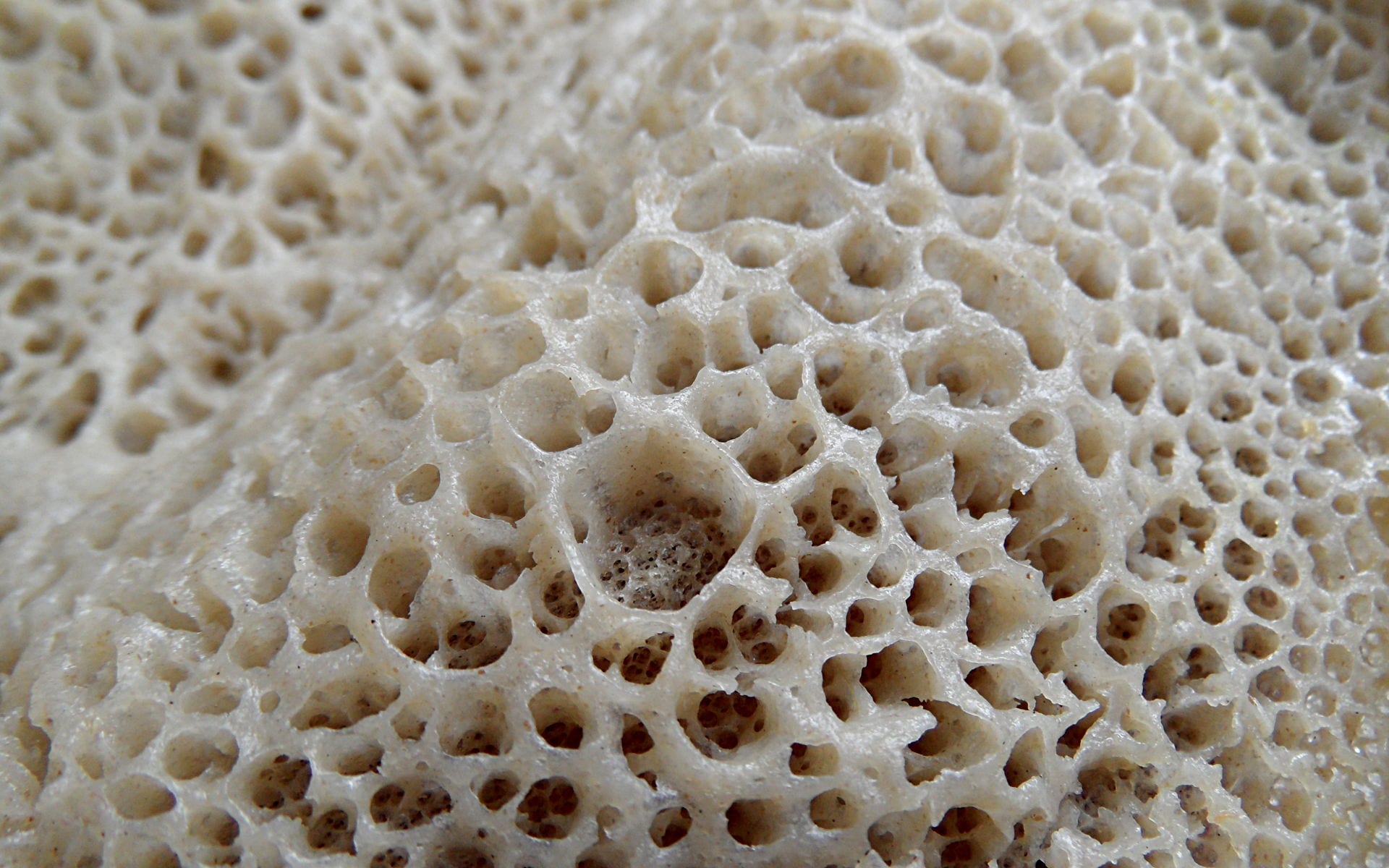
The holes in Somali canjeero, injera's close cousin, are gas bubbles left by the fermenting batter. Photo: Lukasz Nowak, CC BY-SA 4.0, via Wikimedia Commons.
Across West Africa, ogi (also called akamu or pap) is a sour porridge of fermented maize, sorghum or millet. The grain is soaked for a few days, wet-milled and sieved, and the starchy slurry left to sour. Lactobacillus plantarum is the main bacterium. Ogi is a staple breakfast and a common weaning food for babies.41
Dawadawa, also known as soumbala, iru or netetou, is the region's great seasoning. The seeds of the African locust bean tree, Parkia biglobosa, are boiled, dehulled and left in a warm covered heap for several days. Bacillus subtilis and related bacteria digest the seed protein into amino acids, including the savory glutamate, and ammonia, which raises the pH and gives the paste its pungent smell. Dried into balls or cakes, it serves much as soy sauce or fish sauce do elsewhere.4
The Americas
In the Andes, chicha names a family of fermented drinks, most famously chicha de jora from maize. The grain is sprouted to turn its starch into sugar, dried, ground, boiled into a wort and fermented with sediment from earlier batches. A 2020 study of chicha from fourteen Peruvian chicherías found lactic acid bacteria dominant, alongside yeasts.42 Chicha has deep roots. At Cerro Baúl in southern Peru, a hilltop outpost of the Wari state, archaeologists excavated a brewery that could make over a thousand liters at a time of chicha flavored with molle berries. It was ritually burned when the site was abandoned around 1000 CE, and shawl pins on the floor suggest that elite women ran it.43
In central Mexico, pulque is a milky, slightly sour drink made by fermenting aguamiel, the sweet sap of maguey agaves. It ferments in hours through a mix of yeasts and bacteria, including Zymomonas mobilis, one of the few bacteria that make alcohol in quantity. Chemical traces of that bacterium in ancient pots point to pulque drinking by around 200 to 550 CE, and the drink was central to Aztec ritual.44
Two of the world's most traded crops also depend on fermentation, though few people who drink coffee or eat chocolate know it. The step happens on the farm, long before roasting, and for chocolate it is what creates the flavor in the first place, which is why it is worth looking at how cacao and coffee depend on fermentation.
Deep Dive: How cacao and coffee depend on fermentation
A cacao pod holds thirty to fifty seeds packed in a white, sweet, tangy pulp. A raw seed, dried straight from the pod, tastes bitter and astringent and gives a poor, purple chocolate. What turns it into something worth roasting is a wild fermentation that farmers run in heaps under banana leaves or in wooden boxes for several days, usually about a week.45
The process is a relay among microbes. In the first day or two, yeasts dominate the airless, sugary pulp, converting its sugars to ethanol and breaking down pectin so the pulp liquefies and drains away. Lactic acid bacteria grow alongside them, using sugars and the pulp's citric acid to make lactic acid. As the pulp drains and farmers turn the mass to let air in, acetic acid bacteria take over, oxidizing the ethanol into acetic acid. That reaction gives off heat, and the heap can reach around 45 to 50°C.45 Acetic acid and heat seep into the bean and kill the seed embryo, so it cannot sprout. Inside the dead seed, cell walls break down and the bean's own enzymes go to work, splitting proteins into peptides and amino acids and releasing sugars. Those small molecules are the flavor precursors. When the beans are later roasted, they react with one another in the browning reactions that make chocolate taste like chocolate. Fermentation also lets some of the bitter polyphenols oxidize and leach out, softening the astringency.45 Beans that are under-fermented, or not fermented at all, cannot be rescued by roasting.
The relationship between people and fermented cacao is old. The earliest securely dated cacao use, from about 5,300 years ago, comes from Santa Ana-La Florida in the upper Amazon of southeastern Ecuador, where starch grains, the cacao marker theobromine and ancient DNA turned up in pottery of the Mayo-Chinchipe culture.46 In Mesoamerica, residues in pottery from Puerto Escondido, Honduras, show cacao drinks before 1000 BCE. The archaeologists argued from the shape of the earliest vessels that the first cacao drink may have been a mildly alcoholic beer made from the fermented pulp, with chocolate from the roasted seeds coming later, possibly as a by-product.47 Chemistry cannot fully settle this, because both pulp and seeds contain theobromine.47 If they are right, cacao began as a fermented drink, and the bean's fermentation is a holdover from that origin.
Coffee's dependence is subtler. Inside each coffee cherry the two seeds are covered in a sticky layer of mucilage. In the "washed" or wet method used for many high-grade Arabicas, the outer skin and pulp are removed by machine and the seeds left in tanks of water for roughly 24 to 48 hours. Yeasts and bacteria, including lactic acid bacteria, break down the pectin-rich mucilage so it can be washed off before the beans are dried to about 10 to 12 percent moisture.48 In the "natural" or dry method, whole cherries are dried in the sun with the fruit intact, and microbes work on the fruit for longer, which tends to produce heavier, fruitier coffees.48
For a long time the coffee industry treated this step mainly as a cleaning process. Research over the past two decades has found that microbial products from fermentation move into the seed and shape aroma and flavor after roasting, and that the microbial communities differ by method and region.48 Producers now experiment with selected starter cultures, controlled temperatures and sealed tanks in order to steer flavor, much as winemakers do. Cacao research has moved in the same direction: the 2020 review of cacao microbiology argues that starter cultures could make cacao fermentation, which is still almost entirely wild and variable, more consistent in quality.45
The Arctic
In the far north, where plants are scarce and the cold slows decay, fermentation works on meat and fat. Inuit communities in Canada and Greenland make igunaq by caching walrus or seal meat and blubber to age for months. Alaska Native peoples ferment fish heads, salmon eggs, beaver tail, seal flipper and whale in grass-lined pits in the ground.4950
Iceland's hákarl starts with the Greenland shark, whose flesh is toxic when fresh because it is loaded with trimethylamine N-oxide, a compound that helps sharks keep their tissues stable in deep, cold water. The meat is pressed and fermented for six weeks or more, then hung to dry for months. A 2023 study tracking an industrial batch found that trimethylamine N-oxide fell below detectable levels within five weeks while the pH climbed from about 6 to 9, giving the finished meat its notorious ammonia reek.51 An earlier study proposed that Pseudomonas bacteria may play a part in the detoxifying, though that remains a hypothesis.52
The Middle East
The Middle East and the Caucasus are among the oldest homes of fermented milk. Yogurt, strained yogurt (labneh) and kefir all come from this broad region, and the first evidence of dairying, milk fats in pottery from northwestern Anatolia, dates to about 8,000 years ago.8 A distinctive regional ferment is kishk (also keshk, kushuk), made by mixing yogurt or buttermilk with bulgur wheat and salt, letting it ferment for days, then drying it into a powder or balls that keep through the year. Rehydrated, it becomes a sour, savory porridge or soup base in Lebanon, Syria, Jordan, Iraq and Egypt, where it goes by local names.53 Kishk is a good example of a ferment that does two jobs at once: it preserves summer milk and wheat as a light, dry food, and it builds flavor that people came to prefer for its own sake.
What the health evidence says
Part 3 of 6
This part weighs the health claims made for fermented foods: the Stanford trial, what happens to live microbes in the gut, then dairy, kimchi, kefir, kombucha, sourdough, natto and mood, and who should be careful. It ends with a ladder that ranks each claim by the strength of its evidence.
Fermented foods arrive wrapped in big promises: better digestion, calmer moods, a stronger immune system, a longer life. Some of those promises rest on solid ground, some on a single small study, and some on nothing more than lab dishes and mice. The honest picture is patchy, and it helps to know what kind of study sits behind each claim before deciding how much weight to give it.
Three kinds of study come up again and again below. A randomized trial assigns people by chance to eat one thing or another, then compares what happens; it is the best tool for showing cause and effect, but food trials tend to be small and short. A cohort study follows a large group of people for years, records what they eat and who gets sick, and looks for patterns; it can spot links across hundreds of thousands of people but cannot rule out that yogurt eaters, say, also exercise more or smoke less. A meta-analysis pools the results of many earlier studies into one estimate, and it is only as good as the studies it pools. A related kind of study, the cross-sectional survey, takes a single snapshot and is weaker still, because it cannot even say which came first.
| Study type | What it does | What it can show | Its limit |
|---|---|---|---|
| Randomized trial | Assigns people by chance to eat one thing or another | Cause and effect | Food trials tend to be small and short |
| Cohort study | Follows a large group for years, recording diet and illness | Links across hundreds of thousands of people | Cannot rule out other differences between eaters |
| Meta-analysis | Pools many earlier studies | One combined estimate | Only as good as the studies it pools |
| Cross-sectional survey | Takes a single snapshot | Who eats what, and who is ill, at one moment | Cannot say which came first |
The Stanford trial
The study most often cited for fermented foods in general came out of Stanford University in 2021. Hannah Wastyk, Justin Sonnenburg, Christopher Gardner and colleagues randomly assigned generally healthy adults to one of two diets for ten weeks: one high in fiber, the other high in fermented foods such as yogurt, kefir, kimchi, sauerkraut, kombucha and vegetable brine drinks.54 The fermented-food group raised its intake from an average of 0.4 servings a day to 6.3, and over the study its gut microbiome grew steadily more diverse while 19 of 93 measured inflammatory proteins in the blood went down, among them interleukin-6 (IL-6), a signaling protein tied to chronic low-grade inflammation.54 The fiber group showed no rise in diversity. The result made headlines, and it deserves a closer look at what the trial did and did not show.
Deep Dive: Inside the Stanford fermented-food trial
The trial, published in Cell in July 2021, was designed as a microbiome and immune study rather than a weight-loss or disease study. Of 381 people screened, 39 were assigned to a diet. One dropped out and two were excluded after taking antibiotics, leaving exactly 18 people in each arm.54 They were on average 51 years old, mostly women (73 percent), mostly white (81 percent) and highly educated (89 percent held a college degree or more).54 That is a narrow slice of humanity, and the authors say so.
The protocol ran 17 weeks in all. Participants spent three weeks on their usual diet so the researchers could take baseline samples, then four weeks ramping up their assigned foods, six weeks holding at a high level, and four final weeks in which they could eat as they liked.54 A dietitian reviewed food logs and nudged people toward their targets. The fiber group roughly doubled its fiber from about 21.5 grams to 45 grams a day, and neither group drifted into the other's foods.54 Each person built the diet differently. Some leaned on yogurt, others on kombucha or brine drinks, so "fermented foods" here means a mix rather than any single product.54
The headline numbers come with an important footnote of their own. The trial's primary outcome, the single measure it was designed and powered to test, was a "cytokine response score" that captures how immune cells react when stimulated. Cytokines are the small proteins immune cells use to signal one another, and IL-6 is one of them. That primary score did not change significantly in either arm.54 The drop in 19 inflammatory proteins and the rise in microbiome diversity were secondary findings. Secondary findings are not worthless, but they are the kind of result a trial was not built to confirm, and with dozens of measurements taken, some will move by chance. The researchers used statistical corrections for multiple comparisons, which helps, but the honest reading is "promising signal," not "proven effect."
Standard health markers did not budge either. Blood glucose, insulin, triglycerides, LDL and HDL cholesterol, blood pressure and waist size showed no differences over the study.54 In healthy people with normal numbers there may have been little room to move, but it means the trial offers no direct evidence about weight, blood sugar or heart risk.
One of the more interesting findings concerns where the new diversity came from. A natural guess is that people simply swallowed new species with their kimchi and kefir. The researchers sequenced the fermented foods themselves and compared those microbes with the new ones turning up in stool. Only a small share overlapped, peaking at about 5.4 percent early in the study, and later in the study the overlap was no greater than in the fiber arm.54 The authors concluded that the diversity rise was mostly not the food microbes moving in. Something about the diet seems to have let other, previously rare or newly acquired microbes gain a footing, though the study cannot say what.
The fiber arm told its own story. Fiber did not raise diversity, but it increased the microbial genes for breaking down complex carbohydrates, and people's immune responses split into three distinct paths that tracked how diverse their microbiome was at the start.54 One reading is that a depleted microbiome may lack the species needed to use extra fiber well, and that fermented foods could help rebuild that capacity. That idea is plausible and untested.
The authors list their own limits plainly: a small sample that limits statistical power and generalizability, no control group eating an unchanged diet (the two arms were compared to each other and to themselves over time), an intervention only ten weeks long, healthy participants only, and no way to show that the microbiome changes caused the immune changes.54 Nobody knows how long the effects last after people stop. The study is a well-run, deeply measured pilot. It has become the most quoted piece of evidence that fermented foods do something measurable to the human immune system, and it has not yet been reproduced at scale.
Do the microbes survive, and does it matter?
The International Scientific Association for Probiotics and Prebiotics (ISAPP), a scientific body that sets working definitions for the field, published a consensus statement in 2021 defining fermented foods as "foods made through desired microbial growth and enzymatic conversions of food components."55 The definition makes a point that is easy to miss: many fermented foods contain no live microbes when eaten. Sourdough bread is baked, most beer and wine are filtered, and canned sauerkraut, soy sauce and vinegar are heat-treated.55 Yogurt, kefir, most cheeses, miso, natto, tempeh, unheated fermented vegetables and most kombuchas do carry living microbes.55
For the live ones, the next question is whether the microbes survive the trip through the gut, and what they do when they get there.
Deep Dive: What happens to yogurt's bacteria in your gut
Yogurt is made by two bacteria, Lactobacillus delbrueckii subspecies bulgaricus and Streptococcus thermophilus. Neither is a normal resident of the human intestine. For decades researchers argued about whether they reach the colon alive at all, with some studies finding them in stool and others finding nothing.56
A 2006 Italian study gave a clear answer for one commercial yogurt. Twenty healthy volunteers avoided yogurt and fresh dairy for two weeks, then ate 125 grams of plain yogurt twice a day for a week. That daily dose delivered roughly 6 billion live L. bulgaricus cells and 50 billion live S. thermophilus cells.56 The researchers grew bacteria from stool samples on days 2 and 7 and confirmed their identity with strain-specific DNA tests. Live L. bulgaricus turned up in 13 of the 20 volunteers, at concentrations of roughly a thousand to half a million cells per gram of stool. Live S. thermophilus, the more numerous of the two in the pot, turned up in only one person.56 So some yogurt bacteria do survive stomach acid and bile, but the numbers that come out the other end are a tiny fraction of what went in, and survival varies by species and by person.
Surviving is not the same as settling in. The term for microbes that pass through without establishing a lasting population is "transient." A 2014 study in Nature by Lawrence David and colleagues put volunteers on all-animal or all-plant diets for a few days and found that microbes from the food itself, including bacteria, fungi and even viruses from cheese and cured meats, showed up in the gut, but only for as long as people kept eating them.57 A 2015 review of lactobacilli and bifidobacteria eaten in foods and supplements described them as forming a "transient microbiome" that may temporarily supplement the resident community.58 The ISAPP panel estimated that, depending on diet, food-borne lactic acid bacteria might make up between 0.1 and 1 percent of the bacteria in the large intestine at a given moment, based on as many as 100 billion cells in a single serving.55
Even targeted probiotic supplements tend not to stay. In a 2018 study in Cell, Niv Zmora, Eran Elinav and colleagues gave healthy volunteers an 11-strain probiotic and then took samples directly from the gut lining by endoscopy, rather than relying on stool. The probiotic bacteria survived passage, but some people's guts resisted them and others allowed partial colonization, in patterns that varied by person, by gut region and by strain. Stool samples could not tell the two groups apart, and the effect on the gut community was transient.59
Does a microbe that passes through in a day or two matter? Possibly, in a few ways. Bacteria can do useful chemistry while in transit. The clearest example is lactose. Yogurt cultures carry the enzyme lactase, which breaks down milk sugar, and when the bacteria die in the small intestine they release it. The European Food Safety Authority reviewed the human studies in 2010, found that 13 of 14 showed better lactose digestion in people who poorly digest it, and approved the claim that live yogurt cultures improve lactose digestion in such people.60 This is one of the best-established benefits of any fermented food, and it works because of live bacteria doing a specific job on the way through.
Other proposed effects of transient microbes include nudging the immune cells that line the gut, producing short-chain fatty acids and other compounds, and briefly competing with less friendly microbes.5558 These are plausible mechanisms with support in animal and lab studies. In people, they remain mostly unmeasured, and they will differ from food to food and strain to strain. The upshot is that eating yogurt does not "reseed" the gut in any lasting sense. If it helps, it helps while it is being eaten, which is an argument for regular habits rather than occasional doses.
That distinction is why scientists are careful with the word "probiotic." In the definition first set by the United Nations Food and Agriculture Organization and the World Health Organization, and reaffirmed by ISAPP in 2014, a probiotic is a live microorganism that, given in adequate amounts, confers a health benefit on the host.61 The benefit has to be shown, and it is tied to defined strains. ISAPP's 2021 statement says a fermented food should be called a source of probiotics only if at least one of its strains meets that bar; otherwise "contains live and active cultures" is the accurate label, and a pasteurized product is simply a "food made by fermentation."55 A jar of farmers-market sauerkraut is full of live bacteria of unknown identity and unknown effect. That makes it a fermented food, and not, strictly speaking, a probiotic.
Dead microbes may still count. In 2021 ISAPP also defined a postbiotic as a "preparation of inanimate microorganisms and/or their components that confers a health benefit on the host."62 The idea is that cell walls, fragments and metabolites can act on the body even when nothing is alive. This category is new and its evidence base is still being assembled, but it offers one possible reason why heat-treated fermented foods might not be inert.
Fermentation also changes the food itself. Microbes break down proteins into short chains called bioactive peptides, some of which act on blood pressure or immunity in lab tests; they break down antinutrients such as phytate, which binds minerals; and some make vitamins.5563 The vitamin story is uneven. Natto, soybeans fermented with Bacillus subtilis, is by far the richest food source of vitamin K2 in the form called menaquinone-7: a Finnish analysis of 17 fermented foods found about 902 micrograms per 100 grams in natto, against trace amounts in most others.64 Vitamin B12 is shakier. Fermented plant foods such as tempeh sometimes contain it, but the amount depends on which bacteria happened to be present, and a review of plant B12 sources did not count them as reliable for vegetarians.65
- 2001 Probiotic defined A UN FAO/WHO expert group defines probiotics as live microbes that confer a health benefit in adequate amounts.
- 2010 Lactose claim EFSA approves the claim that live yogurt cultures improve lactose digestion.
- 2021 Fermented foods and postbiotics ISAPP separates fermented foods from probiotics and defines postbiotics.
- 2024 Yogurt and diabetes The US FDA allows a qualified claim linking yogurt with lower type 2 diabetes risk.
Fermented dairy: yogurt, diabetes and cheese
Yogurt has the largest body of evidence of any fermented food, much of it from cohort studies. The best-known analysis came from Harvard researchers in 2014, who followed nearly 200,000 American health professionals and nurses across three cohorts for up to three decades. Total dairy intake had no link with type 2 diabetes, but yogurt did: each additional daily serving went with about 17 percent lower risk (a hazard ratio of 0.83). Pooling 14 cohort studies with almost 460,000 people gave a similar figure of about 18 percent lower risk per daily serving.66 Cohort data like these cannot rule out that yogurt eaters differ in other ways, and the researchers adjusted for body weight, exercise, smoking and diet as best they could.
That evidence underpins the first qualified health claim the US Food and Drug Administration has allowed for yogurt. In March 2024, responding to a 2018 petition from Danone North America, the FDA said it would not object to labels stating that "eating yogurt regularly, at least 2 cups (3 servings) per week, may reduce the risk of type 2 diabetes," provided the label adds that "FDA has concluded that there is limited information supporting this claim," or a similar line saying the evidence is limited.67 A qualified claim is a step below a full health claim: it exists for cases where evidence is suggestive but not conclusive, and the FDA made the hedge mandatory. The agency also framed the link as one with yogurt as a whole food, not with any single nutrient or bacterium in it.67
Cheese is a stranger case. It is high in saturated fat and salt, which on paper should raise heart risk, yet cohort studies mostly do not find that. A 2017 meta-analysis of 15 prospective cohort studies found that people who ate the most cheese had about 10 percent lower risk of cardiovascular disease, 14 percent lower risk of coronary heart disease and 10 percent lower risk of stroke than those who ate the least, with the lowest risk at around 40 grams a day and no further gain beyond.68 Three of its seven authors worked for Yili, a large Chinese dairy company, which is common in this field and worth knowing.68 The usual explanations for the gap between theory and data, such as the "food matrix" of cheese changing how its fat is absorbed or fermentation byproducts acting on blood vessels, are hypotheses. The safe reading is that moderate cheese eating does not appear harmful to the heart in these populations, not that cheese protects it.
Kimchi
Kimchi research comes almost entirely from Korea, which is both its strength and its limit: the people studied actually eat kimchi every day, but the findings may not carry over to other diets.
The best summary to date is a systematic review and meta-analysis by Seoeun Ahn and colleagues, published online in late 2024 in Nutrition Reviews. It found only five intervention trials, with 205 participants in total, plus four cohort studies with about 42,000 people.69 Pooling the trials, fermented kimchi lowered fasting blood glucose by about 1.9 mg/dL, a real but very small change. After the authors dropped trials that pulled the results in different directions, kimchi was also linked with lower triglycerides (about 29 mg/dL) and lower blood pressure (about 3.5 points systolic and 2.7 diastolic).69 Dropping inconsistent trials to get a cleaner result is a recognized technique, but it makes the pooled numbers less trustworthy, and the authors themselves call for caution given how few studies exist.69 One of those trials, from 2011, is typical of the evidence: 22 overweight adults ate either fresh or fermented kimchi for four weeks each, and the fermented version produced larger drops in blood pressure, body fat, fasting glucose and cholesterol.70 It is a careful design, but 22 people over four weeks cannot settle much.
The blood-pressure finding is surprising, because kimchi is salty and salt raises blood pressure. The review's authors suggest that other components of kimchi might offset the sodium, which is a guess rather than a tested result. Salt and its other risks are covered elsewhere on this page.
The largest observational study is a 2024 analysis in BMJ Open of 115,726 Korean adults aged 40 to 69 from the Health Examinees study. Men who ate one to three servings of kimchi a day had roughly 11 to 13 percent lower odds of obesity than men who ate less than one; cabbage kimchi showed a similar link in men, and radish kimchi (kkakdugi) went with less abdominal obesity in both sexes.71 Three caveats matter. The study is cross-sectional, so it cannot say whether kimchi came before leanness. The relationship was J-shaped, meaning the benefit faded and obesity became more common again at the highest intakes, above about five servings a day, though that upturn was not statistically significant.71 And the study was funded by the World Institute of Kimchi, a government research institute, which employed two of its four authors.71
Kefir, kombucha, sourdough and natto
Kefir, a fizzy fermented milk made with a mixed culture of bacteria and yeasts, has a modest trial record. A 2019 review of fermented foods and gut health found kefir to be the most-tested of the foods it covered, with at least one randomized trial suggesting benefit for lactose malabsorption and as an add-on in treating Helicobacter pylori, the stomach bacterium that causes ulcers.63 For heart markers, a 2025 meta-analysis of seven randomized trials with 385 adults found no significant effect of kefir on blood pressure or on C-reactive protein, a blood marker of inflammation, though inflammation fell in the subgroup of trials lasting eight weeks or more.72
Kombucha, sweetened tea fermented with bacteria and yeast, is the clearest case of popularity outrunning evidence. A 2019 systematic review searched three medical databases and the main trial registries, screened 310 articles, and found exactly one study reporting health results in human beings.73
Sourdough bread is fermented and then baked, so it contains no live microbes, but fermentation changes the dough. Wheat and rye are rich in fructans, a type of FODMAP: the fermentable short-chain carbohydrates that can trigger bloating and pain in people with irritable bowel syndrome (IBS). Sourdough microbes can break fructans down, and selected cultures can cut them sharply while leaving slower-fermenting fiber in place.75 In a Finnish randomized crossover trial, 87 people with IBS ate regular rye bread for four weeks and a specially made low-FODMAP rye sourdough for four weeks. On the low-FODMAP bread they had less gas, pain, cramping and rumbling, and their breath showed less fermentation, though their overall symptom severity score and quality of life did not improve.76 The benefit depends on the process. Many loaves sold as "sourdough" are made quickly or with added yeast, and a short fermentation may leave most fructans intact.75
Natto carries the most specific mechanism. Vitamin K2 activates proteins that bind calcium in bone and that help keep calcium out of artery walls.77 Japanese cohort data are consistent with a bone benefit. In the Japanese Population-based Osteoporosis Study, postmenopausal women who ate more natto lost less bone at the hip over three years, and no such link appeared for tofu or other soy foods, which lack K2.78 A later analysis of 1,417 women from the same study, followed for a median of 15 years, found that eating seven or more 40-gram packs a week went with about half the risk of osteoporotic fracture, compared with less than one pack.79 A three-year randomized trial of 180 micrograms a day of menaquinone-7 supplements in 244 healthy postmenopausal Dutch women slowed age-related loss of bone density and strength, which supports the vitamin as the active ingredient.80 For arteries, the evidence is thinner: in the Rotterdam Study of 4,807 Dutch adults, people with the highest dietary K2 intake had about 57 percent lower risk of dying of coronary heart disease and less severe calcification of the aorta, while vitamin K1 from leafy greens showed no such link.77 That is one cohort, in a population whose K2 came mainly from cheese rather than natto.
Gut, brain and mood
The idea that gut microbes influence mood, often called the gut–brain axis, rests mostly on animal research. Human studies of fermented foods and the brain are few and small.
The one most often cited was published in 2013 by Kirsten Tillisch and Emeran Mayer at UCLA. Thirty-six healthy women were randomly assigned to eat a fermented milk product containing four bacterial strains twice a day for four weeks, to eat a non-fermented milk product, or to eat nothing extra. Brain scans by functional MRI before and after showed that the fermented-milk group had reduced activity in a network of brain regions involved in emotion and body sensation while viewing images of emotional faces.81 The study was small, measured brain activity rather than how anyone felt, and was co-authored by researchers from Danone Research, which makes the product used.81 It showed that a fermented food can register in brain imaging. Whether that changes mood remains unknown.
The APC Microbiome Ireland group at University College Cork has tested whole diets. In a 2023 trial, 45 adults were randomly assigned for four weeks to a "psychobiotic" diet rich in fiber-rich prebiotic foods and two to three daily servings of fermented foods, or to general healthy-eating advice. Perceived stress fell 32 percent on the special diet and 17 percent in the control group; the difference between groups was not statistically significant, and biological stress markers did not change.82 Those who stuck to the diet most closely had the largest drops in stress. The fair summary is that diet quality may help stress, fermented foods are one candidate ingredient, and nobody has yet shown a mood effect specific to them.
Who should be careful
For most healthy people, the ISAPP panel judged properly made fermented foods to be safe and rarely linked to food poisoning.55 A few groups have particular reasons for caution.
- Histamine intolerance. Some people break down dietary histamine poorly, usually through low activity of the gut enzyme diamine oxidase, and report headaches, flushing or digestive upset after histamine-rich foods. Aged cheeses, fermented fish and sausages, sauerkraut and wine are among the higher sources. The condition is real but still poorly defined, with no standard diagnostic test.83
- People taking MAOI antidepressants. Monoamine oxidase inhibitors block the breakdown of tyramine, a compound formed in aged and fermented foods, and large tyramine loads can spike blood pressure. Aged cheese was historically the main danger. A 2018 review found that modern starter cultures and hygiene have lowered tyramine levels in most foods, so that most cheeses are safe in normal portions, but soy sauces, fermented sausages and some aged or tap beers can still be high, and anyone on these drugs should follow a prescriber's list.84
- Severely immunocompromised people. Lactic acid bacteria very rarely cause bloodstream infections, almost always in people who are critically ill, have central lines, or have badly weakened immune systems.85 Most clinical guidance for such patients concerns concentrated probiotic supplements, but unpasteurized fermented foods carry their own food-safety considerations and are worth discussing with a care team.
The evidence ladder
Putting the pieces together gives a ladder. Few rungs are high.
| Claim | Main evidence | Strength |
|---|---|---|
| Live yogurt cultures help people who poorly digest lactose | Over a dozen trials, regulatory approval in the EU60 | Strong |
| Natto and K2 support bone density in older women | Cohort data plus a 3-year supplement trial787980 | Moderate |
| Yogurt goes with lower type 2 diabetes risk | Large cohorts, meta-analysis, FDA "limited evidence" claim6766 | Moderate (observational) |
| Low-FODMAP sourdough eases some IBS symptoms | One good crossover trial, process-dependent7675 | Moderate for specific breads |
| Cheese does not raise heart risk at moderate intake | Meta-analysis of cohorts68 | Moderate (observational) |
| Fermented foods raise microbiome diversity and lower inflammation | One 36-person trial, secondary outcomes54 | Weak, promising |
| Kimchi improves blood sugar, lipids, blood pressure | Five small trials, Korea only69 | Weak |
| Kimchi helps prevent obesity | Cross-sectional data, industry-funded71 | Weak |
| K2 protects arteries | One cohort plus mechanism77 | Weak |
| Fermented foods improve mood | Small imaging and diet trials8182 | Weak |
| Kefir lowers blood pressure | Meta-analysis found no effect72 | Not supported |
| Kombucha has health benefits | One pilot trial in 12 people7374 | Almost no data |
| Eating fermented foods permanently reseeds the gut | Studies show microbes are transient565957 | Not supported |
The overall picture is encouraging without being settled. Fermented foods are old, safe for most people, and associated with several good outcomes, and a handful of specific benefits are well demonstrated. The broader idea that they tune the microbiome and calm inflammation has one strong-looking small trial behind it and a great deal of work still to do.
The stomach cancer question
Part 4 of 6
A viral clip in October 2026 claimed that fermented foods cause stomach cancer. This part sets out what the studies found, what the cancer agencies concluded, how salt and H. pylori drive the disease, and how to read the risk numbers.
In October 2026 a short clip went around social media. A gastroenterologist, stopped in the street and asked for the one thing everyone should know about the gut, answers that fermented foods cause gastric cancer. The clip appears to have been filmed somewhere in Asia. The speaker's name, the city and the original platform could not be traced for this page, and none of the coverage found so far identifies them. On October 18, 2026, Tim Spector answered it in a short audio post on his Substack, "Do fermented foods cause stomach cancer?" His reading of the evidence: the signal follows salt, heavily salted preserved foods eaten in large amounts, and infection with the stomach bacterium Helicobacter pylori. Fermentation as such is, in his words, a "red herring."86 An MDLinx feature had already framed the same worry as a "kimchi cancer epidemic," tracing it through salt and H. pylori rather than through the microbes in the jar.87
Both halves of the argument have something to them. There really is a body of studies linking certain East Asian pickled and fermented foods to stomach cancer, and two of the world's main cancer-evaluation bodies take that link seriously. There is also a great deal of evidence that the link runs through salt and an infection, and that it says little about yogurt, kefir, sauerkraut eaten as a side, or most of what people in Europe and North America mean by "fermented foods." This section goes through the evidence in the order a careful reader would want it: what the studies found, what the official bodies concluded, what is known about the mechanism, and how to read numbers like "50% higher risk."
What the studies found
The most cited single piece of evidence is a 2012 meta-analysis, a study that pools the results of many earlier studies, by Jian-Song Ren, Farin Kamangar, David Forman and Farhad Islami, published in Cancer Epidemiology, Biomarkers & Prevention. They searched English and Chinese databases and found 60 studies of pickled vegetables or pickled foods and gastric cancer. Pooled together, people in the highest intake groups had about 1.5 times the odds of stomach cancer of people in the lowest (odds ratio 1.52). The link was stronger in Korean and Chinese studies (about 1.9) than in Japanese ones (1.16), and in studies from elsewhere it was not statistically clear.93 That paper is where the "50% higher risk" figure comes from, and it rewards a slower reading of what was actually pooled.
Deep Dive: Reading the 2012 pickled-food meta-analysis
A meta-analysis is only as good as the studies it gathers, and the 2012 paper by Ren and colleagues is unusually open about what it gathered. Of its 60 studies, 50 were case-control studies and only 10 were prospective cohorts. In 11 studies the comparison was between people who ate pickled foods and people who did not; in the other 49 it was between the highest and lowest reported intake groups, whatever those happened to be in a given population. The pooled odds ratio was 1.52 overall, 1.56 in the case-control studies, and 1.32 in the cohort studies.93
That gap between study designs matters. In a case-control study, researchers recruit people who already have stomach cancer and a comparison group who do not, then ask both groups what they used to eat. In a cohort study, researchers record diets first and wait to see who gets sick. Cohort studies are slower and more expensive but far less vulnerable to memory bias, because nobody knows yet who will become a "case." When an association shrinks from about 1.56 in case-control studies to about 1.32 in cohort studies, a reasonable inference is that some of the larger number came from how the data were collected. A smaller, still positive association remains.
The geographic split points the same way. The odds ratio was 1.89 in Korean studies, 1.86 in Chinese studies, 1.16 in Japanese studies and 1.14 (not statistically significant) in studies from other countries.93 The foods grouped under "pickled" vary hugely across those places. In parts of China studied in the 1980s and 1990s, pickled vegetables could be heavily salted, stored for months without refrigeration, and sometimes moldy. Japanese tsukemono and modern Korean kimchi are different products again. The authors also reported "high heterogeneity" in every analysis, a technical way of saying the studies disagreed with each other more than chance alone would explain. When results scatter that widely, a single pooled number describes an average across unlike things.
Then there is what the studies did not measure. Very few of the underlying papers could adjust properly for salt intake, for H. pylori infection, or for the poverty and lack of refrigeration that go with eating stored, preserved food year-round. The World Cancer Research Fund panel made this point directly when it reviewed the same literature: preserved foods may be eaten more by people without refrigeration, so pickled vegetables may be associated with low socioeconomic status and a high prevalence of H. pylori, "leading to the possibility of association by confounding factors."94 A 2009 meta-analysis by Islami, Ren and colleagues on pickled vegetables and esophageal cancer, which found an even larger pooled odds ratio of about 2.1, discussed the same limits: mostly case-control designs, high heterogeneity, and possible confounding by socioeconomic factors.95
Later cohort work has narrowed the estimate further. In 2020 a Korean team analyzed two large prospective cohorts, KoGES (about 196,000 adults) and the Korean Multi-center Cancer Cohort. Neither cohort showed a clear association between pickled vegetable intake and gastric cancer; the relative risk per 40 grams a day was 0.95 in one and 0.99 in the other. When they pooled their own results with earlier cohort studies, the dose-response estimate was a 15% higher risk for each extra 40 grams a day of pickled vegetables (relative risk 1.15, 95% confidence interval 1.07 to 1.23).96 That is a long way from "fermented foods cause gastric cancer," and it still concerns salted pickles.
None of this means the 2012 paper was badly done. Its authors concluded, in measured language, that their results "suggest a potential 50% higher risk" and called for better prospective studies.93 The fair summary is that heavy consumption of traditionally salted Asian pickles is linked with somewhat higher stomach cancer risk in high-incidence populations, that the best-designed studies give the smallest numbers, and that the data cannot by themselves separate the pickle from the salt in it, the infection that often accompanies poverty, or the fresh fruit and vegetables that heavy pickle eaters often went without.
Studies of specific Korean foods fit the same pattern. A hospital-based case-control study from Korea, published in 2005 with 421 gastric cancer patients and 632 matched controls, found that people in the highest intake group for kimchi had odds of 1.57 and for soybean pastes 1.62, compared with the lowest. Nonfermented allium vegetables and nonfermented seafood went with lower risk.97 The study did not measure salt or H. pylori. Its authors noted that Koreans had some of the highest urinary sodium levels in the world and that both kimchi and soybean pastes are salty, so salt or chemicals formed during fermentation might explain the finding; they could not test either.97
Fermented soy tells a similar story. A 2000 meta-analysis by Anna Wu, Dan Yang and Malcolm Pike pooled 14 studies of fermented soy foods (miso, soybean pastes, soy sauce) and found a pooled risk estimate of 1.26 for high intake. Ten studies of nonfermented soy (tofu, soy milk) gave 0.72, a lower risk. The authors then showed that fermented soy intake tracked salt intake while nonfermented soy tracked fruit and vegetable intake, and that almost none of the studies had adjusted for either. Their conclusion was that soy's role "cannot be determined with confidence" until those confounders are dealt with.98 A 2011 meta-analysis limited to Japan and Korea reached nearly the same numbers: 1.22 for high fermented soy intake across 20 studies and 0.64 for nonfermented soy across 17.99
The strongest test of miso specifically comes from Japan's JPHC study, which followed about 39,000 men and women aged 40 to 59 from 1990 to 2001. In men, eating miso soup daily went with higher gastric cancer risk in a basic model. Once the researchers adjusted for total salt intake, the association for miso soup shrank and lost statistical significance. Heavily salted foods such as salted fish roe and salted fish preserves kept a strong link in both sexes, even after accounting for total salt. In women, miso soup showed no clear association at any level.100 A 2024 meta-analysis of 52 studies of soy and total cancer risk found no association for fermented soy products as a group (relative risk 1.18, confidence interval 0.95 to 1.47), soy paste (1.00) or miso soup (0.99), while tofu and soy milk went with lower risk.101
| Study | Design | Food | Main result |
|---|---|---|---|
| Ren et al. 201293 | Meta-analysis, 60 studies | Pickled vegetables/foods | OR 1.52 overall; 1.32 in cohort studies; 1.16 in Japan |
| Nan et al. 200597 | Korean case-control, 421 cases | Kimchi; soybean paste | OR 1.57; 1.62 (salt and H. pylori not measured) |
| Wu et al. 200098 | Meta-analysis | Fermented vs nonfermented soy | 1.26 vs 0.72; salt and produce not adjusted for |
| Tsugane et al. 2004100 | Japanese cohort (JPHC), 39,065 people | Miso soup; salted fish roe | Miso link in men fades after salt adjustment; salted roe stays |
| Yoo et al. 202096 | Two Korean cohorts + meta-analysis | Pickled vegetables | No clear link in either cohort; pooled RR 1.15 per 40 g/day |
| Wang et al. 2024101 | Meta-analysis, 52 studies | Fermented soy, miso | No association with total cancer |
What the official bodies say
In 1993 the International Agency for Research on Cancer (IARC), the World Health Organization's cancer-classification body, evaluated "pickled vegetables (traditional in Asia)" in Monograph 56. It found "limited evidence" in humans and "inadequate evidence" in animals and placed them in Group 2B, "possibly carcinogenic to humans." The agency described the products as local vegetables fermented, with or without salting, in parts of China, Japan and Korea. It noted that extracts from northern China and Japan were mutagenic to bacteria and contained low levels of N-nitroso compounds.91 Interestingly, the human evidence the agency reviewed was stronger for cancer of the esophagus than for the stomach: for the stomach, several Japanese and Chinese studies were negative and the results were described as mixed.91
Group 2B needs careful reading. IARC classifies the strength of evidence that something can cause cancer under some circumstances, which it calls a hazard. It explicitly does not measure risk, the likelihood that cancer will occur at a given level of exposure. Agents in the same group "may be very different" in how much cancer they actually cause.102 A 2B listing means the evidence is suggestive but incomplete. In the same 1993 volume, the agency placed "Chinese-style salted fish" in Group 1, the highest category, on the strength of consistent dose-response links with nasopharyngeal cancer (a cancer of the upper throat behind the nose), especially when eaten in childhood.103 Salted fish is a salt-cured product that may also ferment, and it contained high levels of the nitrosamine N-nitrosodimethylamine in some samples.103
The World Cancer Research Fund and American Institute for Cancer Research (WCRF/AICR) reviewed the stomach cancer literature in their Continuous Update Project report (2016, revised 2018). Their panel judged that "greater consumption of foods preserved by salting is probably a cause of stomach cancer." "Probable" is the second-strongest grade in their system, below "convincing." The evidence was consistent for salt-preserved vegetables, salt-preserved fish and salt-preserved foods generally, with a statistically significant dose-response for salt-preserved vegetables.94 The panel's category is foods preserved by salting. It does not include fermented foods that are low in salt, and the report notes that some salt-preserved vegetables "may undergo fermentation during preservation," treating fermentation as incidental to the salting.94
Salt, H. pylori and how stomach cancer starts
- Inflame Chronic gastritis The stomach lining becomes chronically inflamed, tied to H. pylori and salt.
- Wear down Atrophy Years of inflammation destroy the acid-producing glands.
- Replace Intestinal metaplasia Cells that look like intestinal lining replace the damaged lining.
- Turn abnormal Dysplasia Some of those cells become abnormal.
- Invade Cancer A small fraction of dysplasias become invasive cancer, typically after decades.
The biggest single cause of stomach cancer was unknown until the 1980s. In 1984 the Australian physicians Barry Marshall and Robin Warren reported curved bacteria in stomach biopsies from 58 of 100 consecutive patients, present in almost all of those with active chronic gastritis and ulcers.104 The organism, later named Helicobacter pylori, turned out to infect around half of humanity, usually from childhood. In 1994 IARC classified infection with H. pylori as carcinogenic to humans (Group 1).92 Marshall and Warren received the 2005 Nobel Prize in Physiology or Medicine.105 By 2015, using more sensitive antibody tests, IARC researchers estimated that 89% of non-cardia gastric cancers worldwide are attributable to the infection.89
He swallowed the bacteria to prove it
Salt enters the story as an amplifier. In mice infected with H. pylori, a high-salt diet (7.5% salt in the feed against 0.25%) produced significantly heavier bacterial colonization of the stomach and more damage to its lining.107 In people, a small Korean case-control study of early gastric cancer published in 2003 measured H. pylori infection by blood test and salt preference by a taste test. Infection alone raised the odds about fivefold. People who were both infected and preferred very salty food had about ten times the odds of early gastric cancer of people who were uninfected and preferred less salt. In that study, high intake of salt-fermented fish and kimchi also went with higher risk, while soybean curd, fresh vegetables and fruit went with lower risk.108 This is the "ten times" figure in Spector's post.86 It comes from 69 cases, so the precise number is uncertain, but the pattern fits the step-by-step model of stomach cancer that pathologists had already worked out.
Deep Dive: The Correa cascade, stage by stage
Most stomach cancers of the common "intestinal" type do not appear suddenly. In 1992 the Colombian-American pathologist Pelayo Correa summarized decades of pathology and epidemiology into a sequence that is still the standard teaching model, now usually called the Correa cascade. A healthy stomach lining becomes chronically inflamed (chronic gastritis); with years of inflammation the acid-producing glands are lost (atrophy); the damaged lining starts to be replaced by cells that look like intestinal lining (intestinal metaplasia); some of those cells become abnormal (dysplasia); and a small fraction of dysplasias become invasive cancer. The process typically takes decades.109
Correa linked specific exposures to specific stages. The early stages, gastritis and atrophy, he tied to excessive salt and to H. pylori. The middle stages he linked to the chemistry of nitrosation inside the stomach, the reactions that turn nitrate and nitrite into N-nitroso compounds, which are favored by low vitamin C and high nitrate intake. The late stages he linked again to salt and to low intake of protective nutrients found in fresh produce.109 The model explains why a single risk factor rarely acts alone. Infection starts the inflammation; salt deepens the damage and helps the bacteria colonize; nitrosating chemistry and missing vegetables push the damaged tissue further along.
Salt's role in the model has laboratory and human support. High salt concentrations damage the protective mucus layer of the stomach and the cells beneath it. In infected mice, a high-salt diet increased both the number of H. pylori bacteria and the loss of acid-producing parietal cells, a step toward atrophy.107 The WCRF/AICR panel summarized the mechanism in similar terms: salt can damage the stomach lining and cause inflammation and atrophy, and that damage may increase H. pylori colonization; salt "may contribute to gastric cancer only in individuals who have H. pylori infection and are also exposed to a chemical carcinogen."94 The Korean early-gastric-cancer study, with its tenfold odds for infected people with a strong salt preference, is a human echo of the same interaction.108
Seen through the cascade, the confusion in the viral clip becomes clearer. A traditional heavily salted pickle or fish preserve, eaten daily for decades by people who mostly carried H. pylori from childhood and had little fresh produce in winter, could plausibly contribute at more than one stage: the salt at the early stages, the nitrite and nitrosamines in some poorly controlled ferments in the middle, and the displacement of fresh vegetables throughout. None of those steps requires lactic acid bacteria. A fermented food that is low in salt and nitrosamines, such as plain yogurt, has no obvious place in the cascade at all.
The cascade also explains why prevention focuses on H. pylori. Treating the infection removes the starting trigger. IARC researchers estimated that about 780,000 cancer cases a year worldwide, roughly 6% of all cancers, are attributable to the bacterium.89 The authors of the 2022 global gastric cancer estimates put eradication of H. pylori first in their list of primary prevention measures, followed by reducing salt intake, smoking, obesity and alcohol.88 Diet still matters, but in most of the world it works on a stomach that the bacterium has already inflamed.
One caution about the model. The cascade describes the intestinal type of gastric cancer of the lower stomach, which is the type that dominates in East Asia and drove the historical epidemic. Cancers of the cardia, the very top of the stomach where it meets the esophagus, behave more like esophageal cancers and are linked more with obesity and reflux; WCRF lists body fatness as a convincing cause of cardia cancer.94 When headlines say "stomach cancer," they usually mean the non-cardia type described here, but not always.
Nitrates, nitrosamines and molds
Salt is not the only suspect in traditional preserved foods. Vegetables carry nitrate, and some bacteria convert it to nitrite during fermentation; nitrite can react with amines in food or in the stomach to form N-nitroso compounds, including nitrosamines, many of which cause cancer in animals. IARC recorded low levels of N-nitroso compounds in traditional Asian pickled vegetables.91 WCRF notes that both traditional pickling and high salt intake are associated with formation of N-nitrosamines inside the body.94 Salted fish, the Group 1 case, contained high levels of one nitrosamine in some samples.103
Molds are a further concern where preservation is uncontrolled. The 2009 esophageal meta-analysis discussed mycotoxins, toxic compounds made by molds, including fumonisins, as possible contributors in high-risk Chinese regions.95 In Korea, meju, the dried fermented soybean blocks used to make doenjang (soybean paste) and soy sauce, can be colonized by aflatoxin-producing Aspergillus molds. A national survey reported aflatoxins in 10% of meju samples (2012 to 2015) and 24.4% of soybean paste samples (2016), mostly at low levels, and found that about 91% of the aflatoxin in meju was broken down during paste and sauce production.110 These hazards come from spoilage organisms and storage conditions, and controlled commercial fermentation is designed to keep them out.
The great decline
Stomach cancer has been falling across the industrialized world for nearly a century, and the pattern supports the salt story. In the United States it was the leading cause of cancer death for much of the early 20th century. The American Cancer Society attributes the fall mainly to refrigeration, which led people to eat fewer salted and smoked foods, and to fewer people being infected with H. pylori.90 An English case-control study published in 1989 found that people who had used a refrigerator for 29 years or more had about half the risk of stomach cancer, after accounting for recent diet; the same study found clear links with high salt intake and low intake of salad vegetables and fruit.111 Fresh produce year-round, less need for salt preservation and falling childhood infection rates arrived together, and they are hard to separate.
The same transition is happening in East Asia now. In Jinju, Korea, antibodies to the more dangerous CagA-positive strains of H. pylori fell from 63.2% to 42.5% of the population between 1994 and 2015, and among people aged 10 to 29 the fall was steep.112 Korean gastric cancer incidence rose until 2011 and has declined since, and mortality has fallen throughout.113 Kimchi remains a daily food in Korea. What changed was refrigeration (including the kimchi refrigerator), salt content, infection rates and screening.
- 1930s US peak Stomach cancer is the leading cause of US cancer death; refrigeration begins to spread
- 1984 H. pylori described Marshall and Warren report curved bacteria in inflamed stomachs
- 1994 IARC rulings H. pylori classified as carcinogenic (Group 1), a year after Asian pickled vegetables were listed as Group 2B
- 2026 Viral clip A street interview claims fermented foods cause gastric cancer; Spector replies
Korea and Japan
Korea and Japan are the usual examples in arguments about kimchi and miso, and their numbers need context. In 2020 men in Japan (48.1 per 100,000 a year, age-standardized), Mongolia (47.2) and Korea (39.7) had the highest stomach cancer incidence rates in the world.88 Those figures reflect very high historical H. pylori prevalence, high salt intake, aging populations and something less obvious: both countries look for stomach cancer far harder than anyone else. Japan has run gastric cancer screening since 1983, and its 2018 guidelines recommend either X-ray or endoscopic screening for the population.114 Korea's National Cancer Screening Program, launched in 1999, offers people 40 and over screening with upper endoscopy or an X-ray series every two years.115116 Intensive screening finds cancers that would otherwise be diagnosed later or, in some cases, not at all, which raises recorded incidence while lowering deaths. That is a central reason Korea finds so many stomach cancers early.
Deep Dive: Why Korea finds so many stomach cancers early
Korea's stomach cancer statistics look alarming until the screening program is taken into account. Since 1999 the National Cancer Screening Program has offered gastric cancer screening to people aged 40 and older, with a choice of upper endoscopy (a camera passed through the mouth into the stomach) or an upper gastrointestinal X-ray series.115 The recommended interval is two years.116 Over time endoscopy has become the dominant method, and participation is enormous: between 2013 and 2016 alone, more than 21 million people had a screening endoscopy through the program.117
The program's effect on deaths has been measured. A nested case-control study published in Gastroenterology in 2017 drew on a cohort of more than 16.5 million Korean adults. It compared 54,418 people who were diagnosed with gastric cancer between 2004 and 2009 and died of it with 217,672 matched people who were alive at the same point. People who had ever been screened by endoscopy had about half the odds of dying of gastric cancer (odds ratio 0.53) compared with people never screened. X-ray screening showed no benefit (0.98). The more endoscopies a person had had, the lower the odds: 0.60 after one, 0.32 after two and 0.19 after three or more.115 A case-control design cannot fully rule out that people who attend screening are healthier in other ways, but a fivefold gradient with repeated screening is hard to explain away.
Screening changes what kind of cancer gets found. Most cancers picked up by endoscopy in symptom-free people are "early gastric cancers," tumors confined to the inner layers of the stomach wall. Many can be removed through the endoscope without surgery, and survival is very high. In the Korean Gastric Cancer Association's 2023 nationwide survey of surgically treated patients, early gastric cancer made up 63.1% of operated cases.118 That figure understates the share of early disease, because many of the earliest tumors are removed endoscopically and never reach surgery. Five-year relative survival for all Korean gastric cancer patients rose to 78.4% for those diagnosed in 2018 to 2022, according to the Korea Central Cancer Registry.113 In the United States, where there is no population screening and most cases are found after symptoms appear, survival is much lower.
Screening also inflates incidence. When millions of people are examined every two years, small cancers that might have grown slowly for years, and a few that might never have caused trouble in a person's lifetime, are counted as new cases. Korean incidence climbed through the 2000s as the program expanded, peaked around 2011 and has declined since, while mortality fell steadily across the whole period.113 The rise in recorded cases and the fall in deaths are both partly products of looking harder.
Japan's experience is similar in kind. Population screening, originally by barium X-ray, began in 1983, and endoscopic screening was added after case-control studies showed it reduced mortality. The 2018 Japanese guidelines recommend both radiographic and endoscopic screening, while noting that endoscopy carries more complications and that overdiagnosis, finding cancers that would never have caused harm, has not been directly estimated.114
All of this has two implications for the kimchi question. First, raw incidence comparisons between Korea and countries that do not screen are misleading, because Korea counts cancers other countries miss. Second, the populations most exposed to traditional salted ferments are now also the best protected against dying of stomach cancer, through a combination of falling H. pylori rates, lower-salt diets, refrigeration and the most aggressive endoscopic screening in the world. The Korean experience is better read as a story of what prevention and early detection can do than as evidence that fermented vegetables are uniquely dangerous.
How to read the numbers
Three ideas from epidemiology do most of the work in understanding claims like the one in the clip.
Confounding. A confounder is a third factor that travels with both the food and the disease and creates a link between them. Historically, the people who ate the most salted, stored pickles were often rural, poorer, more likely to have been infected with H. pylori as children, and less likely to have fresh fruit and vegetables in winter. Each of those things independently raises stomach cancer risk. Unless a study measures and adjusts for them, the pickle collects the blame. The 2000 soy meta-analysis showed this concretely: fermented soy tracked salt, nonfermented soy tracked fresh produce, and almost no study had adjusted for either.98 The Japanese cohort showed the reverse move: once salt was accounted for, the miso association in men faded.100
Recall bias. In a case-control study people with cancer and people without it are asked what they ate years ago. Someone recently diagnosed with stomach cancer has often thought hard about what might have caused it and may remember, or report, more of the foods popularly blamed. Healthy controls have no such reason to search their memories. The result can inflate an association. Prospective cohorts, which record diet before anyone falls ill, avoid this problem, and in the 2012 meta-analysis they gave a smaller estimate (1.32) than case-control studies (1.56).93
Relative versus absolute risk. A relative risk says how much a risk is multiplied; an absolute risk says how many people are actually affected. "Fifty percent higher" sounds alarming, but its meaning depends entirely on the starting point. A worked example, assuming for the sake of argument that the associations are fully causal:
| Starting point | Relative risk applied | New risk | Extra cases |
|---|---|---|---|
| US man, lifetime risk about 1 in 104 (0.96%)90 | 1.52 (2012 overall, high vs low)93 | about 1.46% | about 1 extra case per 200 men over a lifetime |
| US man, 0.96% | 1.32 (cohort studies only)93 | about 1.27% | about 1 extra case per 320 men |
| US man, 0.96% | 1.15 (per extra 40 g/day of pickles)96 | about 1.10% | about 1 extra case per 700 men |
| Korean man, 39.7 cases per 100,000 per year (2020)88 | 1.15 | about 45.7 per 100,000 | about 6 extra cases per 100,000 men per year |
The same relative risk produces very different absolute effects in a low-risk and a high-risk population, which is one reason the evidence comes almost entirely from East Asia. These figures are upper bounds: if part of the association is confounding or recall bias, the true effect is smaller. They also concern heavily salted pickles eaten in large amounts, which is not how most people outside East Asia eat fermented food.
Unsalted ferments are a different story
Most fermented foods eaten in Europe and North America are not salt-preserved. Yogurt, kefir and most cultured dairy contain little or no added salt, and none of the evidence above concerns them. For the stomach specifically, a 2014 meta-analysis of 39 studies of dairy products found no clear association with gastric cancer (relative risk 1.06, confidence interval 0.95 to 1.18).119 For cancer overall, a 2019 meta-analysis of 61 studies found that fermented dairy intake was associated with lower cancer risk in cohort studies (odds ratio 0.86), driven mainly by bladder and colorectal cancer; yogurt alone gave 0.81 in cohort studies.120 These are observational associations with their own confounding problems, but they run in the opposite direction from the salted-pickle data. The 2024 soy meta-analysis similarly found no excess cancer risk with natto, miso soup or soy paste.101
The fair reading of all this is the one the cancer bodies already give: salt-preserved foods, eaten in quantity, probably raise stomach cancer risk, especially in people infected with H. pylori; the evidence does not show that fermentation itself is the cause; and the claim cannot be stretched to fermented foods in general.9486
Other risks, and making ferments safely
Part 5 of 6
Fermentation has kept food safe for thousands of years, mostly by producing acid fast enough to crowd out dangerous microbes. When it goes wrong, the failures are specific and mostly well understood. Commercial producers in most countries control them through recipes, acidity testing and hygiene rules; home fermenters have to do it themselves.
Botulism and the 4.6 line
The most serious hazard is botulism, a paralytic illness caused by a toxin made by Clostridium botulinum. The bacterium's spores are everywhere in soil and sediment and are harmless until they find a low-oxygen, low-acid, moist environment, where they germinate and make toxin. That is why acidity is the central safety rule in fermentation. US food regulations define acidified foods as low-acid foods brought to a finished equilibrium pH of 4.6 or below.121 At or below pH 4.6, C. botulinum cannot grow and make toxin, which is why that figure is the dividing line in canning and pickling rules.121 A healthy vegetable ferment such as sauerkraut or kimchi falls well below 4.6 within days. The risk lies in ferments that never become acidic: fish, meat, low-acid vegetables packed in oil, and anything that stalls.
The clearest real-world case is Alaska. About 27% of US foodborne botulism cases occur in Alaska, all among Alaska Native people and, where the source was known, all from fermented foods; from 1950 to 2000 the state recorded 226 cases in 114 outbreaks.122 A review of 1947 to 2007 found an average of 6.9 cases per 100,000 Alaska Native people a year, more than 800 times the overall US rate, with a case-fatality rate of 8.2% overall and 4% or less since 1980.123 The foods involved include fermented fish heads, fish eggs, beaver tail, seal and walrus flipper, and seal oil.124
Changes in method matter more than the foods themselves. Traditional fermentation took place in grass-lined pits in the ground or in other containers that let air move. Investigators in the 1980s and 1990s found that some families had switched to sealed plastic buckets, plastic bags and glass jars, which keep air out and can favor C. botulinum.125 In a 1999 survey in the Bristol Bay region, one-third of fermented-food preparers used plastic containers.126 Three of five outbreaks in one southwestern region between 1975 and 1985 involved fermented beaver tail, a food recently introduced there.125 The CDC now advises Alaska Native cooks not to ferment in plastic or glass, to ferment cold (ideally below 37°F, 3°C), and to boil home-fermented foods for 10 minutes before eating if unsure, since heat destroys the toxin.124 In a January 2001 outbreak, beaver tail and paws stored in a closed sack in a warm entryway for up to three months produced type E toxin and three severe cases.122
Biogenic amines
As microbes break down protein they can produce biogenic amines, chiefly histamine and tyramine. Aged cheeses, fermented fish sauces, fermented sausages, some wines and soy products can contain substantial amounts. For most people they cause no trouble because gut enzymes break them down. People taking monoamine oxidase inhibitors (MAOIs), an older class of antidepressants that blocks one of those enzymes, are the exception: a tyramine-rich meal can trigger a dangerous spike in blood pressure. The European Food Safety Authority's 2011 assessment put the tolerable tyramine level per meal at about 600 mg for healthy people not on these drugs, 50 mg for people on newer MAOIs and only 6 mg for people on classical MAOIs, and suggested about 50 mg of histamine per meal for healthy people.127 It recommended controlling amines with hygiene, temperature and starter cultures that do not produce them.127 People on MAOIs, or with histamine intolerance, should follow the dietary advice that comes with their treatment.
Ethyl carbamate
Ethyl carbamate (also called urethane) forms naturally in fermented foods and drinks, mainly from reactions involving ethanol, and can increase during storage. IARC reassessed it in 2007 (published in Monograph 96 in 2010) alongside alcoholic beverages and placed it in Group 2A, probably carcinogenic to humans.128129 The highest levels are found in spirits distilled from stone fruits such as cherries and plums, where cyanide-forming compounds in the pits act as precursors, and several countries set legal limits for fruit brandies. Levels in bread, yogurt and fermented sauces are much lower.129 For most people the alcohol in an alcoholic drink is a much larger cancer concern than the ethyl carbamate in it; IARC classifies alcoholic beverages themselves as Group 1.128
Kombucha at home
Kombucha is generally safe when brewed with care, but it has a short and instructive case history. In April 1995 two women in a rural Iowa town who had been drinking home-brewed kombucha daily became critically ill with severe lactic acidosis, a dangerous build-up of acid in the blood; one died. The CDC investigation could not establish that the tea caused the illnesses, found no known pathogens in the cultures, and noted that about 115 other people using cultures from the same source had no unexplained illness. It concluded that about 4 ounces a day may not harm healthy people but that risks were unknown for people with health problems or drinking large amounts. It also advised against brewing or storing kombucha in ceramic or lead crystal containers, which can leach toxic metals into the acidic tea.130 That warning was borne out in Australia in 1998, when a couple who had brewed kombucha in a glazed ceramic pot for six months developed lead poisoning that required chelation treatment.131 Glass or food-grade stainless steel are the usual recommendations.
Molds
A thin white film of kahm yeast on a vegetable ferment is common and mostly a quality problem. Fuzzy, colored mold is different. Some molds make mycotoxins, and the Korean meju data show how aflatoxin-producing Aspergillus species can contaminate traditional soybean ferments, though at low levels and mostly reduced by later processing.110 Controlled starters and good storage keep these molds out; at home, a ferment with fuzzy, colored mold growing into the food is best discarded.
Raw-milk ferments and Listeria
Pasteurization is the main barrier between dairy ferments and Listeria monocytogenes, a bacterium that can grow at refrigerator temperatures. The CDC notes that soft, high-moisture cheeses such as queso fresco are more likely to be contaminated than hard cheeses, and that cheeses made from raw milk can carry Listeria. Pregnant people are about 10 times more likely than the general population to get listeriosis, which can cause miscarriage, stillbirth or death of the newborn, and the CDC advises them not to eat soft cheeses unless they are made with pasteurized milk. Contamination after pasteurization during cheesemaking has also caused outbreaks.132 Older adults and people with weakened immune systems face similar risks.
Koji, and the future of fermentation
Part 6 of 6
Koji, the mold behind sake, miso and soy sauce, shows how people domesticated a microbe over centuries. This part follows it from Japanese breweries to modern kitchens, then to the steel tanks of precision and biomass fermentation and the arguments they raise.
The mold that brews Japan
Koji is cooked grain or beans that have been deliberately grown over with a mold, most often Aspergillus oryzae. In Japan it is the starting point for sake, soy sauce, miso, rice vinegar, mirin and amazake.133 Brewers buy the mold as tane-koji, a powder of spores, sprinkle it on steamed rice or soybeans, and keep the grain warm and humid for about two days while white threads grow through it.
- Before Spores Brewers buy the mold as tane-koji, a powder of spores.
- Day 0 Sprinkle The spores go onto steamed rice or soybeans.
- Days 1–2 Grow The grain is kept warm and humid for about two days while white threads grow through it.
- After Brew The finished koji starts sake, soy sauce, miso, rice vinegar, mirin or amazake.
Koji is useful because of its enzymes. As A. oryzae grows it pours out amylases, which break starch into sugars, and proteases and peptidases, which break proteins into peptides and amino acids, along with lipases for fat and glutaminases that free glutamate.27 In sake, the amylases turn rice starch into sugar that yeast can ferment, standing in for the malting that barley gets in beer. In soy sauce and miso, the proteases take soybeans apart into savory amino acids. That is why A. oryzae is sometimes called the original enzyme factory, and it is still used to produce industrial enzymes and other proteins.27
Steamed rice grown over with Aspergillus oryzae. The white fuzz is the mold's threads, which carry the enzymes that turn starch into sugar. Photo: Forrest O., CC BY-SA 2.0, via Wikimedia Commons.
A domesticated poison-maker
A. oryzae has a dangerous close relative. Aspergillus flavus contaminates corn, peanuts and other crops and makes aflatoxins, some of the most potent natural causes of liver cancer.134 The two are so alike that some mycologists consider them the same species.
Genome sequencing has shown how they parted. In 2005 a Japanese-led consortium under Masayuki Machida published the full genome of the reference koji strain RIB40. It was larger than the genomes of related molds, with extra genes for secreted enzymes and for transporters, a pattern that fits a fungus selected for breaking down grain.135 In 2012 John Gibbons, Antonis Rokas and colleagues at Vanderbilt compared domesticated A. oryzae strains with wild A. flavus. They found sharp differences in how the two used their genes when grown on rice, with A. oryzae raising genes for starch and protein breakdown and turning down genes for toxins. They argued that an atoxigenic (non-toxin-making) lineage of A. flavus had been reshaped by human selection into a production system for enzymes. They also proposed that microbe domestication works mainly by remodeling metabolism, while plant and animal domestication has mostly changed growth and development.136
Later work shows how that toxin was lost. Comparisons of strains from different branches of the A. oryzae family tree found that the aflatoxin gene cluster is broken in all of them, in one strain by the deletion of more than half the cluster, and in others by mutations scattered through key genes. Gibbons' group also found that the extra copies of the alpha-amylase (starch-digesting) gene appeared independently in different lineages, a sign that brewers selected the same useful trait more than once.137134
The details of the domestication are still argued. A 2019 study of 82 industrial strains from five Japanese tane-koji makers found signs of past recombination between ancestral lineages and questioned the simple story that A. oryzae came from a single detoxified A. flavus.138 A 2025 population study raised the possibility of several independent domestication events.139 What is not in doubt is that koji makers have kept their strains in culture for centuries, choosing the ones that made the best sake, and that this choosing changed the mold. How that trade became a matter of national pride is a story in itself: the mold that became Japan's national fungus.
Deep Dive: How a mold became Japan's national fungus
The use of molded grain in East Asian brewing is very old. Residues in 9,000-year-old pottery from Jiahu, a Neolithic village in Henan province, show a fermented drink of rice, honey and fruit, though the residues do not say which microbes fermented it.140 Chinese texts describe qu, cakes or grains of molded cereal used to start alcoholic fermentation, from the first millennium BCE.134 Chinese qu is usually a mixed culture of many molds, yeasts and bacteria. What set Japanese koji apart, over time, was its narrowing to essentially one mold grown on loose steamed grain.
In Japan, molded rice appears in the written record by the early eighth century. The Harima no Kuni Fudoki, a provincial gazetteer compiled around 715, tells of rice offered to the gods that grew moldy and was made into sake.141 Koji-making was a specialized trade by the medieval period, and it was valuable enough to fight over. In Kyoto, a guild (za) of koji makers attached to the Kitano Shrine held a monopoly on making and selling koji, backed by the Muromachi shogunate. Sake brewers who wanted to make their own koji resented it. In 1444, in what came to be called the Bun'an koji disturbance, the shogunate withdrew the monopoly; guild members barricaded themselves in the shrine, troops were sent, and the shrine buildings burned. The guild's privileges were partly restored later, then ended for good with Toyotomi Hideyoshi's abolition of the guilds in the late sixteenth century.142
The next step was to separate the mold from the koji. Specialist makers of tane-koji, sometimes called moyashi makers, learned to grow the mold until it produced masses of spores, then dry and sell them as a starter. Their methods, including adding wood ash to the rice, are old and only partly understood; ash seems to feed the mold and to discourage competing microbes.27 Because these houses kept their own strains going for generations and sold the best performers, they functioned as breeders. The 2019 genome study drew its 82 strains from five such makers, and it found that each maker's collection carried its own small set of mutations, the marks of long, separate selection.138
Modern science arrived in the late nineteenth century. In 1876 the German botanist Hermann Ahlburg, teaching in Tokyo, described the koji mold, and in 1883 Ferdinand Cohn gave it the name Aspergillus oryzae, "the Aspergillus of rice."141 In 1894 the Japanese chemist Jōkichi Takamine patented an enzyme extract from the mold, sold in the United States as Taka-diastase, one of the first commercial enzymes.141 Japanese institutions such as the National Research Institute of Brewing kept large strain collections, and RIB40, the strain sequenced in 2005, comes from there.135
The designation came in 2006. The Brewing Society of Japan, at its annual meeting held during the centenary of the Brewing Society, declared koji mold Japan's kokkin, "national fungus."133143 The proposal came from Eiji Ichishima, an enzyme chemist and emeritus professor at Tohoku University, who argued that the mold underpins sake, miso, soy sauce and the wider Japanese diet. The designation covers A. oryzae, the related soy sauce mold Aspergillus sojae and the black koji mold Aspergillus luchuensis used for Okinawan awamori and Kyushu shochu.143 It is a symbolic title, set by a scientific society rather than by law, and it puts a microbe in the company of a national flower or bird.
The title has an irony that commentators often point out. The domestication of koji molds almost certainly began in China, and the Japanese strains descend from that older tradition.134 The title honors about thirteen centuries of Japanese selection, guild rivalry and careful strain-keeping, which turned a cousin of a crop poison into one of the safest and most studied molds in the world.
- c. 715 Harima no Kuni Fudoki Earliest Japanese written mention of sake from molded rice.
- 1444 Bun'an koji disturbance Kyoto's Kitano Shrine koji guild loses its monopoly; shrine burned.
- 1894 Taka-diastase Takamine patents an enzyme extract from the koji mold.
- 2006 National fungus Brewing Society of Japan names koji mold the kokkin.
Koji in the modern kitchen
Outside breweries, koji's widest home use in Japan is shio koji, a mix of rice koji, salt and water left to ferment into a porridge-like seasoning. The enzymes keep working in the jar, so meat or fish marinated in shio koji is tenderized and seasoned with glutamate at the same time. A boom in the early 2010s was widely credited to Myoho Asari of Kojiya Honten, a koji shop in Saiki, Oita, founded in 1689, which was close to closing in the mid-2000s and then flooded with orders for salted koji.144
Chefs elsewhere took koji further. At Noma in Copenhagen, the fermentation lab run by David Zilber from 2016 grew koji on barley, rye and other local grains and used it to make new misos, soy sauces and garums from Nordic ingredients. The 2018 Noma Guide to Fermentation by René Redzepi and Zilber gave koji its own long chapter and spread the techniques to home cooks.145 In 2020 Rich Shih, a koji workshop teacher, and Jeremy Umansky, a Cleveland chef, published Koji Alchemy, the first book in English devoted to koji, with a foreword by Sandor Katz. It covers koji-cured meats and charcuterie, sauces and pastes, and koji grown on substrates far from rice.146 Koji-aged steak, in which a crust of mold on the meat speeds up the flavor changes of dry-aging, became a restaurant fixture after that.
From crocks to bioreactors
Industry now uses "fermentation" in a wider sense. The Good Food Institute, a nonprofit that promotes alternative proteins, sorts it into three kinds. Traditional fermentation uses microbes to change a food, as in everything above. Biomass fermentation grows fast-growing microbes and eats the microbes themselves. Precision fermentation programs a microbe to make one specific molecule, which is then purified out of the broth.147
| Kind | What the microbe does | What people eat | Examples |
|---|---|---|---|
| Traditional | Changes a food | The changed food | Kimchi, yogurt, miso |
| Biomass | Grows fast in a fermenter | The microbe itself | Quorn mycoprotein, Fy |
| Precision | Is programmed to make one molecule | The purified molecule | Rennet, Impossible's heme, Perfect Day's whey protein |
Precision fermentation. Most precision-fermented food ingredients come from genetically engineered yeasts or fungi grown in steel tanks. Rennet for cheese has been made this way since the 1990s. Newer products copy animal proteins. Impossible Foods makes soy leghemoglobin, the iron-carrying protein that gives its plant-based burger a meaty color and flavor, in an engineered yeast first known as Pichia pastoris (now Komagataella phaffii). Perfect Day makes beta-lactoglobulin, the main whey protein of cow's milk, in an engineered strain of the fungus Trichoderma reesei, for "animal-free" ice cream and cream cheese.148149
Biomass fermentation. Quorn's mycoprotein is the oldest example. In the 1960s the British food company Rank Hovis McDougall went looking for a microbe that could turn starch into protein, and in 1967 it found the fungus now called Fusarium venenatum in a soil sample. After about ten years of safety testing, the company won approval to sell it in the United Kingdom in 1985.150 The fungus is grown in continuous fermenters, harvested, heated to cut its RNA content and formed into meat substitutes.
The debate
The new fermentations have drawn arguments that traditional ferments never faced.
Regulation. In the United States most of these ingredients reached the market through the GRAS ("generally recognized as safe") process, in which a company assembles a safety case and can notify the FDA. Impossible's heme took two tries: an early notice was withdrawn after the FDA raised questions, and a second, GRN 737, received a "no questions" letter in July 2018. Because heme also colors the meat, Impossible then needed a separate color-additive approval, granted in 2019.148 The Center for Food Safety sued, arguing the agency had not tested the ingredient properly. In 2021 the Ninth Circuit Court of Appeals upheld the FDA's decision, with one judge dissenting on standing.152 Perfect Day's whey protein received its own "no questions" letter in 2020, with the condition that it carry the same allergen labeling as milk, because the protein is identical to the milk allergen.149 Europe moves more slowly. Its food-safety agency did not give a favorable opinion on Impossible's heme until 2024, and final approval still had to come from the European Commission and member states.153
GRAS itself is now in question. Critics have long called it a loophole, since a company can decide on its own that an ingredient is safe without telling the FDA at all. In March 2025 the U.S. Health Secretary directed the FDA to explore rules that would end this "self-affirmed" route and require public notice with safety data. Lawyers noted that the GRAS exemption is written into the statute, so fully closing it would need Congress.154 Precision-fermented ingredients that have gone through the notification route would be less affected than those that were self-affirmed.
Ethics and trust. Supporters argue that making milk or egg proteins in tanks could cut land use, emissions and animal suffering. Critics raise other points: the products rely on genetic engineering, often from proprietary strains; "animal-free" proteins can still trigger the same allergies; and the industry is concentrated in a few venture-backed companies. Some, including the groups that sued over heme, argue the safety reviews have been too light. There is also a question of words. When the ISAPP panel defined fermented foods it was thinking of kimchi and yogurt, not purified proteins from engineered fungi.16 Whether a bioreactor protein belongs in the same family as a crock of sauerkraut is partly a scientific question and partly a matter of labeling and marketing.
The link between the two worlds is closer than the arguments suggest. Aspergillus oryzae, domesticated by sake brewers over centuries, was among the first molds engineered to produce foreign proteins, and koji-mold strains are still used to make industrial enzymes today.27 The national fungus of Japan is also one of the oldest workhorses of precision fermentation.
Footnotes
- Maria L. Marco, Mary Ellen Sanders, Michael Gänzle et al., "The International Scientific Association for Probiotics and Prebiotics (ISAPP) consensus statement on fermented foods," Nature Reviews Gastroenterology & Hepatology 18(3), 2021, 196–208, doi:10.1038/s41575-020-00390-5 (full text via PMC: definition, Box 1 classification, exclusions, labeling rules, history). ncbi.nlm.nih.gov ↩
- ISAPP, "Creating a scientific definition of 'fermented foods'," isappscience.org blog, 2021 (explainer on the word "desired" and enzyme-only processes). isappscience.org ↩
- Eirini Dimidi, Selina Rose Cox, Megan Rossi and Kevin Whelan, "Fermented Foods: Definitions and Characteristics, Impact on the Gut Microbiota and Effects on Gastrointestinal Health and Disease," Nutrients 11(8), 2019, 1806, doi:10.3390/nu11081806 (full text: fermentation types, sourdough, sauerkraut, natto, starter cultures, RCT count). ncbi.nlm.nih.gov ↩
- "Alkaline fermented foods" review, Frontiers in Sustainable Food Systems 6, 2022, article 885328, doi:10.3389/fsufs.2022.885328 (ammonia and pH rise from Bacillus proteolysis in soumbala, dawadawa, natto and related foods); with the soumbala Bacillus survey in BMC Microbiology 22, 2022, doi:10.1186/s12866-022-02642-7. frontiersin.org ↩
- Li Liu, Jiajing Wang, Danny Rosenberg, Hao Zhao, György Lengyel and Dani Nadel, "Fermented beverage and food storage in 13,000 y-old stone mortars at Raqefet Cave, Israel: Investigating Natufian ritual feasting," Journal of Archaeological Science: Reports 21, 2018, 783–793, doi:10.1016/j.jasrep.2018.08.008 (abstract and press coverage, including the dissent from David Eitam). news.stanford.edu ↩
- Amaia Arranz-Otaegui, Lara Gonzalez Carretero, Monica N. Ramsey, Dorian Q. Fuller and Tobias Richter, "Archaeobotanical evidence reveals the origins of bread 14,400 years ago in northeastern Jordan," PNAS 115(31), 2018, 7925–7930, doi:10.1073/pnas.1801071115 (abstract). ncbi.nlm.nih.gov ↩
- Patrick E. McGovern, Juzhong Zhang, Jigen Tang et al., "Fermented beverages of pre- and proto-historic China," PNAS 101(51), 2004, 17593–17598, doi:10.1073/pnas.0407921102 (abstract and coverage). pnas.org ↩
- Mélanie Salque, Peter I. Bogucki, Joanna Pyzel et al., "Earliest evidence for cheese making in the sixth millennium BC in northern Europe," Nature 493, 2013, 522–525, doi:10.1038/nature11698 (University of Bristol press release and abstract). bristol.ac.uk ↩
- National Geographic, "What is garum, the fish sauce ancient Romans loved?," History magazine, n.d. (production, allec, factories in Spain, Portugal and North Africa, Baelo Claudia). nationalgeographic.com ↩
- Alfredo Carannante, "Archaeozoological analysis of fish remains from the 'Garum Shop' of Pompeii," International Journal of Osteoarchaeology, 2019, doi:10.1002/oa.2783 (abstract and secondary summaries). doi.org ↩
- Louis Pasteur, "Mémoire sur la fermentation appelée lactique," Comptes Rendus de l'Académie des Sciences 45, 1857, 913–916 (bibliographic entry and commentary in the Garrison-Morton history of medicine). historyofmedicine.com ↩
- Alimentarium (food museum, Vevey), "Ilya Metchnikoff," n.d. (museum article on Metchnikoff, Grigorov and the yogurt craze). alimentarium.org ↩
- Maria L. Marco, Dustin Heeney, Sylvie Binda et al., "Health benefits of fermented foods: microbiota and beyond," Current Opinion in Biotechnology 44, 2017, 94–102, doi:10.1016/j.copbio.2016.11.010 (abstract and ISAPP summary). isappscience.org ↩
- Sandor Ellix Katz, "Wild Fermentation: The Flavor, Nutrition, and Craft of Live-Culture Foods," Chelsea Green Publishing, 2003, revised 2016 (library catalog record). catalog.slolibrary.org ↩
- René Redzepi and David Zilber, "The Noma Guide to Fermentation," Artisan, 2018, ISBN 9781579657185 (publisher listing). hachettebookgroup.com ↩
- Maria L. Marco, Mary Ellen Sanders, Michael Gänzle et al., "The International Scientific Association for Probiotics and Prebiotics (ISAPP) consensus statement on fermented foods," Nature Reviews Gastroenterology & Hepatology 18(3), 2021, 196–208, doi:10.1038/s41575-020-00390-5 (ISAPP summary page and abstract). isappscience.org ↩
- Benjamin E. Wolfe and Rachel J. Dutton, "Fermented foods as experimentally tractable microbial ecosystems," Cell 161(1), 2015, 49–55, doi:10.1016/j.cell.2015.02.034 (abstract and summaries). pubmed.ncbi.nlm.nih.gov ↩
- Vethachai Plengvidhya, Fred Breidt Jr., Zhongjing Lu and Henry P. Fleming, "DNA fingerprinting of lactic acid bacteria in sauerkraut fermentations," Applied and Environmental Microbiology 73(23), 2007, 7697–7702, doi:10.1128/AEM.01342-07 (full text, USDA-ARS copy). ars.usda.gov ↩
- Jinshui Zheng, Stijn Wittouck, Elisa Salvetti et al., "A taxonomic note on the genus Lactobacillus: Description of 23 novel genera, emended description of the genus Lactobacillus Beijerinck 1901, and union of Lactobacillaceae and Leuconostocaceae," International Journal of Systematic and Evolutionary Microbiology 70(4), 2020, 2782–2858, doi:10.1099/ijsem.0.004107 (abstract and EFFCA note on renaming). pubmed.ncbi.nlm.nih.gov ↩
- Boying Wang, Kay Rutherfurd-Markwick, Xue-Xian Zhang and Anthony N. Mutukumira, "Kombucha: Production and microbiological research," Foods 11(21), 2022, 3456, doi:10.3390/foods11213456 (abstract and cited passages). ncbi.nlm.nih.gov ↩
- M. J. Robert Nout and Jeroen L. Kiers, "Tempe fermentation, innovation and functionality: update into the third millenium," Journal of Applied Microbiology 98(4), 2005, 789–805, doi:10.1111/j.1365-2672.2004.02471.x (abstract and contents). edepot.wur.nl ↩
- Jeanne Ropars, Estelle Didiot, Ricardo C. Rodríguez de la Vega et al., "Domestication of the emblematic white cheese-making fungus Penicillium camemberti and its diversification into two varieties," Current Biology 30(22), 2020, 4441–4453, doi:10.1016/j.cub.2020.08.082 (CNRS press release and abstract). cnrs.fr ↩
- Charles Parkouda, Dennis S. Nielsen, Paulin Azokpota et al., "The microbiology of alkaline-fermentation of indigenous seeds used as food condiments in Africa and Asia," Critical Reviews in Microbiology 35(2), 2009, 139–156, doi:10.1080/10408410902793056 (abstract). pubmed.ncbi.nlm.nih.gov ↩
- Muhammad Afzaal, Farhan Saeed, Fakhar Islam et al., "Nutritional health perspective of natto: A critical review," Biochemistry Research International 2022, 5863887, doi:10.1155/2022/5863887 (abstract and MK-7 figures as quoted in search summaries). ncbi.nlm.nih.gov ↩
- Ji Young Jung, Se Hee Lee, Hyun Mi Jin, Yoonsoo Hahn, Eugene L. Madsen and Che Ok Jeon, "Metatranscriptomic analysis of lactic acid bacterial gene expression during kimchi fermentation," International Journal of Food Microbiology 163(2–3), 2013, 171–179, doi:10.1016/j.ijfoodmicro.2013.02.022 (abstract); the starter-culture results are from the same group's 2012 pyrosequencing study of kimchi with and without Leuconostoc mesenteroides starter (abstract). pubmed.ncbi.nlm.nih.gov ↩
- U.S. Code of Federal Regulations, Title 21, Part 114, "Acidified Foods," sections 114.3 and 114.80 (regulation text). ecfr.gov ↩
- Ghoson M. Daba, Faten A. Mostafa and Waill A. Elkhateeb, "The ancient koji mold (Aspergillus oryzae) as a modern biotechnological tool," Bioresources and Bioprocessing 8, 2021, doi:10.1186/s40643-021-00408-z (abstract and search summaries). bioresourcesbioprocessing.springeropen.com ↩
- Sabine Keuth and Bernward Bisping, "Vitamin B12 production by Citrobacter freundii or Klebsiella pneumoniae during tempeh fermentation and proof of enterotoxin absence by PCR," Applied and Environmental Microbiology 60(5), 1994, 1495–1499 (abstract). pmc.ncbi.nlm.nih.gov ↩
- Hubert W. Lopez, Virginie Krespine, Claudine Guy et al., "Prolonged fermentation of whole wheat sourdough reduces phytate level and increases soluble magnesium," Journal of Agricultural and Food Chemistry 49(5), 2001, 2657–2662, doi:10.1021/jf001255z (abstract). agris.fao.org ↩
- Jussi Loponen and Michael G. Gänzle, "Use of sourdough in low FODMAP baking," Foods 7(7), 2018, 96, doi:10.3390/foods7070096 (abstract and summary). pmc.ncbi.nlm.nih.gov ↩
- UNESCO Intangible Cultural Heritage, "Kimjang, making and sharing kimchi in the Republic of Korea," inscribed 2013 (listing; date confirmed via Korean Ministry of Foreign Affairs release). ich.unesco.org ↩
- K. T. Achaya, "Indian Food: A Historical Companion," Oxford University Press, 1994 (as summarized in a 2026 Onmanorama feature on idli history). onmanorama.com ↩
- William Shurtleff and Akiko Aoyagi, "History of Tempeh," Soyinfo Center, n.d. (PDF hosted by Universitas Gadjah Mada; Serat Centhini dating). ugm.ac.id ↩
- K. Lopetcharat, Yeung J. Choi, Jae W. Park and Mark A. Daeschel, "Fish sauce products and manufacturing: a review," Food Reviews International 17(1), 2001, 65–88, doi:10.1081/FRI-100000515 (abstract record). pure.korea.ac.kr ↩
- World History Encyclopedia, "Fish Sauce in the Ancient World," article 1276, n.d. (Roman fish sauce types, origin debate, Grainger's distinction). worldhistory.org ↩
- Miro Smriga, Takahiro Mizukoshi, Daisuke Iwahata et al., "Amino acids and minerals in ancient remnants of fish sauce (garum) sampled in the 'Garum Shop' of Pompeii, Italy," Journal of Food Composition and Analysis 23(5), 2010, 442–446 (abstract). manuscript.isc.ac ↩
- Robert I. Curtis, "Umami and the foods of classical antiquity," American Journal of Clinical Nutrition 90(3), 2009, 712S–718S (abstract). pubmed.ncbi.nlm.nih.gov ↩
- Luc De Vuyst, Simon Van Kerrebroeck, Henning Harth et al., "Microbial ecology of sourdough fermentations: diverse or uniform?," Food Microbiology 37, 2014, 11–29, doi:10.1016/j.fm.2013.06.002 (abstract); with Ercolini et al. figures on species counts and F. sanfranciscensis from "Diverse Microbial Composition of Sourdoughs From Different Origins," Frontiers in Microbiology 11, 2020, 1212. ncbi.nlm.nih.gov ↩
- K. Müller-Auffermann et al., "Kvass – a traditional Russian beverage – review of its historical development," Brauwelt International, 2011 (AGRIS abstract). agris.fao.org ↩
- Yesuneh Mengesha, Abraham Tebeje and Biresaw Tilahun, "A Review on Factors Influencing the Fermentation Process of Teff (Eragrostis teff) and Other Cereal-Based Ethiopian Injera," International Journal of Food Science, 2022, article 4419955, doi:10.1155/2022/4419955 (full text: ersho, 24–96 hour fermentation, microbes). ncbi.nlm.nih.gov ↩
- FAO, "Fermented Cereals: A Global Perspective," FAO Agricultural Services Bulletin 138, 1999, chapter on African cereal fermentations (ogi process and L. plantarum). fao.org ↩
- Daniela Bassi, Luigi Orrù, Jorge Cabanillas Vasquez, Pier Sandro Cocconcelli and Cecilia Fontana, "Peruvian chicha: A Focus on the Microbial Populations of This Ancient Maize-Based Fermented Beverage," Microorganisms 8(1), 2020, 93, doi:10.3390/microorganisms8010093 (full text). ncbi.nlm.nih.gov ↩
- Michael E. Moseley, Donna J. Nash, Patrick Ryan Williams et al., "Burning down the brewery: Establishing and evacuating an ancient imperial colony at Cerro Baúl, Peru," PNAS 102(48), 2005, 17264–17271, doi:10.1073/pnas.0508673102 (abstract and University of Florida coverage). pnas.org ↩
- Adelfo Escalante, David R. López Soto, Judith E. Velázquez Gutiérrez et al., "Pulque, a Traditional Mexican Alcoholic Fermented Beverage: Historical, Microbiological, and Technical Aspects," Frontiers in Microbiology 7, 2016, 1026, doi:10.3389/fmicb.2016.01026 (full text). frontiersin.org ↩
- Luc De Vuyst and Frédéric Leroy, "Functional role of yeasts, lactic acid bacteria and acetic acid bacteria in cocoa fermentation processes," FEMS Microbiology Reviews 44(4), 2020, 432–453, doi:10.1093/femsre/fuaa014 (abstract). academic.oup.com ↩
- Sonia Zarrillo, Nilesh Gaikwad, Claire Lanaud et al., "The use and domestication of Theobroma cacao during the mid-Holocene in the upper Amazon," Nature Ecology & Evolution 2, 2018, 1879–1888, doi:10.1038/s41559-018-0697-x (abstract and coverage). nature.com ↩
- John S. Henderson, Rosemary A. Joyce, Gretchen R. Hall, W. Jeffrey Hurst and Patrick E. McGovern, "Chemical and archaeological evidence for the earliest cacao beverages," PNAS 104(48), 2007, 18937–18940, doi:10.1073/pnas.0708815104 (full text via PMC). ncbi.nlm.nih.gov ↩
- Mesfin Haile and Won Hee Kang, "The Role of Microbes in Coffee Fermentation and Their Impact on Coffee Quality," Journal of Food Quality, 2019, article 4836709, doi:10.1155/2019/4836709 (full text summary); with Elhalis, Cox and Zhao, Applied Food Research, 2023, on metabolites migrating into the seed. sweetmarias.com ↩
- Centers for Disease Control and Prevention, "Botulism: Alaska Native Foods," n.d. (fermented foods named, container advice, boiling). cdc.gov ↩
- Daniel Leclair, Jeffrey M. Farber, Franco Pagotto, Sandy Suppa, Bill Doidge and John W. Austin, "Tracking sources of Clostridium botulinum type E contamination in seal meat," International Journal of Circumpolar Health 76, 2017, doi:10.1080/22423982.2017.1380994 (abstract; igunaq producers in Nunavik). ncbi.nlm.nih.gov ↩
- Sophie Jensen et al., "Unlocking the microbial diversity and chemical changes throughout the fermentation process of 'Hákarl', Greenland shark," Heliyon, 2023 (Matís summary of the abstract). matis.is ↩
- Andrea Osimani et al., "Unveiling hákarl: A study of the microbiota of the traditional Icelandic fermented fish," Food Microbiology, 2019 (abstract record). openpolar.no ↩
- Review of kishk production and characteristics, Dicle Üniversitesi Veteriner Fakültesi Dergisi, 2024 (full-text PDF: ingredients, regional names, fermentation and drying). dergipark.org.tr ↩
- Hannah C. Wastyk, Gabriela K. Fragiadakis, Dalia Perelman, et al., "Gut-microbiota-targeted diets modulate human immune status," Cell 184(16), 2021, 4137–4153.e14, doi:10.1016/j.cell.2021.06.019 (full text read). pmc.ncbi.nlm.nih.gov ↩
- Maria L. Marco, Mary Ellen Sanders, Michael Gänzle, et al., "The International Scientific Association for Probiotics and Prebiotics (ISAPP) consensus statement on fermented foods," Nature Reviews Gastroenterology & Hepatology 18(3), 2021, 196–208, doi:10.1038/s41575-020-00390-5 (full text read). pmc.ncbi.nlm.nih.gov ↩
- Marina Elli, Maria Luisa Callegari, Susanna Ferrari, et al., "Survival of yogurt bacteria in the human gut," Applied and Environmental Microbiology 72(7), 2006, 5113–5117, doi:10.1128/AEM.02950-05 (full text read, including Tables 1–2). pmc.ncbi.nlm.nih.gov ↩
- Lawrence A. David, Corinne F. Maurice, Rachel N. Carmody, et al., "Diet rapidly and reproducibly alters the human gut microbiome," Nature 505(7484), 2014, 559–563, doi:10.1038/nature12820 (abstract read). pmc.ncbi.nlm.nih.gov ↩
- Muriel Derrien and Johan E. T. van Hylckama Vlieg, "Fate, activity, and impact of ingested bacteria within the human gut microbiota," Trends in Microbiology 23(6), 2015, 354–366, doi:10.1016/j.tim.2015.03.002 (abstract read). pubmed.ncbi.nlm.nih.gov ↩
- Niv Zmora, Gili Zilberman-Schapira, Jotham Suez, et al., "Personalized gut mucosal colonization resistance to empiric probiotics is associated with unique host and microbiome features," Cell 174(6), 2018, 1388–1405.e21, doi:10.1016/j.cell.2018.08.041 (abstract read). pubmed.ncbi.nlm.nih.gov ↩
- EFSA Panel on Dietetic Products, Nutrition and Allergies, "Scientific Opinion on the substantiation of health claims related to live yoghurt cultures and improved lactose digestion," EFSA Journal 8(10), 2010, 1763, doi:10.2903/j.efsa.2010.1763 (summary and secondary reports read). efsa.europa.eu ↩
- Colin Hill, Francisco Guarner, Gregor Reid, et al., "Expert consensus document. The International Scientific Association for Probiotics and Prebiotics consensus statement on the scope and appropriate use of the term probiotic," Nature Reviews Gastroenterology & Hepatology 11(8), 2014, 506–514, doi:10.1038/nrgastro.2014.66 (abstract read). pubmed.ncbi.nlm.nih.gov ↩
- Seppo Salminen, Maria Carmen Collado, Akihito Endo, et al., "The International Scientific Association of Probiotics and Prebiotics (ISAPP) consensus statement on the definition and scope of postbiotics," Nature Reviews Gastroenterology & Hepatology 18(9), 2021, 649–667, doi:10.1038/s41575-021-00440-6 (abstract read). pmc.ncbi.nlm.nih.gov ↩
- Eirini Dimidi, Selina Rose Cox, Megan Rossi and Kevin Whelan, "Fermented foods: definitions and characteristics, impact on the gut microbiota and effects on gastrointestinal health and disease," Nutrients 11(8), 2019, 1806, doi:10.3390/nu11081806 (abstract read). pmc.ncbi.nlm.nih.gov ↩
- Marko Tarvainen, Mikael Fabritius and Baoru Yang, "Determination of vitamin K composition of fermented food," Food Chemistry 275, 2019, 515–522, doi:10.1016/j.foodchem.2018.09.136 (abstract read). pubmed.ncbi.nlm.nih.gov ↩
- Fumio Watanabe, Yukinori Yabuta, Tomohiro Bito and Fei Teng, "Vitamin B12-containing plant food sources for vegetarians," Nutrients 6(5), 2014, 1861–1873, doi:10.3390/nu6051861 (abstract read). pmc.ncbi.nlm.nih.gov ↩
- Mu Chen, Qi Sun, Edward Giovannucci, et al., "Dairy consumption and risk of type 2 diabetes: 3 cohorts of US adults and an updated meta-analysis," BMC Medicine 12, 2014, 215, doi:10.1186/s12916-014-0215-1 (abstract read). pmc.ncbi.nlm.nih.gov ↩
- US Food and Drug Administration, "FDA Announces Qualified Health Claim for Yogurt and Reduced Risk of Type 2 Diabetes," constituent update, March 1, 2024 (page read). fda.gov ↩
- Guo-Chong Chen, Yan Wang, Xing Tong, et al., "Cheese consumption and risk of cardiovascular disease: a meta-analysis of prospective studies," European Journal of Nutrition 56(8), 2017, 2565–2575, doi:10.1007/s00394-016-1292-z (abstract and author affiliations read). pubmed.ncbi.nlm.nih.gov ↩
- Seoeun Ahn, Manije Darooghegi Mofrad, Briana M. Nosal, Ock K. Chun and Hyojee Joung, "Effects of fermented kimchi consumption on anthropometric and blood cardiometabolic indicators: a systematic review and meta-analysis of intervention studies and prospective cohort studies," Nutrition Reviews 83(7), 2025 (online 2024), e1441–e1457, doi:10.1093/nutrit/nuae167 (abstract read). pubmed.ncbi.nlm.nih.gov ↩
- Eun Kyoung Kim, So-Yeon An, Min-Seok Lee, et al., "Fermented kimchi reduces body weight and improves metabolic parameters in overweight and obese patients," Nutrition Research 31(6), 2011, 436–443, doi:10.1016/j.nutres.2011.05.011 (abstract read). pubmed.ncbi.nlm.nih.gov ↩
- Hyein Jung, Ye-Rang Yun, Sung Wook Hong and Sangah Shin, "Association between kimchi consumption and obesity based on BMI and abdominal obesity in Korean adults: a cross-sectional analysis of the Health Examinees study," BMJ Open 14(2), 2024, e076650, doi:10.1136/bmjopen-2023-076650 (full text read, including funding and competing-interest statements). pmc.ncbi.nlm.nih.gov ↩
- Elaheh Rashidbeygi, Mahnoush Mehrzad Samarin, Fatemeh Sheikhhossein, et al., "The effect of kefir consumption on blood pressure and C-reactive protein: a systematic review and meta-analysis of randomised controlled trials," Endocrinology, Diabetes & Metabolism 8(6), 2025, e70124, doi:10.1002/edm2.70124 (abstract read). pmc.ncbi.nlm.nih.gov ↩
- Julie M. Kapp and Walton Sumner, "Kombucha: a systematic review of the empirical evidence of human health benefit," Annals of Epidemiology 30, 2019, 66–70, doi:10.1016/j.annepidem.2018.11.001 (abstract read). pubmed.ncbi.nlm.nih.gov ↩
- Chagai Mendelson, Sabrina Sparkes, Daniel J. Merenstein, et al., "Kombucha tea as an anti-hyperglycemic agent in humans with diabetes: a randomized controlled pilot investigation," Frontiers in Nutrition 10, 2023, 1190248, doi:10.3389/fnut.2023.1190248 (full text read). pmc.ncbi.nlm.nih.gov ↩
- Jussi Loponen and Michael G. Gänzle, "Use of sourdough in low FODMAP baking," Foods 7(7), 2018, 96, doi:10.3390/foods7070096 (abstract read). pmc.ncbi.nlm.nih.gov ↩
- Reijo Laatikainen, Jari Koskenpato, Sanna-Maria Hongisto, et al., "Randomised clinical trial: low-FODMAP rye bread vs. regular rye bread to relieve the symptoms of irritable bowel syndrome," Alimentary Pharmacology & Therapeutics 44(5), 2016, 460–470, doi:10.1111/apt.13726 (abstract read). pmc.ncbi.nlm.nih.gov ↩
- Johanna M. Geleijnse, Cees Vermeer, Diederick E. Grobbee, et al., "Dietary intake of menaquinone is associated with a reduced risk of coronary heart disease: the Rotterdam Study," Journal of Nutrition 134(11), 2004, 3100–3105, doi:10.1093/jn/134.11.3100 (abstract read). pubmed.ncbi.nlm.nih.gov ↩
- Yukihiro Ikeda, Masayuki Iki, Akemi Morita, et al., "Intake of fermented soybeans, natto, is associated with reduced bone loss in postmenopausal women: Japanese Population-Based Osteoporosis (JPOS) Study," Journal of Nutrition 136(5), 2006, 1323–1328, doi:10.1093/jn/136.5.1323 (abstract read). pubmed.ncbi.nlm.nih.gov ↩
- Akane Kojima, Satoyo Ikehara, Kuniyasu Kamiya, et al., "Natto intake is inversely associated with osteoporotic fracture risk in postmenopausal Japanese women," Journal of Nutrition 150(3), 2020, 599–605, doi:10.1093/jn/nxz292 (abstract read). pubmed.ncbi.nlm.nih.gov ↩
- Marjo H. J. Knapen, Nadja E. Drummen, Ellen Smit, Cees Vermeer and Elke Theuwissen, "Three-year low-dose menaquinone-7 supplementation helps decrease bone loss in healthy postmenopausal women," Osteoporosis International 24(9), 2013, 2499–2507, doi:10.1007/s00198-013-2325-6 (abstract read). pubmed.ncbi.nlm.nih.gov ↩
- Kirsten Tillisch, Jennifer Labus, Lisa Kilpatrick, et al., "Consumption of fermented milk product with probiotic modulates brain activity," Gastroenterology 144(7), 2013, 1394–1401, doi:10.1053/j.gastro.2013.02.043 (abstract and author affiliations read). pmc.ncbi.nlm.nih.gov ↩
- Kirsten Berding, Thomaz F. S. Bastiaanssen, Gerard M. Moloney, et al., "Feed your microbes to deal with stress: a psychobiotic diet impacts microbial stability and perceived stress in a healthy adult population," Molecular Psychiatry 28(2), 2023, 601–610, doi:10.1038/s41380-022-01817-y (abstract read). pmc.ncbi.nlm.nih.gov ↩
- Oriol Comas-Basté, Sònia Sánchez-Pérez, M. Teresa Veciana-Nogués, et al., "Histamine intolerance: the current state of the art," Biomolecules 10(8), 2020, 1181, doi:10.3390/biom10081181 (abstract read). pmc.ncbi.nlm.nih.gov ↩
- Peter Kenneth Gillman, "A reassessment of the safety profile of monoamine oxidase inhibitors: elucidating tired old tyramine myths," Journal of Neural Transmission 125(11), 2018, 1707–1717, doi:10.1007/s00702-018-1932-y (abstract read). pubmed.ncbi.nlm.nih.gov ↩
- Shira Doron and David R. Snydman, "Risk and safety of probiotics," Clinical Infectious Diseases 60(Suppl 2), 2015, S129–S134, doi:10.1093/cid/civ085 (abstract read). pmc.ncbi.nlm.nih.gov ↩
- Tim Spector, "Do fermented foods cause stomach cancer?," Gut Feelings with Professor Tim Spector (Substack), October 18, 2026 (post text and cited figures). timspector.substack.com ↩
- MDLinx, "Have you heard of the 'kimchi cancer epidemic'?," undated feature (headline and search summary; full text not accessible). mdlinx.com ↩
- Eileen Morgan et al., "The current and future incidence and mortality of gastric cancer in 185 countries, 2020–40: a population-based modelling study," eClinicalMedicine 47, 2022, 101404, doi:10.1016/j.eclinm.2022.101404 (abstract). pmc.ncbi.nlm.nih.gov ↩
- Martyn Plummer, Silvia Franceschi, Jérôme Vignat, David Forman, Catherine de Martel, "Global burden of gastric cancer attributable to Helicobacter pylori," International Journal of Cancer 136(2), 2015, 487–490, doi:10.1002/ijc.28999 (abstract). pubmed.ncbi.nlm.nih.gov ↩
- American Cancer Society, "Key Statistics About Stomach Cancer," accessed November 2026 (statistics page). cancer.org ↩
- International Agency for Research on Cancer, "Pickled vegetables (traditional in Asia)," IARC Monographs on the Evaluation of Carcinogenic Risks to Humans vol. 56, 1993 (summary and evaluation). inchem.org ↩
- International Agency for Research on Cancer, "Infection with Helicobacter pylori," IARC Monographs vol. 61, Schistosomes, Liver Flukes and Helicobacter pylori, 1994 (summary and evaluation). inchem.org ↩
- Jian-Song Ren, Farin Kamangar, David Forman, Farhad Islami, "Pickled food and risk of gastric cancer: a systematic review and meta-analysis of English and Chinese literature," Cancer Epidemiology, Biomarkers & Prevention 21(6), 2012, 905–915, doi:10.1158/1055-9965.EPI-12-0202 (abstract). pubmed.ncbi.nlm.nih.gov ↩
- World Cancer Research Fund / American Institute for Cancer Research, Diet, Nutrition, Physical Activity and Stomach Cancer, Continuous Update Project report 2016, revised 2018 (Panel judgements matrix and section 7.3). wcrf.org ↩
- Farhad Islami et al., "Pickled vegetables and the risk of oesophageal cancer: a meta-analysis," British Journal of Cancer 101(9), 2009, 1641–1647, doi:10.1038/sj.bjc.6605372 (full text, discussion). pmc.ncbi.nlm.nih.gov ↩
- J. Y. Yoo et al., "Pickled vegetable and salted fish intake and the risk of gastric cancer: two prospective cohort studies and a meta-analysis," Cancers 12(4), 2020, 996, doi:10.3390/cancers12040996 (full text). pmc.ncbi.nlm.nih.gov ↩
- H. M. Nan et al., "Kimchi and soybean pastes are risk factors of gastric cancer," World Journal of Gastroenterology 11(21), 2005, 3175–3181, doi:10.3748/wjg.v11.i21.3175 (full text). pmc.ncbi.nlm.nih.gov ↩
- Anna H. Wu, Dan Yang, Malcolm C. Pike, "A meta-analysis of soyfoods and risk of stomach cancer: the problem of potential confounders," Cancer Epidemiology, Biomarkers & Prevention 9(10), 2000, 1051–1058 (abstract). pubmed.ncbi.nlm.nih.gov ↩
- J. Kim et al., "Fermented and non-fermented soy food consumption and gastric cancer in Japanese and Korean populations: a meta-analysis of observational studies," Cancer Science 102(1), 2011, 231–244, doi:10.1111/j.1349-7006.2010.01770.x (abstract). pubmed.ncbi.nlm.nih.gov ↩
- Shoichiro Tsugane, Shizuka Sasazuki, Minatsu Kobayashi, Satoshi Sasaki, "Salt and salted food intake and subsequent risk of gastric cancer among middle-aged Japanese men and women," British Journal of Cancer 90(1), 2004, 128–134, doi:10.1038/sj.bjc.6601511 (full text, Tables 4–5). pmc.ncbi.nlm.nih.gov ↩
- C. Wang et al., "Soy product consumption and the risk of cancer: a systematic review and meta-analysis of observational studies," Nutrients 16(7), 2024, 986, doi:10.3390/nu16070986 (abstract). pmc.ncbi.nlm.nih.gov ↩
- International Agency for Research on Cancer, "IARC Monographs: Identification of Carcinogenic Hazards to Humans, Questions and Answers," 2018 (full document). monographs.iarc.who.int ↩
- International Agency for Research on Cancer, "Salted fish (Chinese-style)," IARC Monographs vol. 56, 1993 (summary and evaluation). inchem.org ↩
- Barry J. Marshall, J. Robin Warren, "Unidentified curved bacilli in the stomach of patients with gastritis and peptic ulceration," The Lancet 1(8390), 1984, 1311–1315, doi:10.1016/s0140-6736(84)91816-6 (abstract). pubmed.ncbi.nlm.nih.gov ↩
- The Nobel Assembly at Karolinska Institutet, "The Nobel Prize in Physiology or Medicine 2005," press release, October 3, 2005 (prize announcement). nobelprize.org ↩
- Barry J. Marshall, J. A. Armstrong, D. B. McGechie, R. J. Glancy, "Attempt to fulfil Koch's postulates for pyloric Campylobacter," Medical Journal of Australia 142(8), 1985, 436–439, doi:10.5694/j.1326-5377.1985.tb113443.x (citation record). pubmed.ncbi.nlm.nih.gov ↩
- James G. Fox et al., "High-salt diet induces gastric epithelial hyperplasia and parietal cell loss, and enhances Helicobacter pylori colonization in C57BL/6 mice," Cancer Research 59(19), 1999, 4823–4828 (abstract). pubmed.ncbi.nlm.nih.gov ↩
- S. A. Lee et al., "Effect of diet and Helicobacter pylori infection to the risk of early gastric cancer," Journal of Epidemiology 13(3), 2003, 162–168, doi:10.2188/jea.13.162 (abstract). pmc.ncbi.nlm.nih.gov ↩
- Pelayo Correa, "Human gastric carcinogenesis: a multistep and multifactorial process," Cancer Research 52(24), 1992, 6735–6740 (abstract). pubmed.ncbi.nlm.nih.gov ↩
- Seong Eun Jeong, Soo Hyun Chung, Sung-Yong Hong, "Natural occurrence of aflatoxins and ochratoxin A in meju and soybean paste produced in South Korea," Applied Biological Chemistry 62, 2019, 65, doi:10.1186/s13765-019-0472-y (abstract and search summary). doi.org ↩
- David Coggon, David J. P. Barker, R. B. Cole, Michael Nelson, "Stomach cancer and food storage," Journal of the National Cancer Institute 81(15), 1989, 1178–1182, doi:10.1093/jnci/81.15.1178 (abstract). pubmed.ncbi.nlm.nih.gov ↩
- J. S. Park et al., "Changes in seroprevalence of Helicobacter pylori infection over 20 years in Jinju, Korea, from newborns to the elderly," Journal of Korean Medical Science 35(32), 2020, e259, doi:10.3346/jkms.2020.35.e259 (abstract). pmc.ncbi.nlm.nih.gov ↩
- K. B. Park et al., "Epidemiology of gastric cancer in Korea (1999–2022): incidence, survival, and 5-year conditional relative survival," Journal of Gastric Cancer 26(1), 2026, 4–15, doi:10.5230/jgc.2026.26.e13 (abstract). pmc.ncbi.nlm.nih.gov ↩
- Chisato Hamashima et al., "Update version of the Japanese Guidelines for Gastric Cancer Screening," Japanese Journal of Clinical Oncology 48(7), 2018, 673–683, doi:10.1093/jjco/hyy077 (abstract). pubmed.ncbi.nlm.nih.gov ↩
- Jae Kwan Jun et al., "Effectiveness of the Korean National Cancer Screening Program in reducing gastric cancer mortality," Gastroenterology 152(6), 2017, 1319–1328.e7, doi:10.1053/j.gastro.2017.01.029 (abstract). pubmed.ncbi.nlm.nih.gov ↩
- J. S. Moon, "Screening upper endoscopy for early detection of gastric cancer," Journal of Korean Medical Science 33(23), 2018, e190, doi:10.3346/jkms.2018.33.e190 (editorial; search summary of the two-year interval). pmc.ncbi.nlm.nih.gov ↩
- C. K. Noh et al., "Association of intensive endoscopic screening burden with gastric cancer detection," JAMA Network Open 4(1), 2021, e2032542, doi:10.1001/jamanetworkopen.2020.32542 (abstract). pmc.ncbi.nlm.nih.gov ↩
- D. J. Kim et al. (Information Committee of the Korean Gastric Cancer Association), "Korean Gastric Cancer Association-led nationwide survey on surgically treated gastric cancers in 2023," Journal of Gastric Cancer 25(1), 2025, 115–132, doi:10.5230/jgc.2025.25.e8 (abstract). pmc.ncbi.nlm.nih.gov ↩
- Y. Sun et al., "Dairy product consumption and gastric cancer risk: a meta-analysis," World Journal of Gastroenterology 20(42), 2014, 15879–15898, doi:10.3748/wjg.v20.i42.15879 (abstract). pmc.ncbi.nlm.nih.gov ↩
- K. Zhang et al., "Fermented dairy foods intake and risk of cancer," International Journal of Cancer 144(9), 2019, 2099–2108, doi:10.1002/ijc.31959 (abstract). pubmed.ncbi.nlm.nih.gov ↩
- US Code of Federal Regulations, Title 21, Part 114, "Acidified Foods," §114.3 definitions (definition via university extension summaries; eCFR page blocked automated access). ecfr.gov ↩
- Centers for Disease Control and Prevention, "Botulism outbreak associated with eating fermented food, Alaska, 2001," MMWR 50(32), 2001 (full report). cdc.gov ↩
- Ryan P. Fagan et al., "Endemic foodborne botulism among Alaska Native persons, Alaska, 1947–2007," Clinical Infectious Diseases 52(5), 2011, 585–592, doi:10.1093/cid/ciq240 (abstract). pubmed.ncbi.nlm.nih.gov ↩
- Centers for Disease Control and Prevention, "Preventing Botulism: Alaska Native Foods," accessed November 2026 (guidance page). cdc.gov ↩
- Nathan Shaffer, Robert B. Wainwright, John P. Middaugh, Robert V. Tauxe, "Botulism among Alaska Natives: the role of changing food preparation and consumption practices," Western Journal of Medicine 153(4), 1990, 390–393 (abstract). pmc.ncbi.nlm.nih.gov ↩
- L. A. Chiou, Thomas W. Hennessy, Annette Horn, Gail Carter, Jay C. Butler, "Botulism among Alaska Natives in the Bristol Bay area of southwest Alaska: a survey of knowledge, attitudes, and practices related to fermented foods known to cause botulism," International Journal of Circumpolar Health 61(1), 2002, 50–60, doi:10.3402/ijch.v61i1.17405 (abstract). pubmed.ncbi.nlm.nih.gov ↩
- EFSA Panel on Biological Hazards, "Scientific Opinion on risk based control of biogenic amine formation in fermented foods," EFSA Journal 9(10), 2011, 2393, doi:10.2903/j.efsa.2011.2393 (abstract via search summary). efsa.europa.eu ↩
- Robert Baan et al., "Carcinogenicity of alcoholic beverages," The Lancet Oncology 8(4), 2007, 292–293, doi:10.1016/s1470-2045(07)70099-2 (citation record); and IARC, Alcohol Consumption and Ethyl Carbamate, Monographs vol. 96, 2010 (volume page). publications.iarc.who.int ↩
- V. Simion et al., "Studies on the ethyl carbamate content of fermented beverages and foods: a review," Foods 14(19), 2025, 3292, doi:10.3390/foods14193292 (abstract and search summary). pmc.ncbi.nlm.nih.gov ↩
- Centers for Disease Control and Prevention, "Unexplained severe illness possibly associated with consumption of Kombucha tea, Iowa, 1995," MMWR 44(48), 1995, 892–893, 899–900 (full report). cdc.gov ↩
- Tri Giang Phan et al., "Lead poisoning from drinking Kombucha tea brewed in a ceramic pot," Medical Journal of Australia 169(11–12), 1998, 644–646, doi:10.5694/j.1326-5377.1998.tb123448.x (abstract). pubmed.ncbi.nlm.nih.gov ↩
- Centers for Disease Control and Prevention, "How Listeria Spreads: Soft Cheeses and Raw Milk," accessed November 2026 (guidance page via search summary). cdc.gov ↩
- Sandō Atsuko, "Sake brewing" feature on koji and the national fungus, Nippon.com, August 21, 2018 (full article). nippon.com ↩
- Rachel Ehrenberg, "From toxic fungus to soy sauce superstar," Knowable Magazine, 2024, republished by Popular Science, May 9, 2024 (full article). popsci.com ↩
- Masayuki Machida, Kiyoshi Asai, Motoaki Sano et al., "Genome sequencing and analysis of Aspergillus oryzae," Nature 438(7071), 2005, 1157–1161, doi:10.1038/nature04300 (abstract and bibliographic record). ideas.repec.org ↩
- John G. Gibbons, Leonidas Salichos, Jason C. Slot et al., "The evolutionary imprint of domestication on genome variation and function of the filamentous fungus Aspergillus oryzae," Current Biology 22(15), 2012, 1403–1409, doi:10.1016/j.cub.2012.05.033 (abstract and press release). sciencedaily.com ↩
- Katherine Chacón-Vargas, Colin O. McCarthy, Dasol Choi, Long Wang, Jae-Hyuk Yu and John G. Gibbons, "Comparison of two Aspergillus oryzae genomes from different clades reveals independent evolution of alpha-amylase duplication, variation in secondary metabolism genes, and differences in primary metabolism," Frontiers in Microbiology 12, 2021, 691296, doi:10.3389/fmicb.2021.691296 (abstract). frontiersin.org ↩
- Naoki Watarai, Nozomi Yamamoto, Kazunori Sawada and Takuji Yamada, "Evolution of Aspergillus oryzae before and after domestication inferred by large-scale comparative genomic analysis," DNA Research 26(6), 2019, 465–472, doi:10.1093/dnares/dsz024 (abstract and Tokyo Tech press release). titech.ac.jp ↩
- Walter P. Pfliegler et al., population genomics study of Aspergillus oryzae domestication, IMA Fungus, 2025 (search summary only). imafungus.pensoft.net ↩
- Patrick E. McGovern, Juzhong Zhang, Jigen Tang et al., "Fermented beverages of pre- and proto-historic China," Proceedings of the National Academy of Sciences 101(51), 2004, 17593–17598, doi:10.1073/pnas.0407921102 (Penn press release and abstract). news.upenn.edu ↩
- "Sake" and "Aspergillus oryzae," Wikipedia (encyclopedia entries; used for the Harima Fudoki date, Ahlburg and Cohn naming, and Takamine's 1894 patent). en.wikipedia.org ↩
- "麹座" (koji guild), Kotobank, entries from Japanese encyclopedias (Japanese; search summary). kotobank.jp ↩
- Eiji Ichishima, essay on the national fungus designation, Amano Enzyme "Enzyme Wave" vol. 25 (Japanese), drawing on his book 日本の国菌 (Tohoku University Press, 2017) (search summary of the PDF). amano-enzyme.com ↩
- "Pinch of magic revives traditional koji maker," The Japan Times, February 1, 2013 (search summary); company founding date from Embassy of Japan profile of Myoho Asari. japantimes.co.jp ↩
- René Redzepi and David Zilber, The Noma Guide to Fermentation (New York: Artisan, 2018) (publisher listing). hachette.co.uk ↩
- Rich Shih and Jeremy Umansky, Koji Alchemy: Rediscovering the Magic of Mold-Based Fermentation (White River Junction, VT: Chelsea Green, 2020) (publisher listing). chelseagreen.com ↩
- Good Food Institute, "What is fermentation?" (web page). gfi.org ↩
- U.S. Food and Drug Administration, response letter to GRAS Notice No. 737, soy leghemoglobin preparation from Pichia pastoris, July 23, 2018, plus FoodNavigator-USA coverage of the 2019 color additive approval (letter and coverage). centerforfoodsafety.org ↩
- "Perfect Day secures no objections letter from FDA for non-animal whey protein," FoodNavigator-USA, April 14, 2020, on GRAS Notice No. 863 (news coverage). foodnavigator-usa.com ↩
- Marilyn G. Wiebe, "Quorn mycoprotein: overview of a successful fungal product," Mycologist 18(1), 2004, 17–20 (reprint). davidmoore.org.uk ↩
- "Nature's Fynd receives GRAS no questions letter from FDA for 'Fy' nutritional fungi protein," FoodNavigator-USA, June 18, 2021 (news coverage). foodnavigator-usa.com ↩
- U.S. Court of Appeals for the Ninth Circuit, Center for Food Safety v. FDA, No. 20-70747, memorandum, May 3, 2021 (opinion PDF). aglaw.psu.edu ↩
- "Impossible Foods' heme protein is safe, says EFSA GMO panel," AgFunderNews, 2024 (news coverage). agfundernews.com ↩
- U.S. Department of Health and Human Services, "HHS Secretary Kennedy directs FDA to explore rulemaking to eliminate pathway for companies to self-affirm food ingredients safe," press release, March 10, 2025, with Jones Day commentary (press release). hhs.gov ↩