I did not know how much I needed this
· updated · 13 min
I launched myself down the autism diagnosis path. I didn't spend a bunch of time thinking about it, researching it, talking about it. I just did it. The catalyst was not having the capacity for an experience I really wanted. I'll probably talk about that more later, but suffice it to say that maybe I had the experience I needed rather than the one I wanted. Coming out of that experience I took just about every publicly available test you can takeAutism-pediaAssessmentHow autism is diagnosed under DSM-5-TR and ICD-11, how accurate the standard tools and screening questionnaires are in children, adults and women, and how well clinicians agree.Read the entry →. I knew my masking score was off the chartsAutism-pediaMeasuring maskingHow researchers measure masking (camouflaging), from the CAT-Q questionnaire to gap scores and filmed conversations, how well those tools hold up, and why findings about masking depend on them.Read the entry →. I knew I was in a range that suggested I may have autism. I had no idea what any of it really meant.
Around the time I had diagnosed myself with social anxietyAutism-pediaAnxietyHow common anxiety is in autistic adults, how it can differ from anxiety in other people, how well the usual questionnaires work, and what is known about adapted therapies and medication.Read the entry →, rejection sensitive dysphoria, and avoidant personality disorder, I decided it was worth looking at how autism might play a role. I have known since a very young age that I have social anxiety. I also wrongly believed it belonged to my much younger past, and that I had since built a much better toolbox. But I realized recently that my toolbox is closer to an extensive set of hammers. It is like that saying about when you have a hammer everything looks like a nail. If the situation requires a screwdriver, well, I have a hammer. Sometimes the situation calls for tools I haven't even yet conceived of and, well, I still have a hammer. I'm pretty good with my hammer though, it's helped me build a pretty great life. It also helped me build a pretty extensive identity around not belonging. In some ways that's very easy for me. Maybe it has been too easy to not belong though.
Deep Dive: The great and powerful OR
I'm non-conformist by nature as many fellow autists are. I think it's less non-conformity than just seeing the "or"-- seeing the other options more clearly. In my experience many people don't stop to notice, or continue on to, or engage with the OR.
I want to distinguish this from the "and", 'cause the AND is a lot less risky. In our hyper-capitalism, hyper-exceptionalism, hyper-ableismAutism-pediaAbleismWhat ableism and neuronormativity mean, what research shows about public stigma toward autistic people and its links to mental health, how stigma is measured, where discrimination shows up, and what has been tried to reduce it. Most of the evidence comes from one-time surveys, often of university students.Read the entry →, etc.. world, everybody wants the AND.
But the OR is where things get interesting. You have to make a choice and also not choose something else, maybe something else that virtually everyone else is just assuming is the only choice. I'm still looking for all of the ORs. That being said there's a lot of AND in my life too. We will get to Autism and ADHDAutism-pediaAuDHD: autism and ADHD togetherAn overview of what research shows about autism and ADHD occurring together, about executive function and time, about interest, hyperfocus and reward, and about ADHD medication in autistic people. "AuDHD" is a community term. Each section links to a full entry.Read the entry → when we get to know each other better.
I had lived 55 years and it quite honestly never occurred to me that I am autisticAutism-pediaMissed and late diagnosisWho is diagnosed autistic late or not at all, what the research says about why, how the age at diagnosis has changed, and how adults come to be diagnosed.Read the entry →. It had occurred to one of my kids, who over the last year or more had gently suggested it more than once. I had dismissed it as not having much bearing on my life at this point. My sense was that, after this many years of life, what's far more interesting is everything that makes me distinctly myself. Adding a label on top of my individualness, a label I didn't really understand anyway, did not seem particularly helpful. What blows me away now, and what I think is so life changing about a late diagnosisAutism-pediaWhat diagnosis changesWhat research shows about receiving an autism diagnosis as an adult. It covers relief and grief, identity and wellbeing, the words autistic people prefer, and what happens when they tell others. Most of the evidence comes from interviews and online surveys of self-selected adults, mostly white, speaking and without intellectual disability; children learning of their own diagnosis are not covered.Read the entry →, is that a great deal of my individualness is actually.. autism (cue Scooby Doo unmask meme). Once that switch flips (see black & white thinkingAutism-pediaCognitive stylesThe main theories of how autistic people process information (weak central coherence, enhanced perceptual functioning and systemizing), how each has held up when tested, what research shows about reasoning and creativity, and what autistic writers mean by bottom-up thinking.Read the entry →) and you really understand that it is not a label but a way of being, a different way of experiencing the world that so many people share, it feels like a real inversion. I still have plenty of individualness. I haven't lost any identity. I've just gained a very fundamental one. I am so used to blending in, at best, just enough to exist, but never enough to truly live. So the sense of belongingAutism-pediaAutistic communityWhere the autistic community came from, what research shows about autistic identity, belonging, peer support and online spaces, who is left out, and how autistic writers describe finding their people.Read the entry → that comes with knowing I am autistic, and always have been, is pretty great. Belonging has been in short supply for all of those years that make up my late diagnosis.
I want to spend more time on the "just a label" idea I introduced earlier, because I see it in a lot of places I look now. There's also a subtler flavor of it, one I think you only notice after a diagnosis: people who are self-diagnosed, or formally diagnosed, but who don't really identify with it. I think that's perfectly fine. But one version of it goes something like, "I'm (probably) autistic, but I don't let it define me." That one sits less well with me now. The full explanation will probably take some time to express, but let me take a stab at it now. The people saying this already have a platform. I know because I keep finding them quoted in the media. I also know my pre-teen self would have been helped by seeing more autistic people represented. It could have saved me a very long stretch of not knowing, which I will unpack later.
I lived in a different time and place, so there were much different representations of autismAutism-pediaSavant skills and the genius mythWhat savant skills are and how often autistic people have them, the main theories of why they arise, how films and television turned the autistic genius into a stereotype, and what claims that famous people from history were autistic can and cannot rest on.Read the entry → at that time. But in this time and place, I think it makes sense to help others along on their journey of discovery, wherever you are on your own and however little you need the label yourself. Some people really do need it. And those people can be helped by someone who doesn't seem to fit the label but wears it proudly anyway. Basically, the more we see diverse representation of what this "label" can look like, the more we can see a diverse set of people find their people and belong.
Now on to the nitty gritty of the diagnosisAutism-pediaDiagnosis of autismAn overview of how autism is diagnosed, who is missed and why, how recorded numbers have risen, how autism and ADHD overlap, and what a diagnosis changes. Each section links to a full entry.Read the entry →. It was some pretty extensive pre-work from family. Some from me too. It was two 1.5 hour long interviews with a neuropsychologist. It was mostly painless. I can say that I had a ton of impostor syndromeAutism-pediaImposter syndrome and doubtSome autistic people, after a diagnosis or self-identification, come to doubt they are really autistic. Where the idea of imposter feelings comes from, why it resonates, what small studies of late-diagnosed adults record, and the arguments it feeds.Read the entry → leading up to the first call, however. It's good I didn't have more time to let this cook.
- How did I really get to the point where I'm considering autism?
- This is not going to go well.
- There's no way I'm autistic enough.
- I've got a few things, but I'm probably missing 75% of it.
- I mostly just can't be social.
The first session was a little awkward. I was trying to be as honest as possible, but I was still doing too much processing: reading into each question, to the point where I downplayed some things that are very autistic and others that are less so. Just, being a little flat. This is a good skill. It's one of my many hammers. I can naturally be flat, I am autistic after all. I sort of think the flatness is just being more internal and not really knowing how to outwardly express the myriad of things going on internally. I think most people perceive it as being kind of robotic, but I can tell you that is not my experience. It's mostly just processing delay. But, I can also be protectively flat. That's where I let you try to climb the wall without any of those climbing hold things. I just go flat. Make myself small. If I'm really honest I was afraid of being "disqualified" because I couldn't really explain my use of eye contactAutism-pediaWhat masking isWhat masking (camouflaging) means, where the words come from, the three-part model and the compensation framework, what masking looks like day to day, and how it compares with the social adjustments everyone makes.Read the entry → during conversations or because I actually have very good reflexes. It was unfamiliar terrain, but I trusted my clinician, so I gave nuanced answers and tried to let them into my brain a bit. That is the difference a really good, engaged clinician makes: I stop trying to do all of the work and processing, and let them figure it out.
Deep Dive: Conversational Recording
I would record every session and replay it afterwards. That sounds creepy. I didn't literally record the session. I didn't have to. My brain has been trained to do this through tens of thousands of interactions. I wasn't even conscious my brain was doing it during the session. It's just like a mode that is always on when there is a high signal conversation going on. Replay little bits, analyze, recompute a mental model. Re-analyze how it might fit with other bits of previously recorded information. I think a more classical autism presentation would have me scripting my conversations ahead of timeAutism-pediaCommunication stylesWhat research shows about how autistic people understand figurative and implied meaning, handle small talk and conversation, use echolalia and scripts, connect through shared interests, and use more than one language, how speech can come and go, and how autistic writers describe the same things.Read the entry →. Well, I don't do that, at least not very often. It doesn't work well for me. I'm not good with scripts. Also, where I really struggle is 2+ people conversations. Those are pretty hard to script. Also, I'm generally focused on so many other things that it would be impossible to remember my lines. So instead I try to do as much realtime processing as I can. This is an area where I do feel somewhat robotic. I've worked in tech for a long time so my analogy is in terms of computer processing. It often feels like I'm trying to do a lot of very intense computation in order to solve the conversation. I'll get more into this, but, yeah, the other technique is to faithfully record as much of it as possible to hard disk for later offline processing. RAM is expensive, especially these days with trying to get machines to be able to think. ;)
In this case, I would replay my answers to certain questions and then search for them with ".. is this autistic?" appended. It was jaw dropping. All of these nuggets from my distant past, behaviors, over and over again, yes-- autistic. I was very naive. I can be that way, but, also, it almost seems like I was avoiding some of this.
The harder they come. The harder they fall, one and all.
Jimmy Cliff - The Harder They Come
Midway through the first day though, I started to pick up on a theme-- these questions are shockingly relevant. Funny enough they seem very well tailored to me even, almost like they know me. Pretty soon we were getting into all manner of unusual stuff from my childhood that had never made sense to me. I've carried that stuff forward in my memory exactly because it didn't make sense. I know that I have built a very peculiar self identity around a lot of this stuff. I'll unpack more of that when I'm ready. But, let's start with a very distinct memory of me as a child in the shower working through the possibility that I might actually be an alien because I seemed so different from other people. Or, me in the hall soothing myselfAutism-pediaStimmingRepetitive movements, sounds and sensations that many autistic people use to calm down, focus or show feeling. How the community uses the word, where it came from, what studies of autistic adults report, and the long effort to stop it.Read the entry → for long periods of time when I couldn't sleep at nightAutism-pediaEating and sleepHow eating and sleep differ for many autistic people, from selective eating and its overlap with ARFID and anorexia to how common sleep problems are, what the melatonin trials found, how CBT-I has been tested in autistic adults and how hard sleep care is to reach, and what body-clock studies suggest. A research summary, not medical advice.Read the entry → by staring at a night light and squinting and stretching and expanding endless patterns of light. Presumably I was very familiar with star light from my off-world origins and was longing to get back to my people. Well it took a while, but some 50ish years later I've found them, surprisingly right here on earth. We are autistic.
Waiting to get the diagnosis was much more of an emotional rollercoaster than I was prepared for. Again, waves of impostor syndrome and conversation replay, mixed with bouts of realization tears. I told my family I was sure I would get the diagnosis, based on everything I had turned up searching on my own answers. Maybe I'll write separately about this waiting experience because it was intense and you should be prepared.
I can't leave without covering how other people have received my diagnosisAutism-pediaThe costs of being seen: disclosure and safetyHow other people react when autistic traits are visible or a diagnosis is shared, at work, at college, in healthcare and with police, and which autistic people carry extra risk. Bias in first impressions is well established; most of the rest rests on surveys, interviews and argument.Read the entry →. I actually could. I'm not really very focused on this. I've got enough going on with how I'm receiving it. But, let me say a couple of things. When someone's autism diagnosis doesn't match your mental model of autism, you can question the diagnosis or question your mental model. Sadly, many choose the former. I'm not going to spend too much time thinking about that, but there are a lot of variations and expressions of this. I get it. Science can be tricky. Sure, it's a politicized environment where everybody suspects some agenda associated with science. And of course capitalism is so tightly interwoven with science.
At the end of the day autism for me is a concept and concepts have fuzzy boundaries. The autism concept attempts to draw a fuzzy boundary around clusters of behaviors that co-occur and ultimately reflect some differences in neurobiologyAutism-pediaNeurobiology of autismAn overview of what brain research has found about autism, from brain growth and networks to cells, senses, memory and reading, and how much of it is settled. Each section links to a full entry.Read the entry →, which we are just beginning to understand better-- at least that's my personal current best understanding. Again, I can tell you from my own experience how incredibly helpful it is that this concept exists, how grateful I am that there are people who have spent significant years of their lives studying how to draw that boundary, and how incredibly empowering it is to finally have a vocabulary that maps my world to this concept.
I am very grateful for several things around this diagnosis. First, I have good insurance, which made this an incredibly inexpensive experiment. I know many people don't, and I honestly can't say whether I would have been able or willing to do this at a much higher cost. I am grateful that I found what I consider to be a truly great platform-- Prosper Health. I can tell you that I was very impressed with the platform, and particularly impressed with the people. I have already recommended them to those around me. I did the diagnosis fully remote, which worked better for me. I am grateful that I was somehow able to get an appointment so quickly. My family did all sorts of pre-work about me on my behalf, and I had an incredible neuropsych who was also autistic and made me feel so comfortable. Last, I am grateful to my 5-10 year old self who preserved some very important, very strange memories about what it was like to be an alien in a world I didn't understand and all of the strange coping mechanisms that I developed. It was like carrying forward important clues that I would one day be able to figure out. I knew this stuff didn't fit. I had no vocabulary to describe it and no map to connect it with. And when I had tried throughout my life, one single clue at a time was not enough for anyone to help recognize the pattern. But all these seemingly strange, unrelated things do fit together. There were some that only came back to me during the long diagnosis sessions.
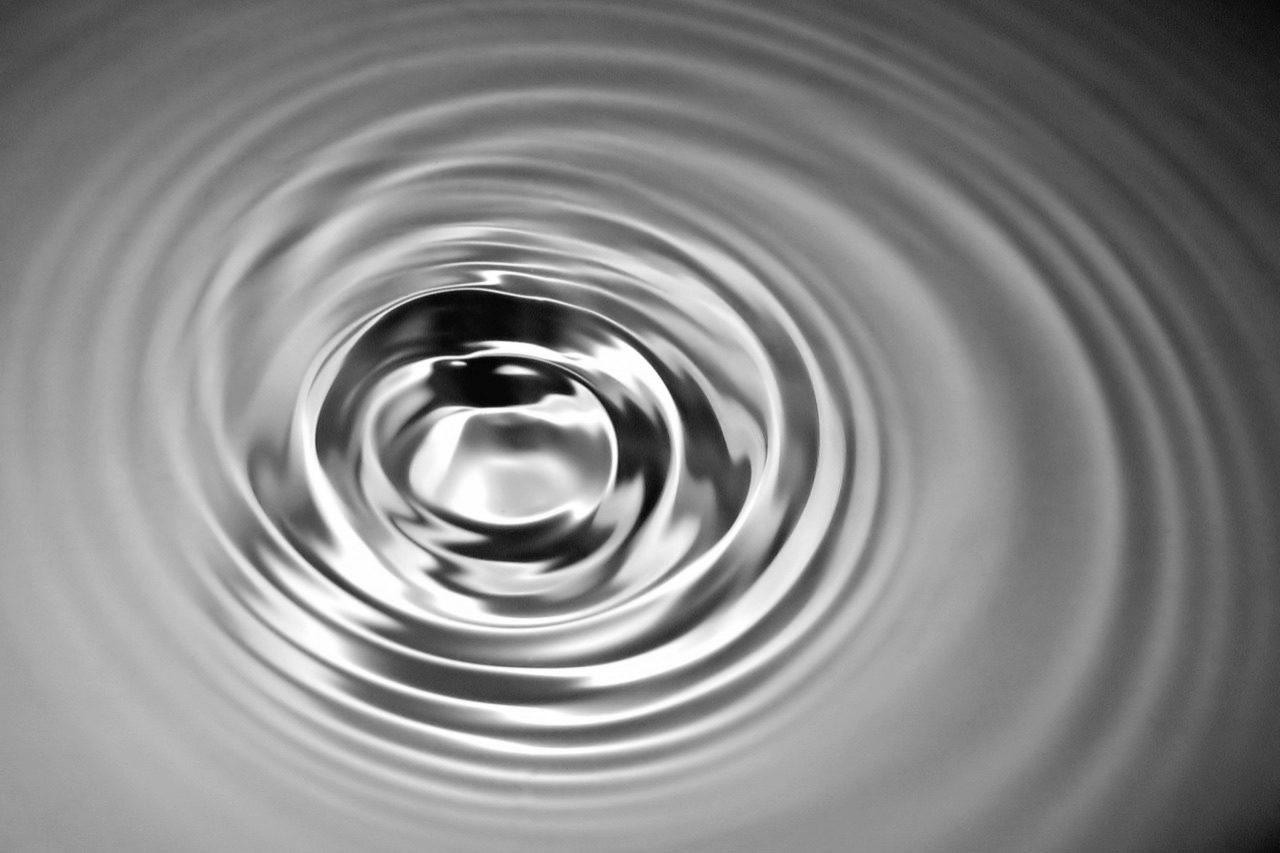
I'll leave you with this: I think on some level I did this for 5-10 year old me. But on some other level 5-10 year old me did this for 55 year old me. Also I did it for the ripple effects-- love me some ripples. ;)
Photo: “2006-01-14 Surface waves” by Roger McLassus, CC BY-SA 3.0, via Wikimedia Commons; cropped and grayed.
