A Sort of Homecoming
· updated · 6 min
And you hunger for the time
Time to heal, desire, time
And your earth moves beneath
Your own dream landscape.U2 -- A Sort of Homecoming
Santa Cruz County is as close to a home as I've had over the last decade or so of my life. I moved from the South Bay during the covid times and it was also the last place I lived in a house-- a nice place in Seabright. The South Bay never felt like a home.
Since then I return on a semi-periodic basis, sometimes for short stays and sometimes for longer. It's kind of a touchstone at this point-- walking the beaches, running in the mountains, visiting all of my favorite places again and making new discoveries. Coming back this time I felt that "distance makes the heart grow fonder" vibe for Santa Cruz.
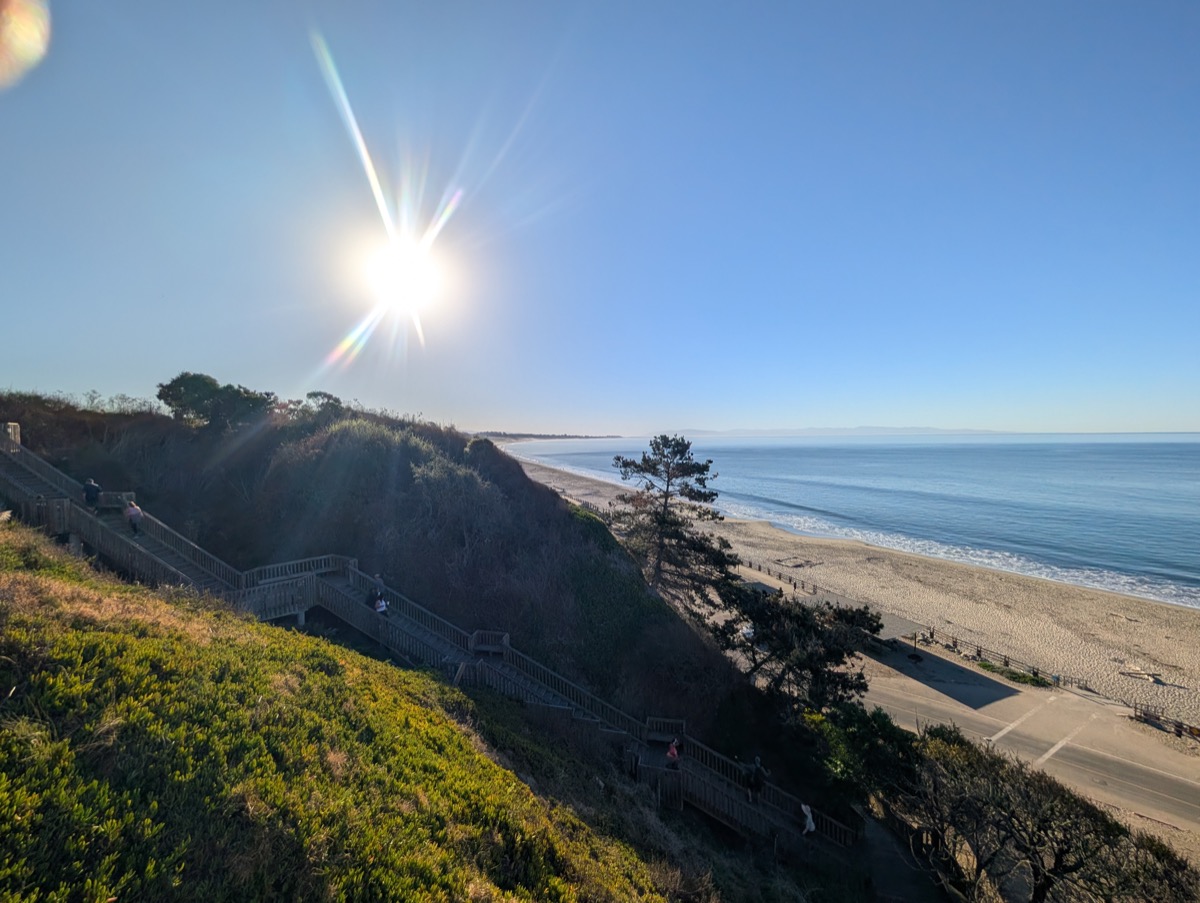
Things can start to become routine before too long when you stay in the same place. You can start to take a bunch of things for granted. While I do appreciate folks who stay in one place and get into the deeper cycles of the same place, there are so few of us now who migrate around, seasonally, nomadically, etc. It occurs to me that this lifestyle provides a different kind of cycle-- a return. I've had cycles on my mind since last winter, when I felt some deeper cycles for the first time. I like to notice them now. Just noticing that there are times that are more or less favorable for certain things and attuning to that.
These thoughts lead me to housing. Well, first to Invisible Cities by Italo Calvino. This is one of my favorite books. I first read it during my college days. College mostly involved me self-directing my own learning and completely ignoring classes as I hopped majors from CS to English, lost my scholarship and eventually decided structured learning was not for me. Invisible Cities is one of those books that is cyclical in its own way. It feels like a book that is an infinity loop back on itself. You can start it anywhere and read as much or as little and return to it many times. It deepens each read for me. I introduced it to one of my kids who also took to it. For me, it's a reflection on how place defines people and people define place. There's more too-- the outward representation of what is public, civic, expected vs. the undercurrent of desire.
Just this theme on the reciprocity of place and people is quite deep tho. It's really only about the last 10,000 years that we've been trying this experiment of building collective public spaces and larger scale non-temporary housing. The earliest known discovery so far is the early settlement activity in Turkey. Göbekli Tepe is the prime example. Meanwhile, in what I think can only be seen as a certain point on a cycle we have seen play out more than once in human history, but never to the extent we are witnessing with late stage capitalism, almost everyone in the US is anchored to place. The glorious invention of the 30-year mortgage and everyone trying to "own" their own castle keeps a huge segment of the population fixed in place for the most part. There are a lot of weird second-order effects too like an economy that needs to support a never-ending escalator of upward mobility so that you can move somewhere better. Of course, this isn't for everybody. In fact it was structurally built to exclude some folks. There are also the renters of course-- that growing segment who are having some trouble getting on the escalator for one reason or another. And, then there's the "un-housed".
I have the good fortune of knowing several un-housed folks in the Santa Cruz area. People I've known for several seasons, many in some cases. For them this return of mine is not much different, not much has changed. Santa Cruz is a good place to be un-housed. Pretty wet during the winter, but a good temperate climate for the most part. Santa Cruz, I guess, cares more about the un-housed than most areas. There's a higher level of interest in the general community for sure.
I can't afford to live in Santa Cruz. Most can't. It's one of many highly desirable places where the working poor are having a hard time finding anything affordable. There are more and more monochromatic blocks of steel, stone and glass rising up and they usually have some small affordance for the service class to win the housing lottery.
There's a lot I don't understand about housing in the US let alone Santa Cruz. I traveled in Peru and a tour guide asked me why we build everything from wood... hmm, not sure. It's cheap? Most housing, even very low-income housing in Peru, is brick, concrete, adobe, etc. We are also very afraid of housing density here. It's pretty clearly more efficient, leads to community and integration, lots of its own second-order effects. I'm not an expert, but not sure crime is one of them. There may be some correlation due to socio-economics being what they are, but I don't think there's causation. It makes space for nature, public spaces and less environmental impact.
Then there are building codes of course. Very few places exist in the US where codes are relaxed enough to build with more traditional, eco-friendly materials and construction techniques. Most housing is pretty indistinguishable from the alternatives. Sure, there's enough subtle variation to keep people interested, keep the desire whetted for the slightly different variant which would really, finally make you feel at home. Or, at least that would make all of your friends and family desire it too. This is not the housing of artists or tinkerers. We have not explored the possibility space of housing on really any dimension. This is the housing of capitalism, stamped out in great sameness, somehow made desirable through massive home improvement, design and furniture stores where you can add your own bits and baubles to customize it. All of which is pretty much also basically indistinguishable.
I did it. I had a home office that was wall to wall homemade frames for a bunch of concert posters I had collected. They were fun to collect. It was fun to make the space. Then it was just there. Something to show people, maybe. It was nice to have the artwork up. Now, I hang up my art with scotch tape. I don't have much room so things cycle in and out. It works better for me. I also don't collect things anymore, at least not physical things. This season I went to Open Studios in Santa Cruz again, something I've been doing for the last four years or so. I got some more art. Time to cycle some things out. It's a good ritual. I also get to see how artists live in Santa Cruz which I think is its own minor miracle. It's fun to see other neighborhoods and houses and meet artists in the community.
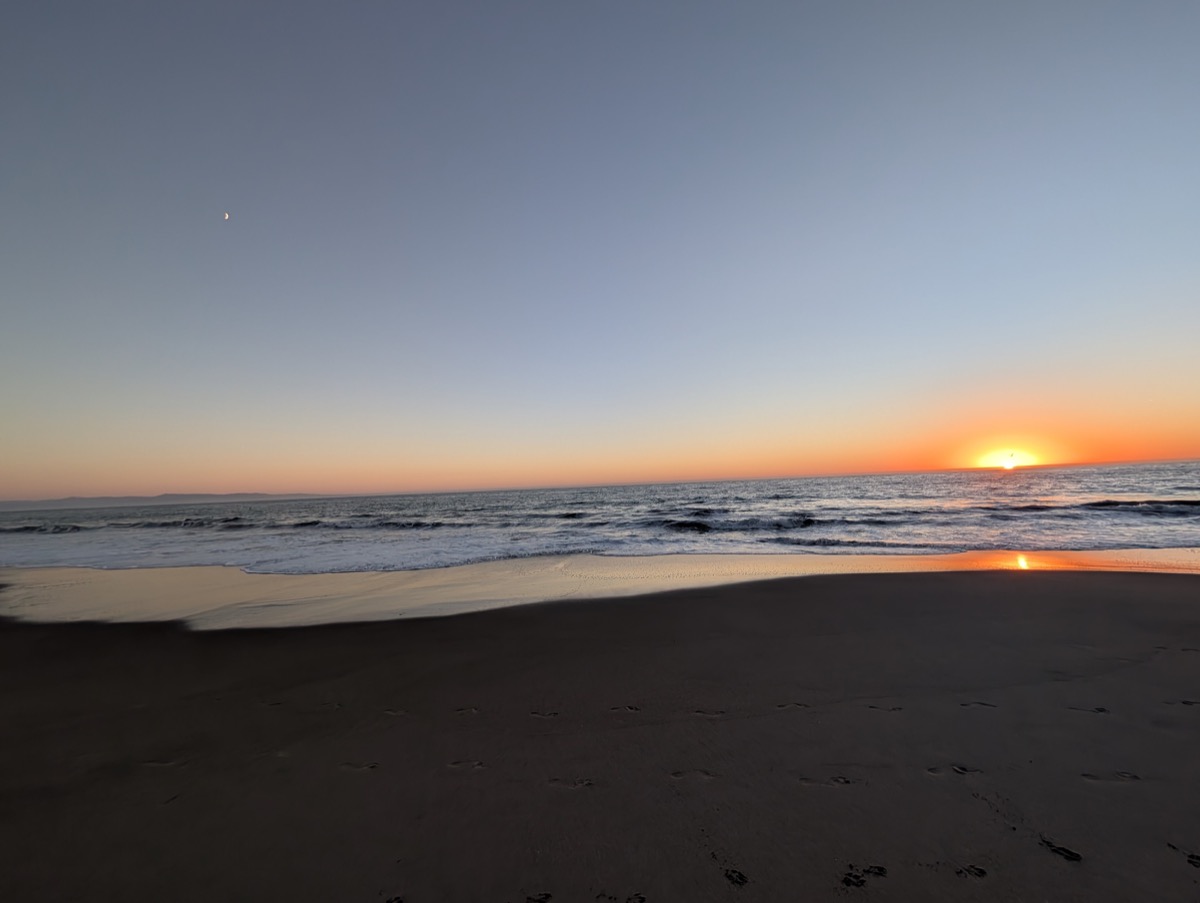
Housing is pretty interesting. It creates a context for what is possible and how we choose to live apart and together. I am grateful to have a house and especially to have one with wheels that lets me keep collecting field notes. This place is really weird. I'm glad I get to tell you about it.
If you do want to explore more of the possibility space for housing I can't recommend Kirsten Dirksen's youtube channel highly enough.
More on her channel: Kirsten Dirksen in my Sources.