LitRPG-pedia 1.0
The LitRPG-pedia is out of beta. It's one reader's guide to LitRPG and progression fantasy: 918 series, each checked against the books and what readers say about them.
It started as a persona database I built to help me choose my next series. Every time I finished one, I'd go back to it and ask what to read next. It has been a great source of comfort for me to return to over the last few months. It holds a special place for me because I started building it shortly before and during my diagnosis. I also just love the genre, and it has me inspired to write things for it.
Here is what's in 1.0.
Shelves
The home page is a wall of shelves. Up top are the featured ones: Foundational, the series that started, named or set the template for the genre, then Cultivation, and Time Loops & Second Tries. Every shelf has an "About this shelf" page that says why each series is on it.
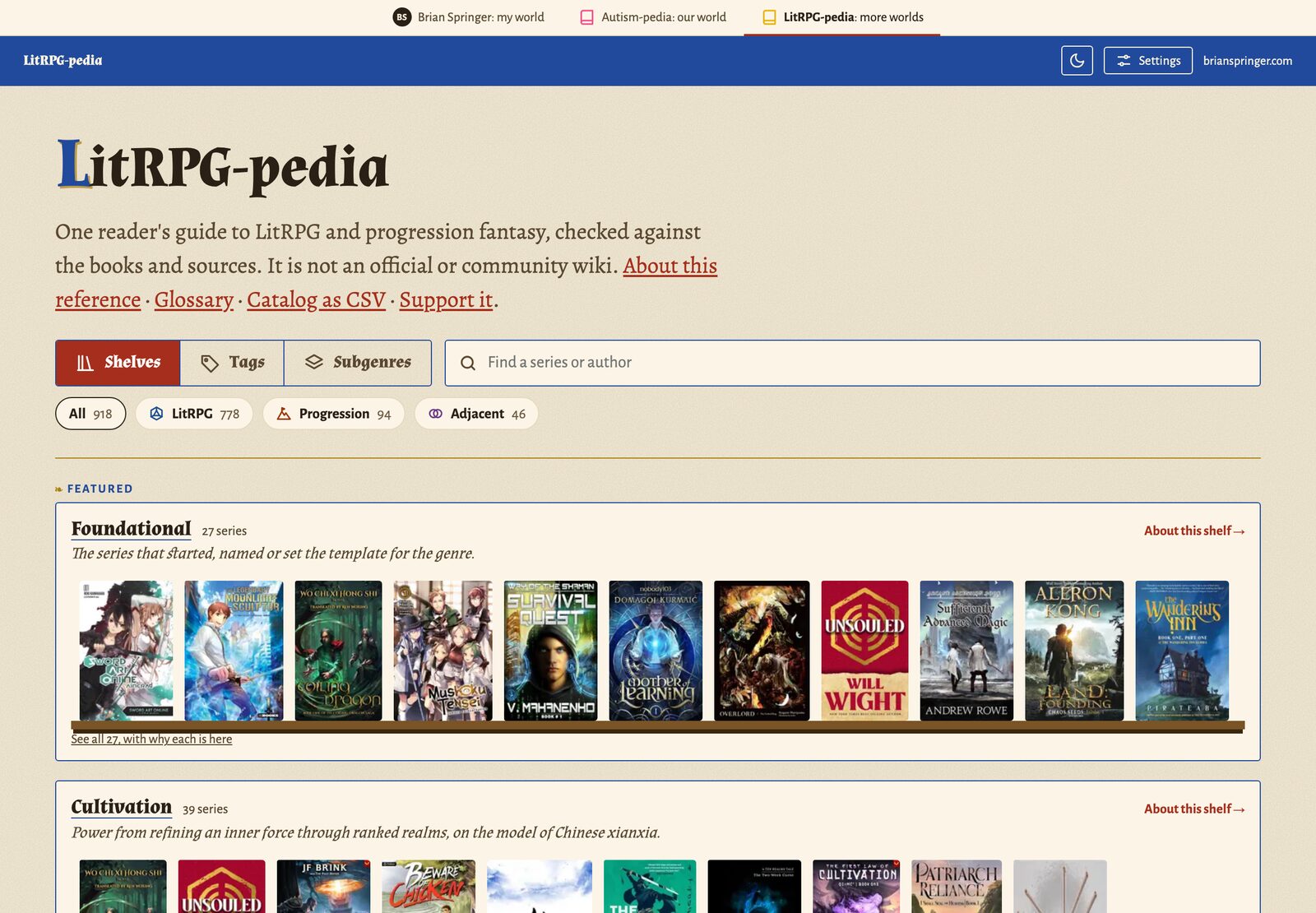
Below those, series are grouped by genre (LitRPG, Progression Fantasy, and close kin I call Adjacent), by tier (Platinum, Gold, Silver), and a New in 2026 shelf.
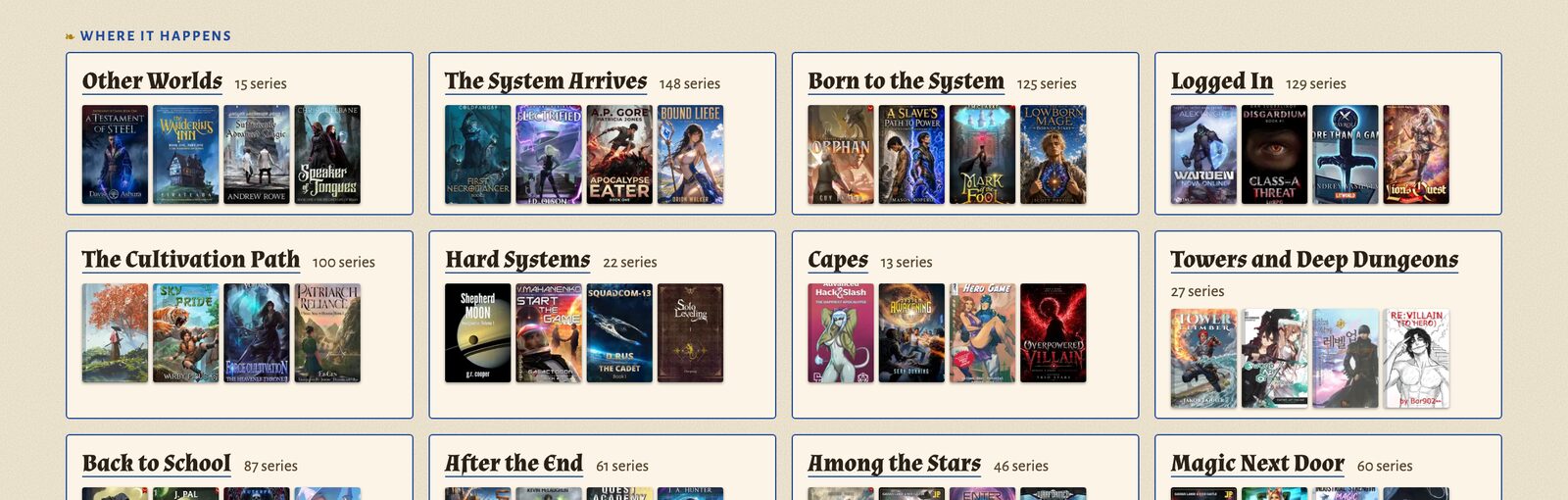
Then there are the picked shelves, built around one theme or setup: Community care, Dungeon core, Most inventive, Earth lore, Ensemble epic. And four rows of shelves that sort the catalog by where it happens, who it follows, what gets built and how it feels. Logged In or The System Arrives. Healers or The Villain's Turn. Hearth and Shop or Kingdom Builders. Found Family, Kindness Is Strength, In on the Joke.
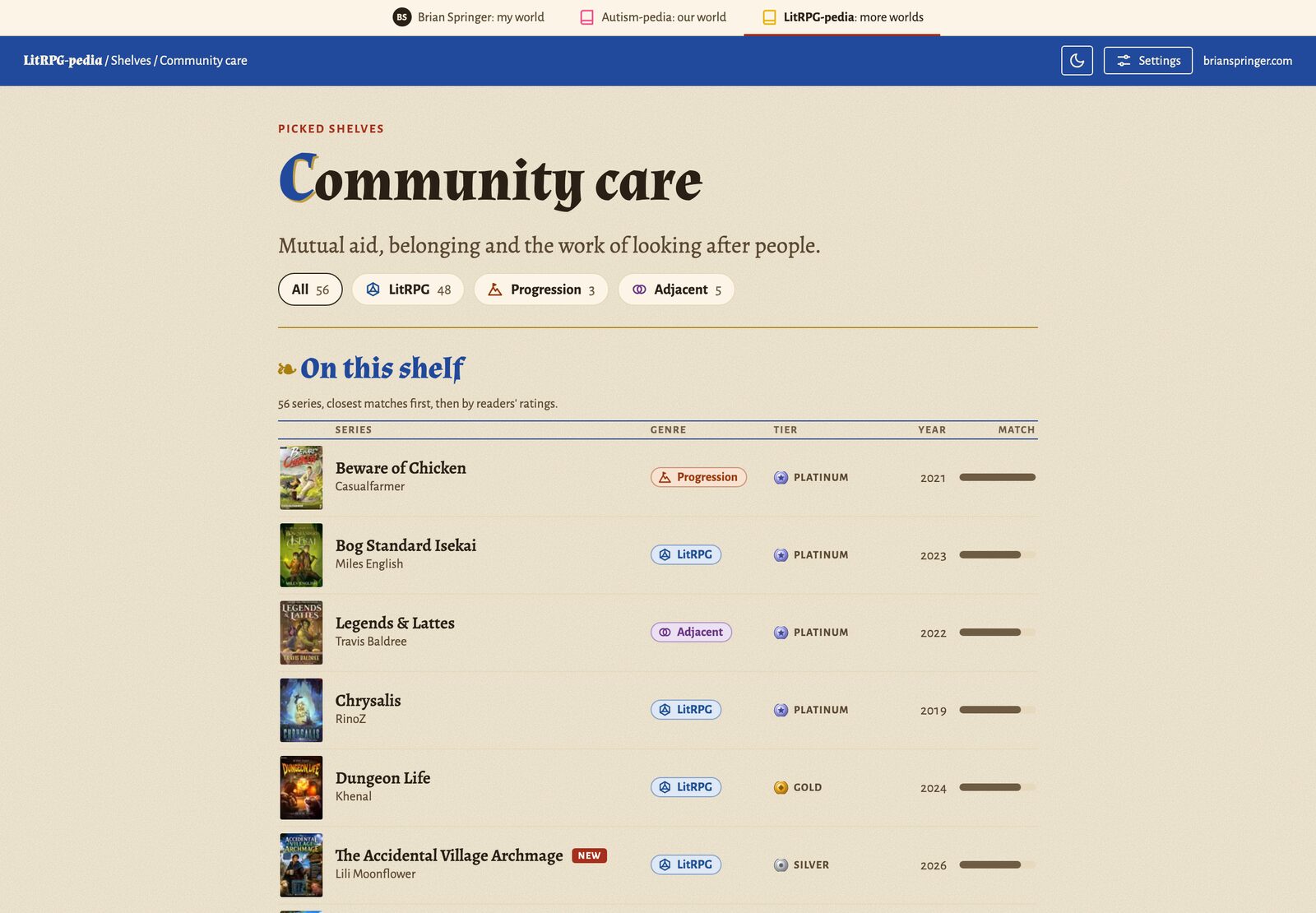
A picked shelf lists the closest matches first, then sorts by readers' ratings, so you can see how strongly each series fits.
Series pages
Every series has its own page. A sidebar sums it up at a glance: author, narrator, how many books, whether it's complete, hours on audio, content level, and where to start. A small chart shows each book's length on audio, and the rarest tags show what sets the series apart from the rest.
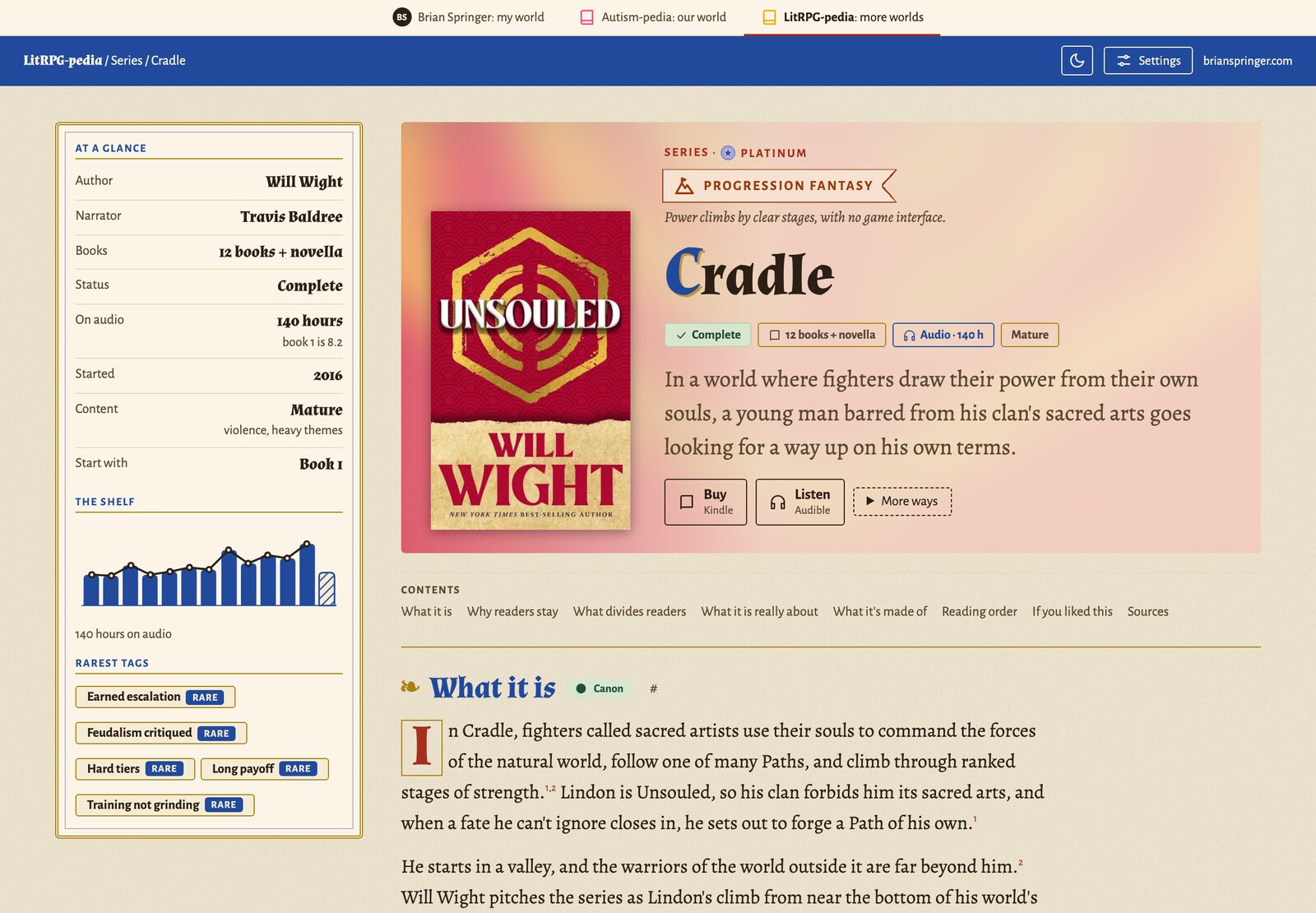
The page itself covers what the series is, why readers stay, what divides readers, what it's really about, reading order, and what to read if you liked it. Each claim is labeled by where it comes from, the books themselves or reader reviews. A reason only counts as "readers agree" when three or more independent reviewers say it.
Tags, subgenres and search
Tags go finer than shelves, and every tag has its own page. Subgenres are the broad kinds readers ask for by name, like VRMMO, dungeon crawl, slice of life, base building or academy, each with a count of how many series have it. Search finds a series or an author.
Some tags name a weakness: plot armor, exposition dumps, prose that reads like a first draft. These critical tags come from reader reviews, and a tag only goes on when several reviewers notice the same thing. They're off by default. Turn them on in Settings and they show on a series' own page, and they're never used to sort or suggest anything.
Also
- A glossary that explains every tag, from "earned escalation" to "found family".
- The whole catalog as a CSV, if you want to make something of your own with it.
- Light and dark looks.
- A "Suggest a series" link, if one you love is missing.
Nothing for sale
There are no ads, sponsors or affiliate links. Links to Audible, Kindle, Royal Road or a publisher go straight there, and nobody gets paid when you click or buy. It was put together with AI help and reviewed by me, and the About page says how. Like the Autism-pedia, it's built for the community, for readers looking for their next series and for the authors who write them.