Autism-pedia 2.0
The Autism-pedia started as my notes from reading the research after a very late diagnosis. It has grown into something closer to a library, so it's time for a 2.0. Here is what's new.
Books
The pedia now has a book page for every book it cites, about 200 of them. Each one has its cover, a short description, who wrote it, and the entries that cite it. Where the publisher or author describes the book, I quote them. Where they don't, I wrote a summary myself and say so.
Every book page has plain links to buy, listen or borrow: the publisher, Bookshop.org, Amazon, Audible, Libro.fm, WorldCat and Libby. None of them are affiliate links. The site earns nothing from them. I built this for the community, for readers looking for their next book and for the authors who wrote them. If you always shop in one place, Settings lets you pick a preferred store and it moves to the front.
Inside the entries, a book gets a single line where it fits, and no one book gets leaned on too often. I hope that gives each section some context from the people who've written about it, and works as a teaser that sends you off to read the whole book.
A few books carry a short note on the evidence, mostly books written with assisted typing, where who authored the words has been questioned. The pedia reports the writer's account and says plainly that the question is open. I'd rather do that than leave those books off the shelf.
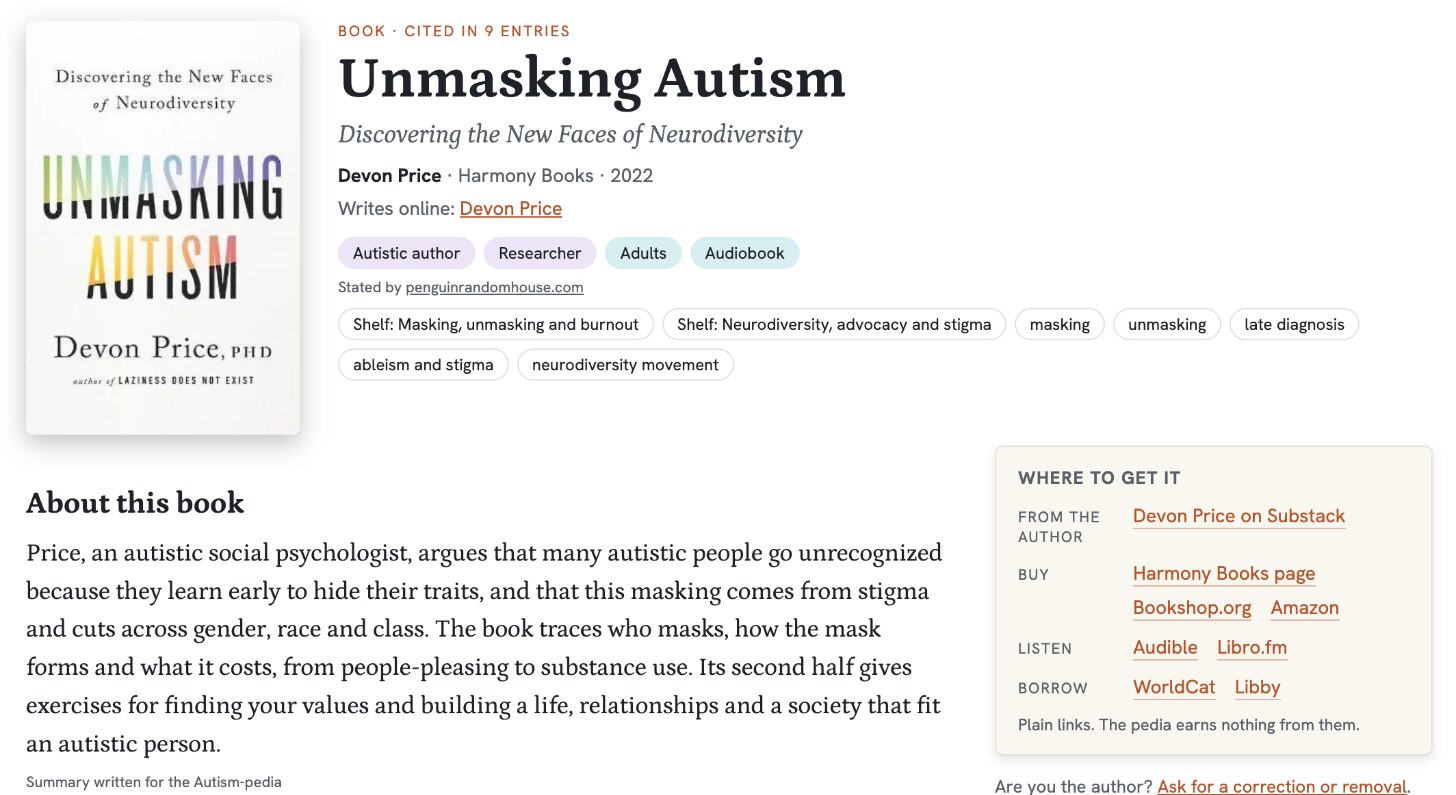
Here's Unmasking Autism by Devon Price, one of the books I return to most. It's cited in nine entries, and since Price also writes on Substack, the page links to that too.
I wrote up how books get picked in How the pedia picks books.
Shelves and tags
Books sit on shelves grown from what they're about: senses and meltdowns, diagnosed as an adult, masking, nonspeaking and AAC, work, families, and more. There are also shelves by who wrote them, so you can browse autistic authors, parents, and clinicians and researchers on their own. Tags go finer than shelves, and every tag has its own page.
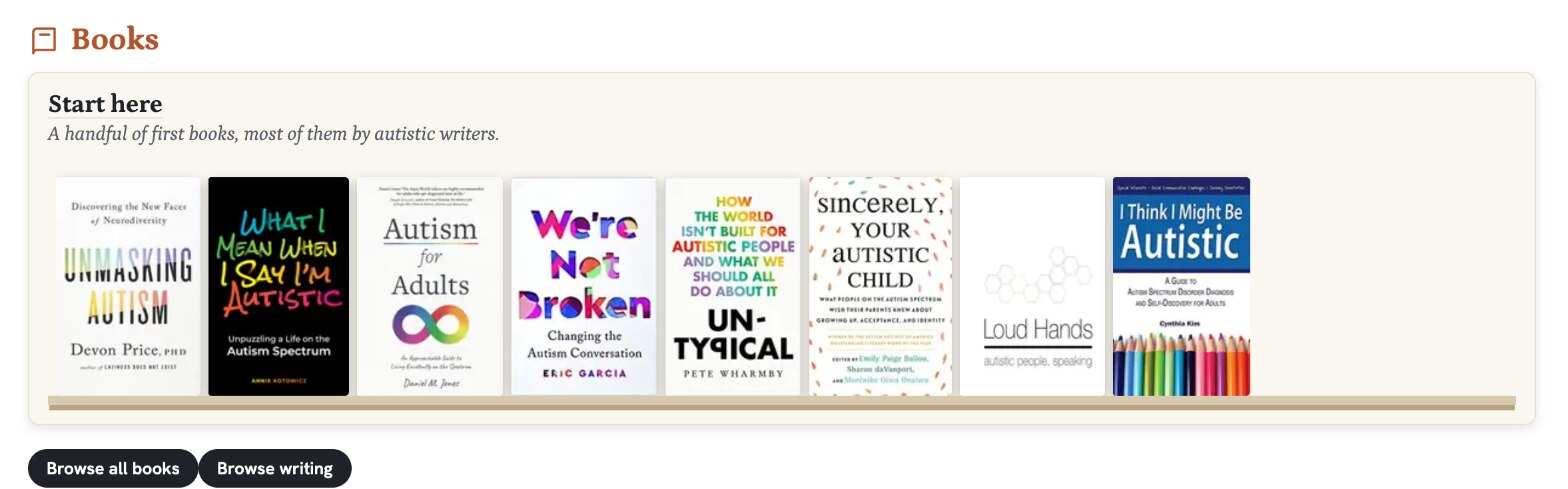
If you don't know where to begin, there's a Start here shelf, and it's now the first thing on the Autism-pedia home page.
Blogs and community writing
A lot of the best writing about autism isn't in books. It's on Substack, WordPress and personal blogs, written by autistic people, parents, researchers and community groups. The pedia now has a writing catalog of about 50 of these writers, each with a few posts to start with and the entries that cite them. Entries now cite this writing next to the research, in a "Books and writing" section at the foot of each one.
A new topic on abuse, trauma and safety
This is the hardest part of 2.0 to write, and the one that matters most to me. Abuse, trauma and safety is a new group of entries covering the sexual abuse of autistic children, grooming and compliance, disclosure and being believed, abuse in relationships, bullying, restraint and seclusion, and recovery. It describes what research and survivors report, without graphic detail. Every page in the group opens with a content note and helplines for the US and UK.
I also reviewed every page's younger-reader version myself. Getting those right took the most care. I tried to give the best presentation I could, one that keeps younger readers safe and still tells them what they need to know.
Also new
- Book chips in entries. When an entry cites a book, the citation links straight to its book page.
- A Covers setting, if you'd rather browse the shelves as plain text.
- Each topic overview shows the books most cited across its entries.
- If you know a book or a blog that belongs here, there's a "Suggest a book or writing" link on the book pages.
Coming next
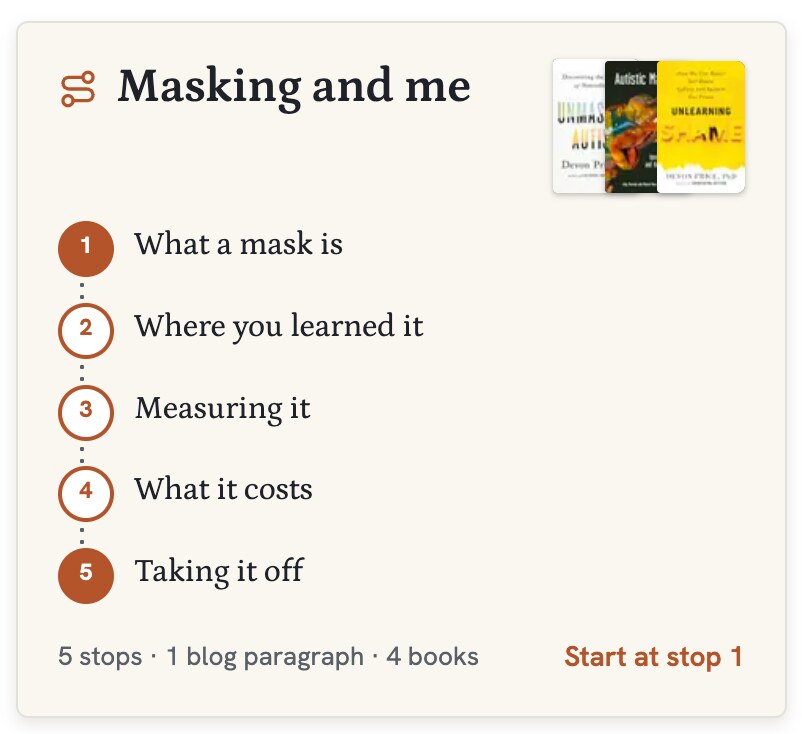
Trails: short paths through the pedia on one theme, with the books beside them and the places I've written about it on this blog. The first one is about masking. I'm still writing it.